





Green Glass Wine Glasses
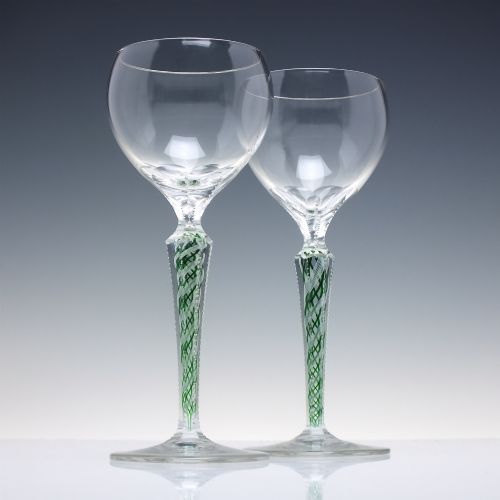
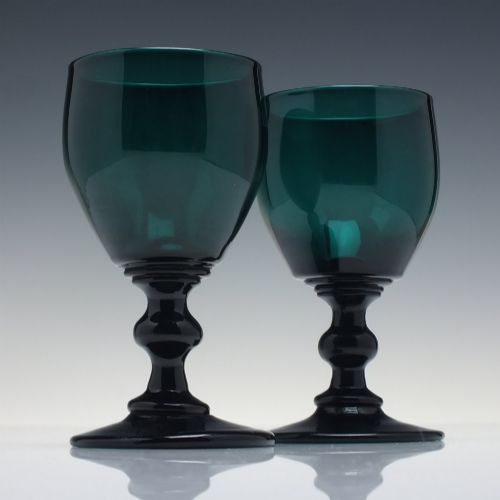
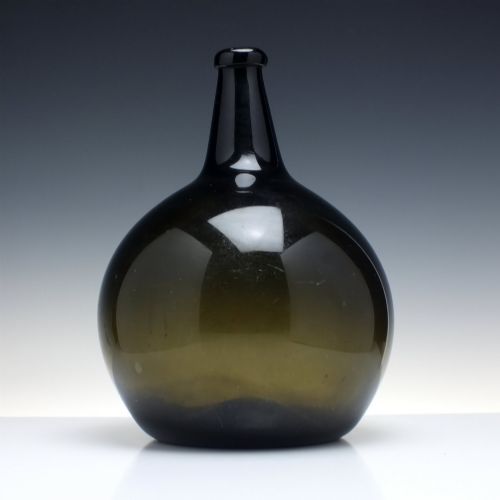
Green glass wine glasses bring rich colour and historic character to the table through centuries of blown and moulded forms.
Green Glass Wine Glasses
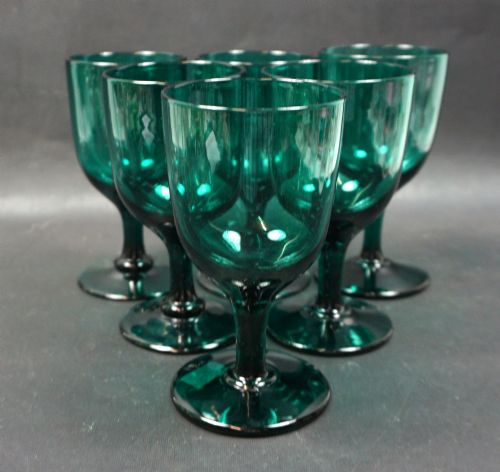
Green glass wine glasses encompass drinking vessels produced across the Georgian and Victorian eras up to the twentieth century, including robust English Bristol types and continental roemers. Collectors frequently encounter matching sets from the nineteenth century alongside individual eighteenth-century rummers and dram glasses.
The selection extends beyond standard stems to incorporate hock glasses, finger bowls and table decanters utilising similar colour palettes. English, Bohemian and French workshops dominate the available origins.
Formations range from trumpet and bucket bowls to traditional hollow stems designed for Germanic white wines.
How they were made
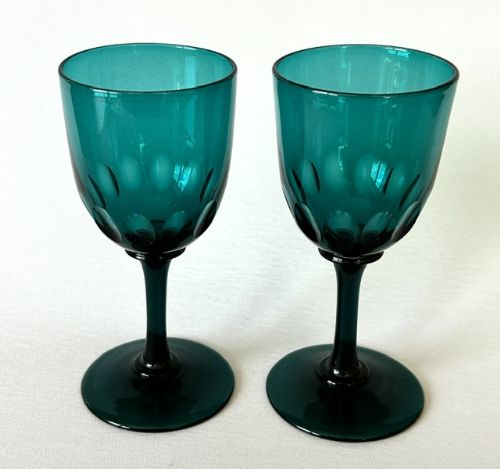
Craftsmen shaped these vessels using hand-blown lead glass and coloured soda glass, often incorporating rib moulding or hammer moulding to create textured bowls. Overlay techniques permitted layers of clear crystal over green glass to be cut back for decorative contrast.
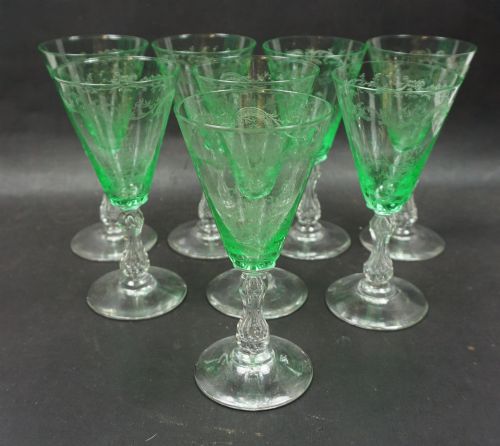
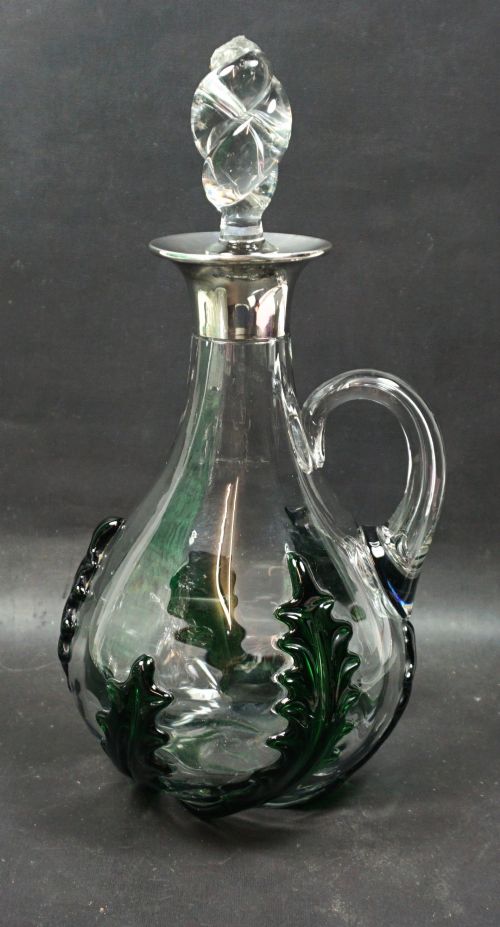
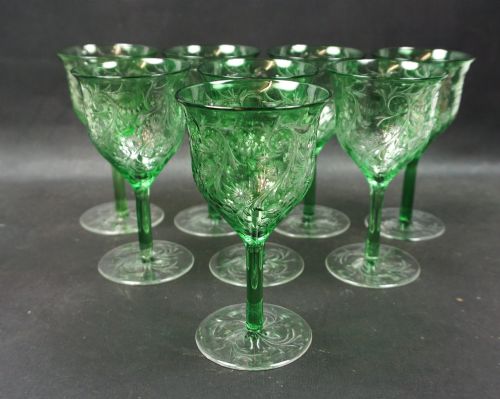
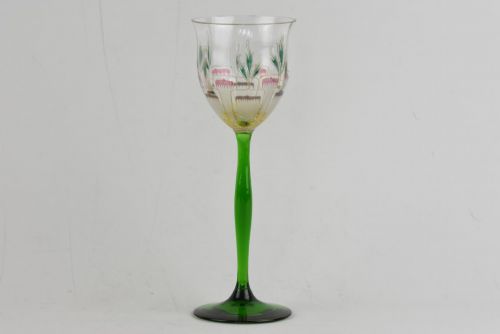
Surface ornamentation involved polychrome enamel painting, armorial detailing and delicate wheel engraving depicting vines and floral motifs. Pewter mounts and silver necks appear on associated decanters and jugs from later periods.
Green Glass Wine Glasses Retail Price Guide 2026
Typical asking prices for green glass wine glasses among the pieces listed under this phrase on Sellingantiques today, from the lower quarter to the upper quarter. They describe what is for sale here now, not the wider market.
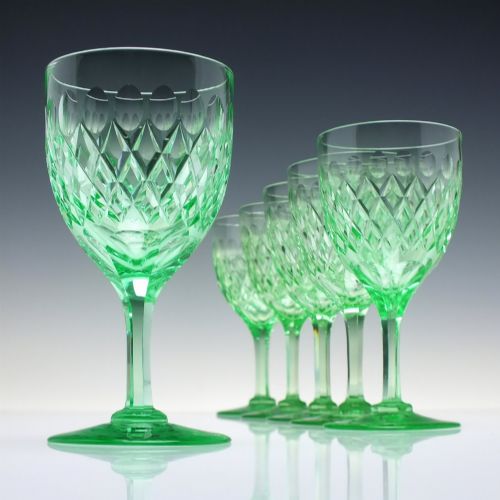
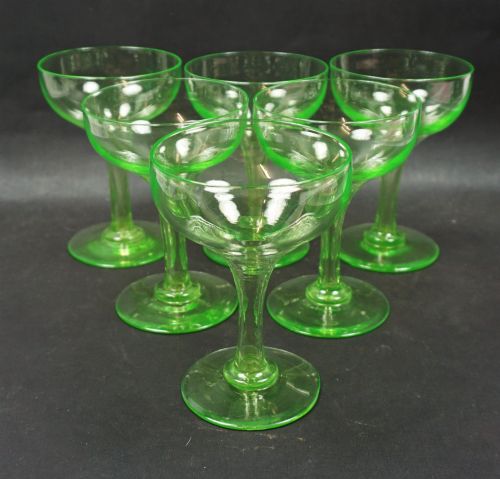
Several Victorian wine glasses hide under the guise of vaseline glass, glowing fiercely under ultraviolet light like subterranean moss.
What varies in quality
The distinction between ordinary utility wares and exceptional pieces rests upon the depth of the metal and the precision of the hand-finishing. Rich emerald and turquoise tones achieved through skilled mineral addition contrast with simpler tinted glass.
Fine examples display crisp wheel-cut facets, meticulously hand-painted enamel work and balanced proportions without heavy pontil scarring on the foot.
Baccarat·Theresienthal·Lobmeyer·Frits Hechert·Archibald Knox for Liberty Co
The Green Glass Wine Glasses Glossary
- Roemer
- A traditional Germanic drinking vessel featuring a large spherical bowl resting on a cylindrical hollow stem studded with prunts. These glasses were historically used for hock and white wine.
- Hock glass
- A tall stemmed wine glass traditionally utilised for Germanic white wines and hock. They frequently exhibit coloured bowls or overlaid crystal.
- Pontil mark
- The rough scar left on the base of a blown glass object where the pontil rod was detached. Its smoothness or absence often indicates careful finishing.
- Rib moulding
- A decorative technique where molten glass is inflated into a ribbed dip mould to impart vertical or spiral ridges to the bowl.
- Vaseline glass
- A type of glass coloured with uranium dioxide that exhibits a characteristic yellow-green fluorescence under ultraviolet light.
Green Glass Wine Glasses: Frequently Asked Questions
How do I identify Georgian green wine glasses?
Georgian examples typically display deep Bristol green or turquoise hues with heavier metal content and simple, elegant bowl forms such as bucket or trumpet shapes. Pontil marks on the undersides are common indicators of period hand-blowing techniques.
Examination of the stem construction reveals earlier manufacturing traits, including knops and air twists, though solid stems remain predominant in coloured tavern and table wares.
What is a roemer glass used for?
Roemer glasses were traditionally used for serving hock and other Germanic white wines during formal meals. The large capacity and wide bowl allowed the wine to breathe effectively.
The hollow stem provided a comfortable grip while keeping the warmth of the hand away from the bowl, maintaining the proper temperature of the beverage.
Are antique green wine glasses safe to use?
Most antique green glass wine glasses remain suitable for occasional modern dining use provided they are handled with care. Hand washing in lukewarm water is essential to preserve fragile enamel work and thin rims.
Avoid thermal shock from hot liquids or modern dishwashers, which can cloud the historic metal or weaken centuries-old glass.