

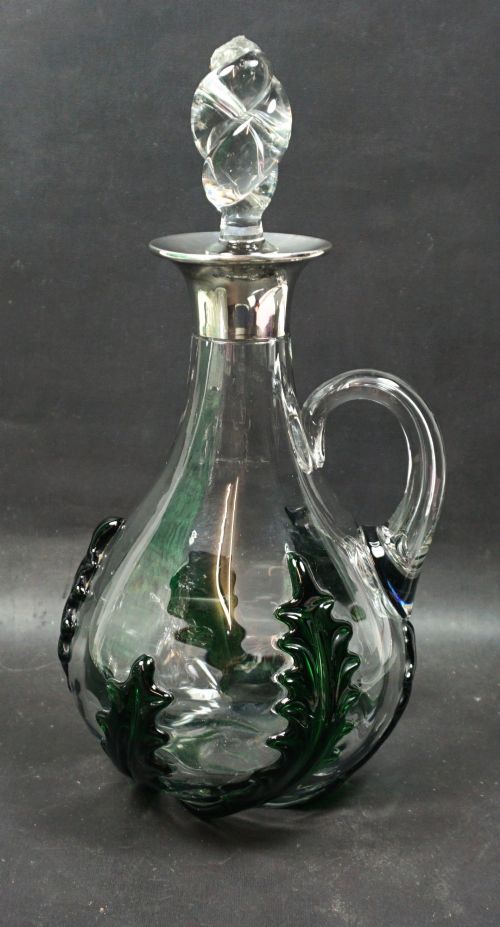


Green Glass Wine Decanter
These green glass wine decanter examples bring vibrant colour and period craftsmanship to the table, making them sought-after vessels for serving wine.
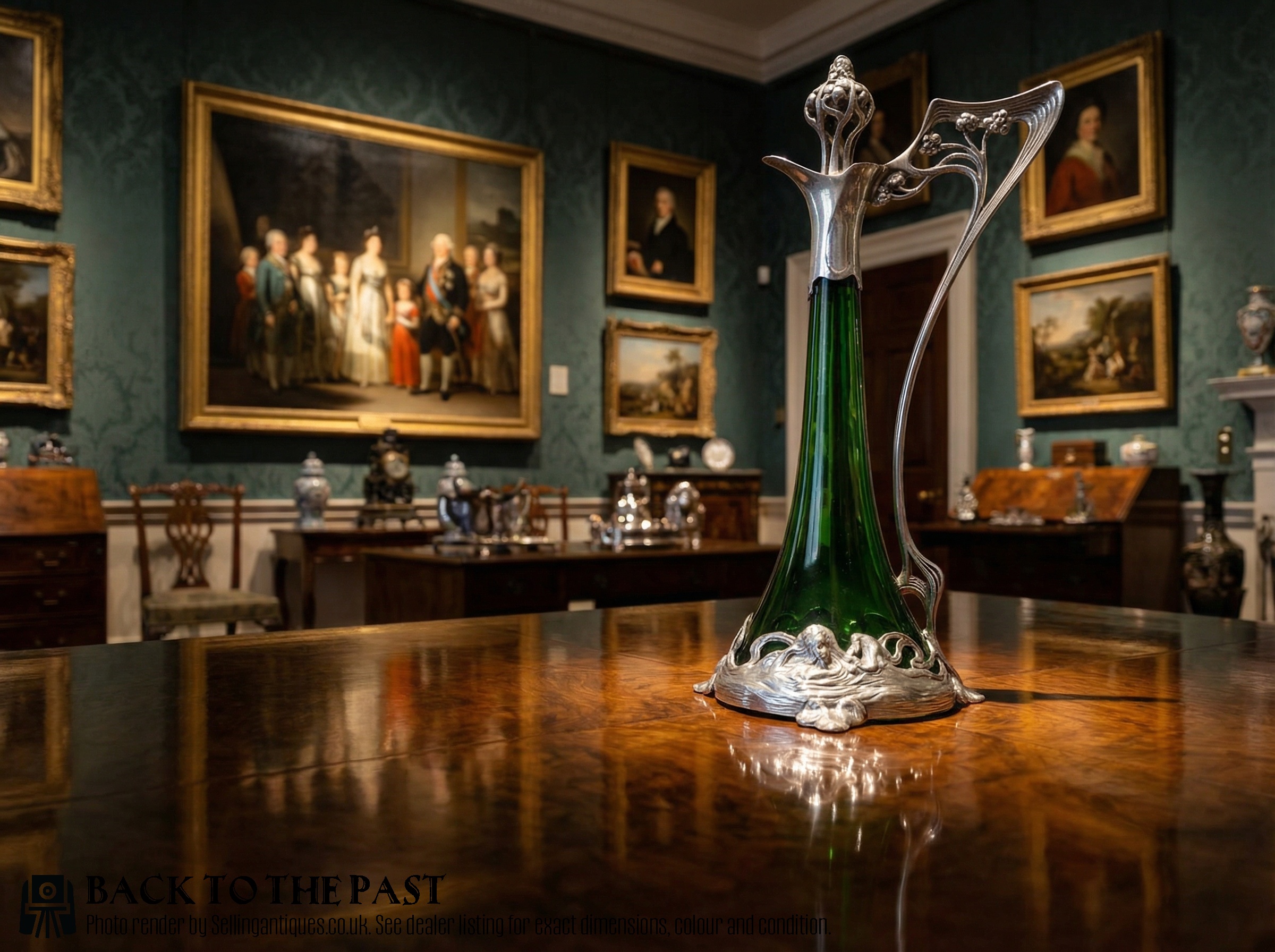
Green Glass Wine Decanter
When searching for a green glass wine decanter, a buyer encounters a diverse selection ranging from nineteenth-century Victorian vessels to later Art Nouveau designs. The most common examples met on this page include Victorian wine jugs, overlay glass pieces, and tall hock decanters.
The assortment spans English, Bohemian, and Austrian origins, reflecting various historical periods including the Victorian era and the early twentieth century. Forms extend beyond traditional bottles to encompass claret jugs, ewers, and ships decanters suited for different table settings.
Materials and production methods
Makers utilised glassblowing and moulding techniques to shape the body of each green glass wine decanter, frequently employing colour overlay or crystal glass to achieve deep hues. Enamel painting and applied details further decorated the surface of Victorian and later examples.
Metalwork components such as pewter collars, silver mounts, and brass fittings were cast and secured to the glass necks. Workshops like Liberty Co and WMF combined metal craftsmanship with glass production, particularly during the Art Nouveau period.
Green Glass Wine Decanter Retail Price Guide 2026
Typical asking prices for green glass wine decanter among the pieces listed under this phrase on Sellingantiques today, from the lower quarter to the upper quarter. They describe what is for sale here now, not the wider market.
Listings feature items from the Victorian period through to Art Deco, incorporating materials such as pewter, enamel, and overlay glass.
Distinguishing quality across the range
The refinement of the glass body and the weight of the material distinguish the finer examples from simpler production pieces. Clarity in overlay glass and precision in enamel painting indicate higher execution standards by the maker.
The integration and metal quality of mounts, whether silver, pewter, or brass, affect the overall standing of a piece. Substantial metalwork by known designers demonstrates superior craftsmanship compared to standard commercial fittings.
Archibald Knox for Liberty Co·WMF
The Green Glass Wine Decanter Glossary
- Overlay glass
- A glass-making technique involving layers of different coloured glass, where the outer layer is cut away to reveal the contrasting colour beneath.
- Claret jug
- A specialised pouring vessel designed specifically for serving red wine, often featuring a handle and a hinged metal lid.
- Hock decanter
- A tall, slender wine vessel traditionally utilised for serving white wine, frequently seen in coloured crystal.
- Ships decanter
- A table jug featuring a wide base that prevents tipping aboard a vessel at sea.
- Mary Gregory
- A style of decorative glassware featuring white enamel silhouettes of children or figures amidst foliage.
Green Glass Wine Decanter: Frequently Asked Questions
What is a green glass wine decanter used for?
These vessels were traditionally utilised for serving and aerating wine at the dining table. The coloured glass helped protect the contents from light.
Today, they serve both functional pouring roles and decorative display purposes within period interiors.
How do I date a green glass wine decanter?
Dating relies on observing stylistic markers such as Victorian enamel work, Art Nouveau organic pewter mounts, or simpler shapes from the nineteenth century. Manufacturing techniques and metal hallmarks also provide clues to the period of origin.
Comparing the form and decorative motifs against known historical styles helps narrow down the decade of production.
How do I care for antique glass decanters?
Gentle hand washing in lukewarm water with mild soap preserves the delicate glass and any enamel decoration. Metal mounts should be kept dry to prevent tarnishing or corrosion.
Avoid sudden temperature changes to protect the historic glass from thermal shock.
Where were these decanters made?
The pieces originate from various European centres, with English, Bohemian, and Austrian workshops heavily represented in the record. Each region brought distinct regional glass-making traditions to the form.
Local metalworkers also contributed specialised pewter and silver mounts to the regional glass bodies.