
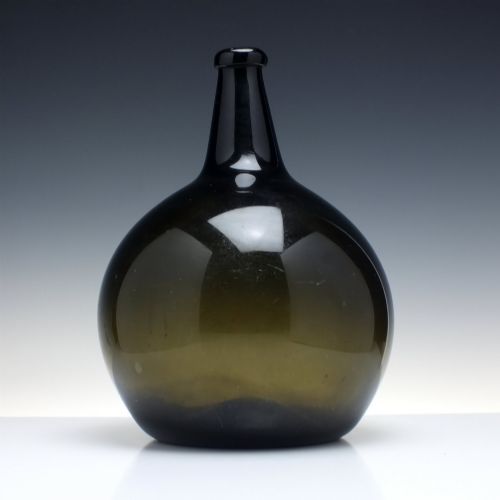


Green Glass Wine Bottle
These green glass wine bottle examples are heavy, dark vessels shaped by decades of service, offering tactile history for any table.
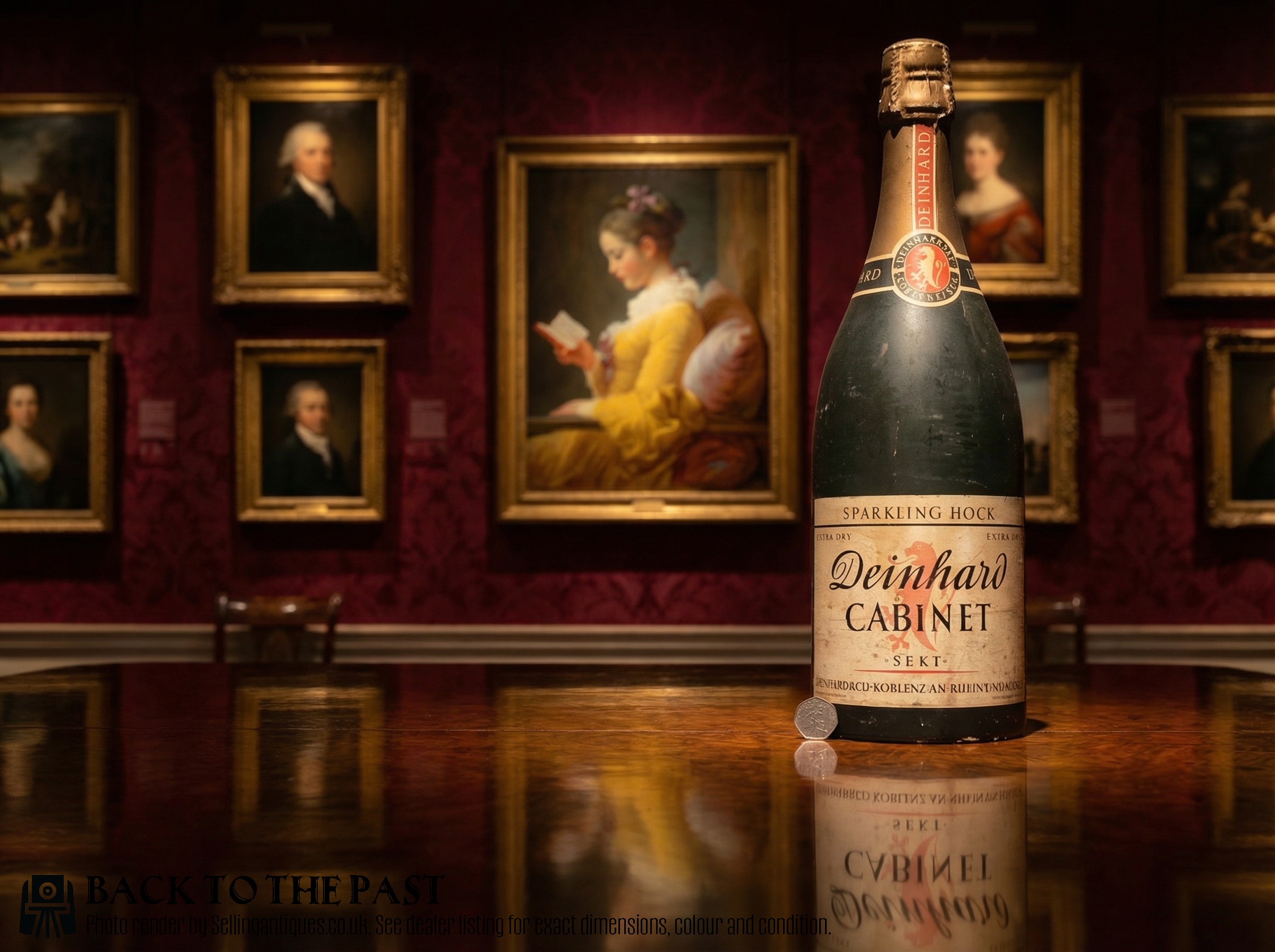
Green Glass Wine Bottle
When you search for green glass wine bottle, you are looking at robust containers that survive from the Georgian, Victorian, and later periods. The examples on this page span forms such as cylinder bottles, mallet bottles, tall hock decanters, ewers, and large demijohns.
You are most likely to meet heavy hand-blown vessels from the eighteenth and nineteenth centuries, alongside French carboys and advertising displays from the twentieth century. These pieces originate from Britain, Scotland, and France, reflecting centuries of practical utility and decorative display.
Materials and construction
The primary material is dark green glass or teal glass, often formed through hand-blown techniques that create thick walls and organic surface irregularities. These bottles frequently incorporate applied glass threads, pontil marks, and deep bases designed to catch sediment.
Finer iterations combine the heavy glass body with metal mounts, such as silver necks, silver mounts, or pewter fittings. Some French demijohns are housed in original iron baskets, combining industrial metalwork with blown glass.
Periods represented span the Georgian era, Victorian period, and twentieth-century French country items like carboys.
Distinctions in quality
Quality rests in the depth of colour, the integrity of the hand-blown form, and the presence of period mounts in silver or pewter. An early eighteenth-century mallet or cylinder bottle displays rich iridescence and deep kick-ups in the base.
The addition of decorative elements, such as hand-painted enamel work or substantial silver collars, separates standard utility vessels from high-status display pieces. The weight and clarity of the glass further distinguish regional variations like Scottish Alloa pieces from standard French carboys.
The Green Glass Wine Bottle Glossary
- Mallet bottle
- An eighteenth-century wine bottle shape characterised by a short neck and a body that widens toward a flat base. This form evolved from earlier onion bottles to sit steadily on ships and tables.
- Demijohn
- A large, narrow-necked glass vessel used for storing liquids. They are often enclosed in wicker or iron baskets for protection during transport.
- Hock decanter
- A tall, slender wine vessel, frequently made from coloured crystal or glass. These pieces take their name from traditional German hock wine containers.
- Kick-up
- The deep indentation pushed into the base of a wine bottle. This structural feature strengthens the vessel and collects sediment.
Green Glass Wine Bottle: Frequently Asked Questions
What are these green glass wine bottles?
These are heavy, hand-blown glass vessels produced from the eighteenth century through to the twentieth century for storing and serving wine, spirits, and cider.
They include early mallet and cylinder forms, tall decanters with silver mounts, and large French demijohns used for bulk storage.
How were these bottles used originally?
In earlier centuries, sturdy green glass bottles served to transport and cellar wine, protecting the contents from light.
Finer examples fitted with silver necks or enamel decoration were brought to the dining table to decant and serve wine.
How do I date a green glass wine bottle?
Dating relies on the shape of the body, the length of the neck, and the depth of the base indentation.
Eighteenth-century examples often feature mallet or transitional shapes with deep pontil marks, while Victorian pieces show more refined collars and silver hardware.
How should I clean my antique bottle?
Antique glass requires gentle cleaning with warm water and mild soap to preserve any original surface iridescence or historic patina.
Avoid harsh abrasives or soaking metal mounts like silver and pewter in strong cleaning solutions.
Can I display these bottles in a modern home?
These robust glass vessels suit open shelving, sideboards, or window sills where natural light can pass through the dark green walls.
Large demijohns and carboys also function well as floor-standing decorative elements or simple flower vases.