






Green Glass Dish
A green glass dish brings rich colour and light to a table, spanning eras from opulent Victorian dressing sets to sleek Art Deco forms.
Green Glass Dish
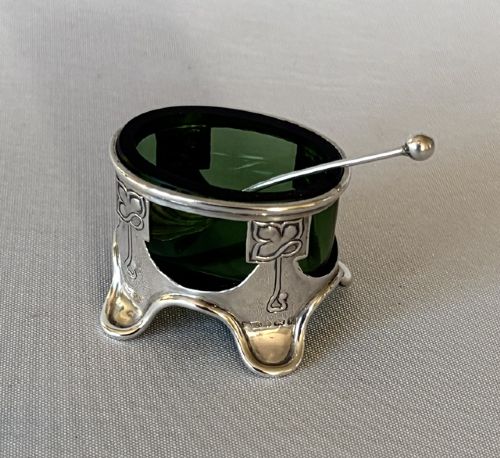
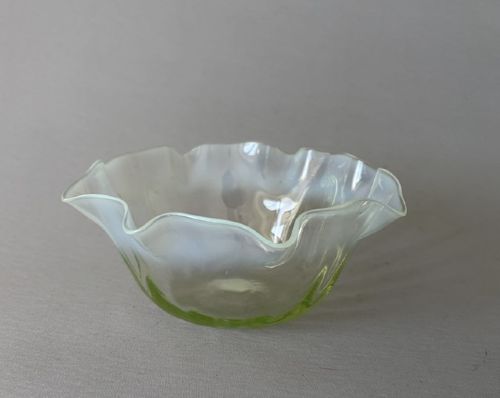
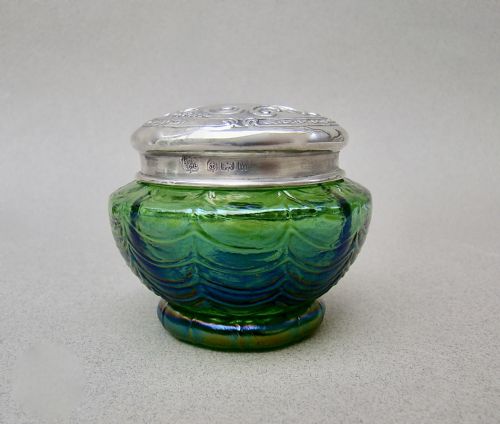
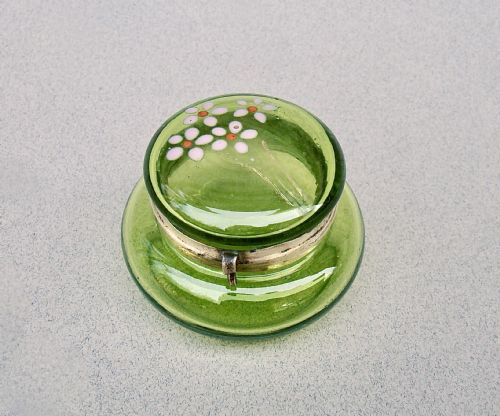
A green glass dish encompasses everything from decorative bowls and centrepieces to lidded trinket boxes, salt cellars, and dessert dishes. When exploring this phrase, buyers encounter pieces spanning the nineteenth century through to the Art Deco period of the nineteen-thirties, with Edwardian examples appearing frequently.
The objects take diverse forms, including pedestal bowls, swing-handled baskets, scallop shell dishes, and finger bowls. Many incorporate metal mounts, frames, or lids in sterling silver, silver plate, or enamel, combining glass vessels with functional metalwork.
Origins stretch across Europe and Britain, with items originating from English makers, Scottish glasshouses, French ateliers, and Bohemian workshops. Pieces range from utilitarian table salt cellars to substantial ornamental table boxes and centrepieces.
Assessing quality and execution
Quality rests upon the depth and clarity of the glass, the precision of mould-blown or free-blown forms, and the sophistication of surface treatments such as enamel painting or iridescence. Superior pieces exhibit refined proportions, clean casting in metal mounts, and distinct characteristics associated with notable designers and factories.
The integration between glass liners and their silver or silver-plated mounts indicates standard of manufacture, where custom-fitted components align precisely. Maker marks, factory stamps, and hallmarks provide documentary evidence of origin that distinguishes standard production ware from superior examples.
Green Glass Dish Retail Price Guide 2026
Typical asking prices for green glass dish among the pieces listed under this phrase on Sellingantiques today, from the lower quarter to the upper quarter. They describe what is for sale here now, not the wider market.
Listings feature items from the nineteenth century, Edwardian era, and nineteen-thirties, utilising materials such as uranium glass, sterling silver, and enamel.
Whitefriars·Kralik·A. J. Pepper & Co·Val St. Lambert·Viners·René Lalique·Monart·Loetz
The Green Glass Dish Glossary
- Vaseline glass
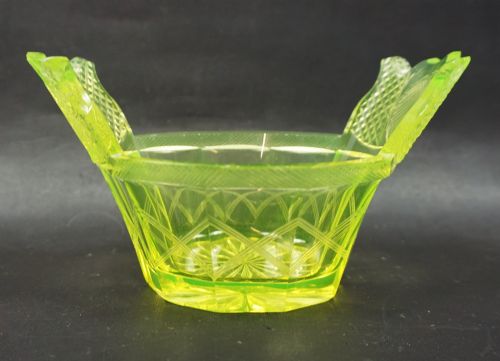
- A type of glass containing uranium dioxide, which produces a characteristic yellow-green colour that glows under ultraviolet light. It gained popularity during the Victorian and Edwardian eras for decorative tableware.
- Uranium glass
- Glass pigmented with uranium oxide, yielding hues from pale green to deep yellow-green. It was widely produced across Bohemia and Britain during the nineteenth and early twentieth centuries.
- Pâte de Verre
- A method of glass casting where finely crushed glass is mixed with a binder, packed into a mould, and fused in a kiln. This technique produces dense, textured objects with subtle colour gradations.
- Opaline glass
- An opaque or translucent glass developed in France, often moulded into decorative shapes such as scallop shells and finished with gilt edges. It ranges in opacity from milky white to soft pastel shades including green.
- Monart glass
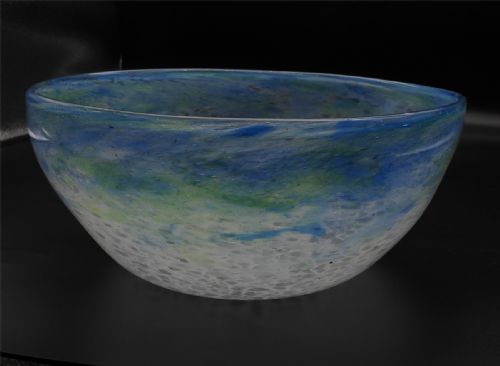
- A style of mottled and cloud-form art glass produced in Scotland, known for suspended bubbles and rich internal colour layers. Early pieces display distinctive studio craftsmanship from the twentieth century.
Green Glass Dish: Frequently Asked Questions
How do I identify vaseline glass?
Vaseline glass is recognised by its characteristic yellow-green colour and its strong fluorescent glow under ultraviolet light. The colour results from the addition of uranium dioxide to the glass batch during production.
Most pieces date from the nineteenth and early twentieth centuries, appearing in forms such as finger bowls, small dishes, and decorative baskets mounted in silver plate.
What periods are common for these dishes?
The available pieces span the nineteenth century through the Art Deco period of the nineteen-thirties. Victorian and Edwardian examples frequently feature ornate metal mounts, while later items embrace modernist lines.
Nineteenth-century items often include enameled trinket boxes and opaline shell dishes, whereas nineteen-twenties and thirties items reflect Art Nouveau and Art Deco design movements.
How were silver mounts marked?
Silver components on dressing table boxes and dessert dishes often bear British hallmarks indicating the assay office, metal purity, and date letter. Makers such as A. J. Pepper and Viners stamped their corporate marks alongside these official hallmarks.
Silver-plated items typically carry manufacturer stamps or trade marks that denote the plating company rather than official government assay marks.
Can I use antique salt cellars today?
Antique salt cellars and small glass dishes serve well for holding small items, pins, or condiments, provided they are handled with care. The glass and silver-plated mounts benefit from gentle hand cleaning without harsh abrasives.
Placing them on stable surfaces protects delicate glass edges and ensures that nineteenth-century or Edwardian pieces remain preserved for daily enjoyment.