



Green Gemstone Solitaire Ring
A green gemstone solitaire ring brings a striking flash of colour to the hand, combining a single central stone with precious metal.
Green Gemstone Solitaire Ring
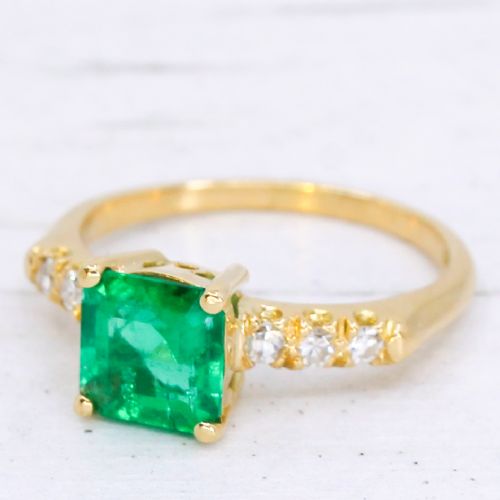
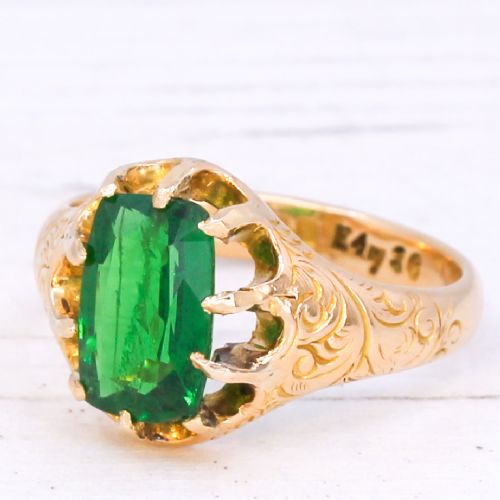
A green gemstone solitaire ring focuses attention on a single green stone set within precious metal, spanning periods from the Edwardian era through Art Deco and Mid-Century designs. These pieces showcase a variety of forms, from clean geometric cuts to rounded cabochons held securely in precious settings.
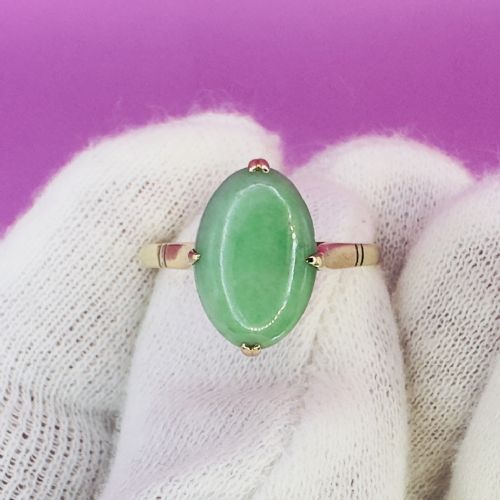
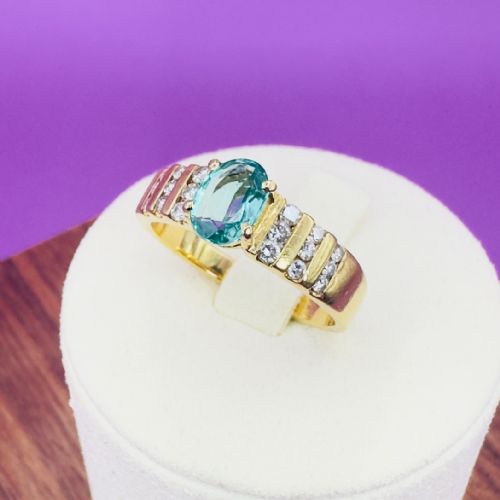
The green stones encountered in these rings range from emerald and tsavorite garnet to jade, bloodstone, chalcedony, tourmaline, and green quartz variants. Most examples on this page date from the early twentieth century up to the 1960s, reflecting changing aesthetic preferences across several decades.
Materials and construction methods
Goldsmiths utilised varying purities of yellow gold, white gold, and platinum to mount each green gemstone, pairing them occasionally with small accent diamonds. Metalwork styles shifted from delicate Edwardian filigree and scrolling to the bold, structured geometry typical of the Art Deco period.
Stones are shaped using traditional lapidary techniques, producing faceted cuts that maximise brilliance or smooth cabochon surfaces that emphasise natural depth and colour. Settings rely on secure claws or bezel wraps to hold stones such as jade, emerald, and tsavorite firmly in place.
Green Gemstone Solitaire Ring Retail Price Guide 2026
Typical asking prices for green gemstone solitaire ring among the pieces listed under this phrase on Sellingantiques today, from the lower quarter to the upper quarter. They describe what is for sale here now, not the wider market.
Bloodstone brings a dash of earthy drama with its deep green body peppered by natural red jasper spots.
Distinguishing quality in older rings
Quality rests upon the natural colour saturation, clarity, and visual weight of the central green stone, alongside the precision of its cut or polish. Finer examples display vivid, even pigmentation and minimal natural inclusions that might otherwise interrupt the passage of light through the gem.
The integrity and craftsmanship of the metal mounting further define the piece, observing how cleanly the prongs or bezels are finished and how well the band preserves its original gauge. A well-preserved setting protects the gemstone while maintaining the distinct stylistic hallmarks of its manufacturing period.
The Green Gemstone Solitaire Ring Glossary
- Solitaire
- A ring design featuring a single prominent gemstone mounted centrally on the band. This setting draws the eye entirely to the qualities of the main stone.
- Cabochon
- A gemstone shaped and polished with a smooth, rounded top rather than flat facets. This style is frequently used for opaque or translucent stones like jade and bloodstone.
- Tsavorite garnet
- A vibrant green grossular garnet variety known for high brilliance and rich colour saturation. It provides a durable alternative to emerald in antique jewellery.
- Columbian emerald
- An emerald originating from Colombia, historically celebrated for a particularly intense and warm green hue. These stones often command attention in twentieth-century pieces.
Green Gemstone Solitaire Ring: Frequently Asked Questions
How do I care for my ring?
Clean your ring gently using warm soapy water and a soft brush, avoiding harsh chemical dips that can damage softer stones like jade or emerald.
Store the piece separately in a fabric-lined box to prevent harder gems from scratching the metal or the central green stone.
Can I wear this daily?
Daily wear is entirely possible, though harder stones like tsavorite and diamond resist scratching better than softer materials such as chalcedony or emerald.
Take the ring off during heavy manual work or gardening to protect both the delicate prongs and the central gemstone from impact.
What is a cluster ring?
A cluster ring arranges a central gemstone surrounded by a tight formation of smaller accent stones, usually diamonds, to create a larger visual presence.
This arrangement differs from a solitaire by multiplying the points of light and altering the overall silhouette on the finger.