







Green Garden Watercolour Artwork
Green garden watercolour artwork brings domestic greenery and pastoral planting inside through delicate pigments on paper framed behind glass.
Green Garden Watercolour Artwork
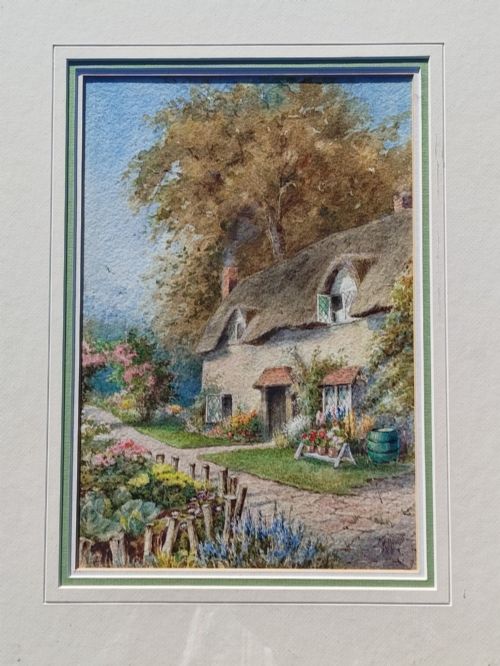
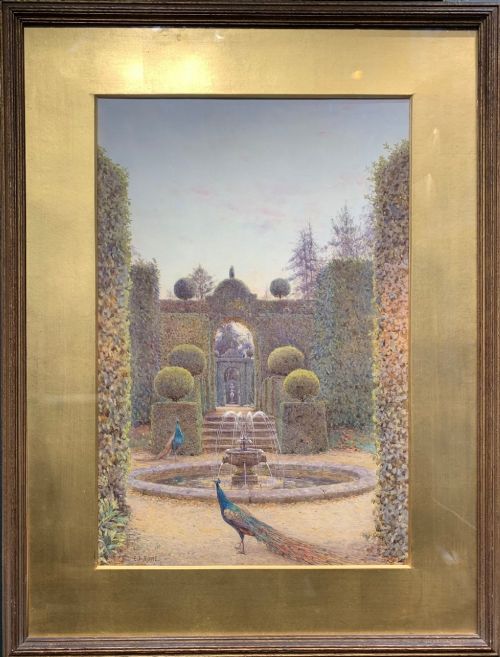
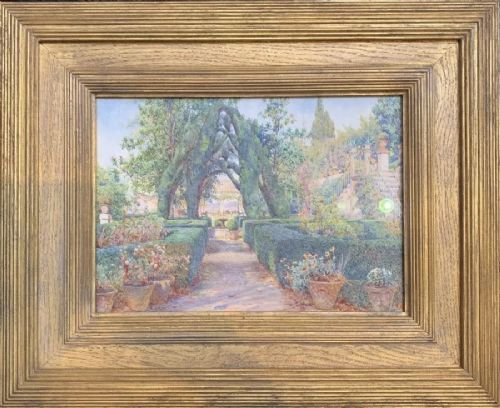
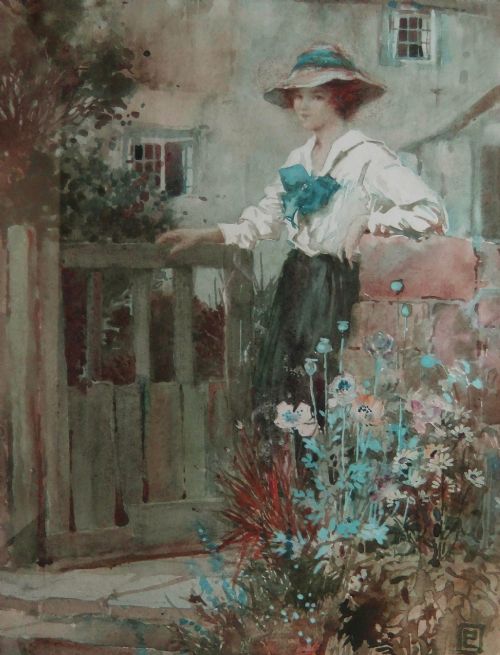
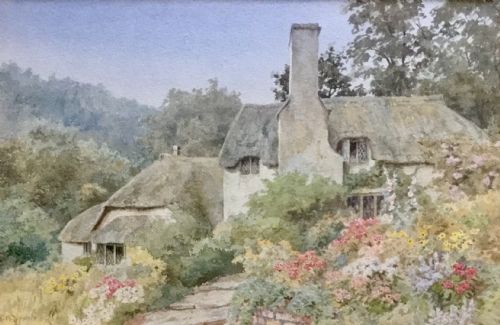
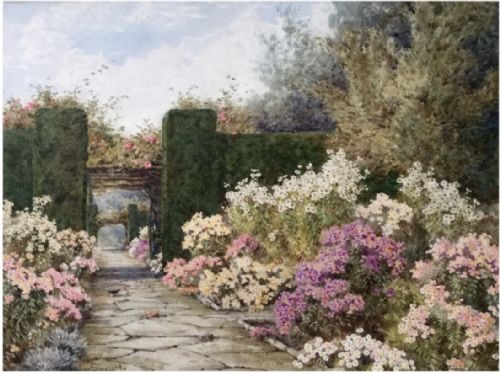
A green garden watercolour artwork captures intimate pastoral scenes, cottage gates, and walled flower beds across the late Victorian, Edwardian, and interwar periods. These framed paintings reflect a sustained British fascination with cultivated outdoor spaces, country houses, and rural idylls.
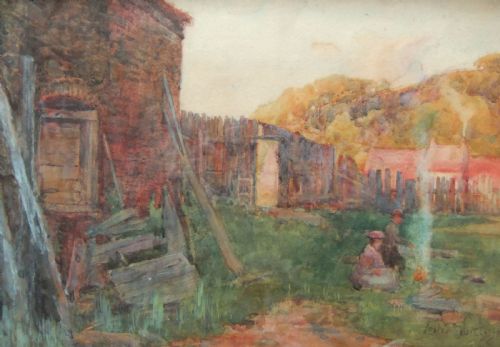
The pieces on this page lean heavily towards the early twentieth century and the Edwardian era, alongside Victorian examples. Collectors encounter subjects ranging from Yorkshire cottage gardens and Surrey villages to sunlit paths populated by children, hens, or pets.
The primary vehicle for these compositions is watercolour paint on paper, often protected beneath glass within a traditional wooden frame. They function domestically as quiet windows onto seasonal flora, herbaceous borders, and domestic horticulture.
Materials and technique
Artists deployed watercolour pigment mixed with water upon prepared paper sheets to build translucent washes and precise botanical details. Some compositions incorporated bodycolour or touches of gold leaf to accentuate highlights on foliage and architecture.
Finished sheets were secured behind protective glass and housed within wooden frames to safeguard the delicate paint surface from moisture and atmospheric degradation over the decades.
Green Garden Watercolour Artwork Retail Price Guide 2026
Typical asking prices for green garden watercolour artwork among the pieces listed under this phrase on Sellingantiques today, from the lower quarter to the upper quarter. They describe what is for sale here now, not the wider market.
The listings feature works executed across multiple decades, spanning from the Victorian era into the nineteen-forties.
Markers of quality
Quality rests upon the artist's command of light, botanical precision, and atmospheric depth within the garden setting. Superior examples achieve a convincing balance between loose impressionistic foliage and structured architectural elements like stone walls, thatched roofs, and timber gates.
The handling of pigment density and colour retention also determines standing. Works that retain their original vibrancy without excessive fading demonstrate careful historical preservation away from direct sunlight.
Ernest Arthur Rowe·Percy Lancaster·Harry Wanless·Arthur Hopkins·Theresa Stannard·Owen Bowen·Lilian Stannard·David Woodlock·John Abernethy Lynas-Gray·Thomas Nicholson Tyndale·Arthur Claude Strachan·Lester Sutcliffe·Henry John Sylvester Stannard·Benjamin D. Sigmund·Beatrice Parsons·George Frederick Nicholls·Minnie Smythe
The Green Garden Watercolour Artwork Glossary
- Watercolour pigment
- Finely ground colour particles suspended in a water-soluble binder, applied in washes to paper.
- Bodycolour
- Watercolour paint mixed with a white pigment to make it opaque, used for highlights and solid areas.
- Edwardian pastoral
- An artistic style celebrating rural peace, manicured lawns, and traditional cottage gardens during the early twentieth century.
- Framed artwork
- A picture enclosed within a protective wooden border and glass pane for display and preservation.
Green Garden Watercolour Artwork: Frequently Asked Questions
What periods do these paintings span?
The works originate largely from the late nineteenth century through to the interwar decades of the twentieth century.
This encompasses Victorian, Edwardian, and British Impressionist movements.
How should I hang watercolour art?
Keep watercolours away from direct sunlight to prevent the pigments from fading over time.
Display them on interior walls where temperature and humidity remain stable.
Are these paintings original works?
The listings feature hand-painted original watercolours on paper rather than modern mass-produced prints.
Many bear the signature of the artist or carry contemporary attribution.
What subjects appear most often?
Cottage gardens, walled flower beds, herbaceous borders, and rural pathways dominate the compositions.
Human figures, domestic pets, and traditional houses frequently anchor the landscape.