


Green Dragon Dish
These green dragon dish items unite porcelain and enamel works carrying ancient motifs across diverse centuries.
Green Dragon Dish
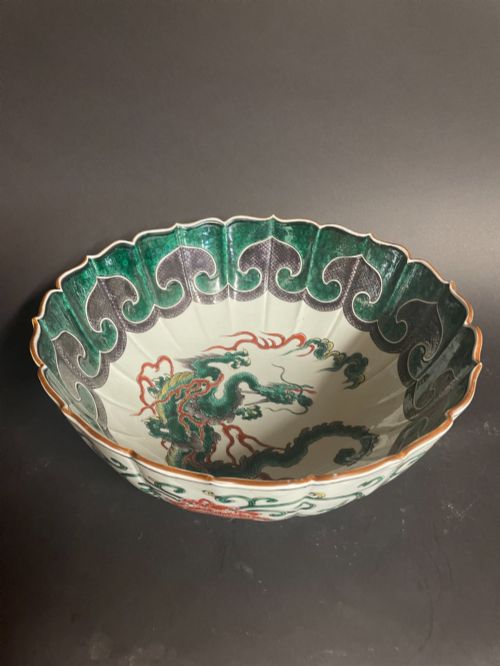
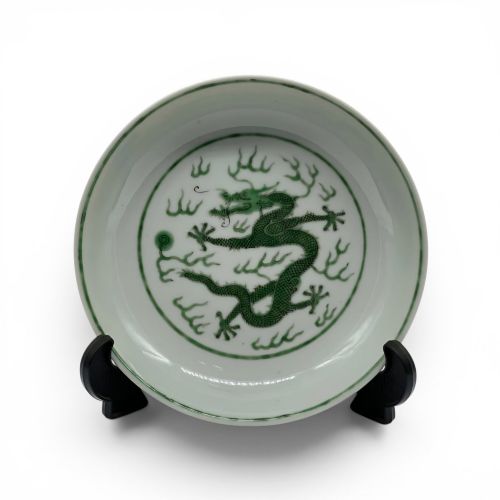
A green dragon dish is a decorative vessel featuring oriental or imperial dragon motifs rendered in vibrant green tones upon ceramic, porcelain or enamel surfaces. When you search for this phrase, you encounter diverse forms ranging from English bone china plates to Japanese chargers and Chinese bowls.
The pieces appearing on this page span several distinct historical eras, including Georgian, Regency, 19th Century, and 1920s periods. Forms vary between decorative bowls, chargers, cabinet plates, and dishes, showing both European interpretations of Asian design and genuine Asian craftsmanship.
Materials and construction
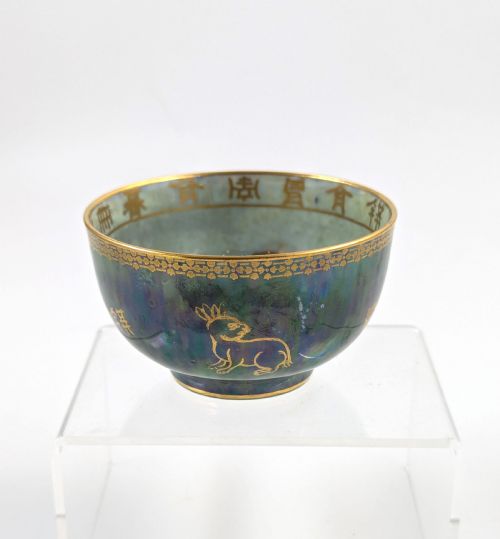
These pieces utilise porcelain, bone china, and copper foundations decorated with enamel, lustre glaze, and gold leaf. Many items incorporate intricate surface treatments such as vitreous enamel and brass wire cloisonné to delineate the dragon motifs.
Makers combine traditional ceramic throwing or metal shaping with hand-painted enamelling and lustring techniques. Firing processes fix the metallic oxides and lustres to the ceramic or metallic body to achieve the characteristic green coloration.
Quality variations
Quality rests upon the precision of the hand-painted enamelling, the complexity of the dragon design, and the clarity of the glaze or lustre finish. Pieces executed with rich gold leaf details and flawless cloisonné wirework stand apart from simpler commercial output.
The reputation of the maker and the adherence to traditional styles, such as Qing Dynasty style or Japanese Meiji period aesthetics, also distinguish finer examples from standard decorative ware.
Barr Flight And Barr·Daisy Makeig Jones·Wedgwood·Worcester
The Green Dragon Dish Glossary
- Cloisonne
- Enamelwork in which enamel is applied to compartments created by soldering wire onto a metal base. This technique creates defined cells of colour across chargers and bowls.
- Lustre Glaze
- A metallic glaze that imparts an iridescent sheen to ceramic surfaces. This finish catches the light and adds depth to the green dragon design.
- Bone China
- A type of soft-paste porcelain containing bone ash. It provides a durable and translucent white body for English plates and bowls.
- Charger
- A large decorative plate or dish intended for display rather than service. These items often showcase the most elaborate dragon motifs.
- Doucai
- A Chinese porcelain technique involving underglaze blue outlines filled with overglaze enamels. This method produces vibrant multi-coloured patterns.
Green Dragon Dish: Frequently Asked Questions
How do I date a green dragon dish?
Dating relies upon factory marks, stylistic influences, and material composition. Examining the base of the piece often reveals maker stamps or period characteristics.
Items from the Georgian and Regency eras show distinct English ceramic bodies, whereas pieces from the late nineteenth century reflect Japanese Meiji period or Qing dynasty styles.
Are these dishes meant for food?
Most pieces function primarily as decorative objects for display on tables, walls, or in cabinets. Chargers and cabinet plates are generally too delicate or historically significant for daily dining.
Using them for serving risks damaging fragile lustres, enamels, and gold leaf applications accumulated over the centuries.
How should I clean my dish?
Gentle dusting with a soft, dry cloth is the safest method for removing everyday particles. Avoid harsh chemical cleaners, abrasive sponges, and immersion in water.
Water and harsh cleaners can degrade delicate gold leaf, enamel surfaces, and lustre glazes found on nineteenth and twentieth-century pieces.
What is the difference between lustre and enamel?
Enamel consists of vitrified glass paste applied to metal or ceramic and fired to create opaque or translucent colours. It forms the solid green body of many dragon motifs.
Lustre glaze incorporates thin metallic films that produce an iridescent, reflective sheen across the ceramic surface, creating a different optical effect.