

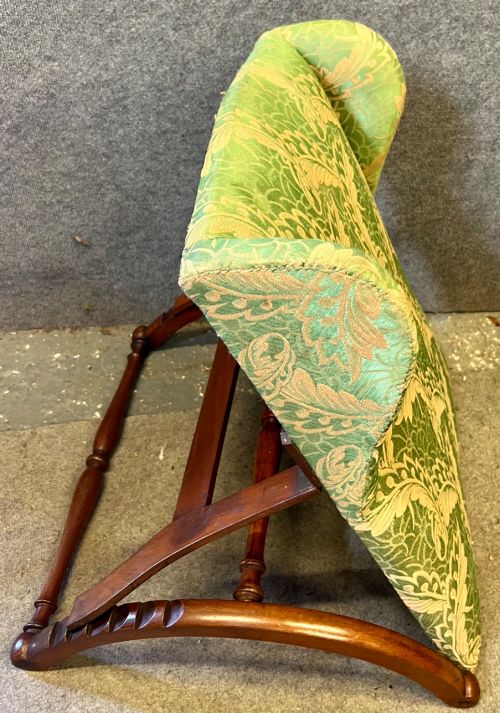


Green Damask Chair
Green damask chair designs bring rich texture and period seating together, offering structured support with patterned upholstery.
Green Damask Chair
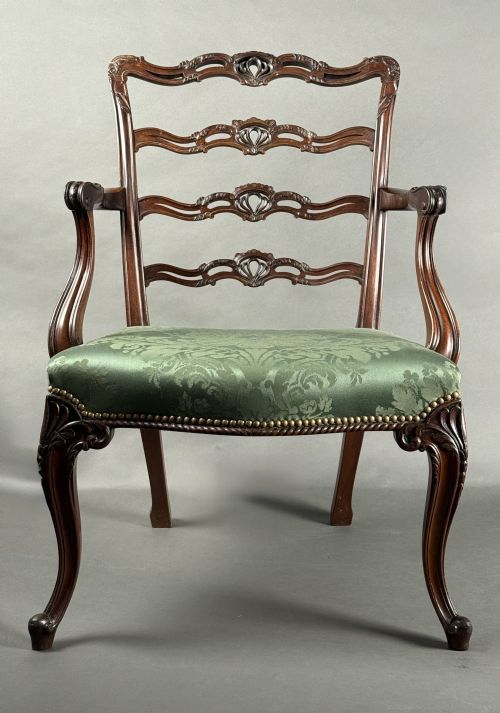
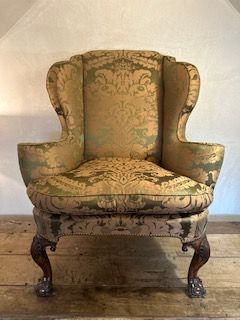
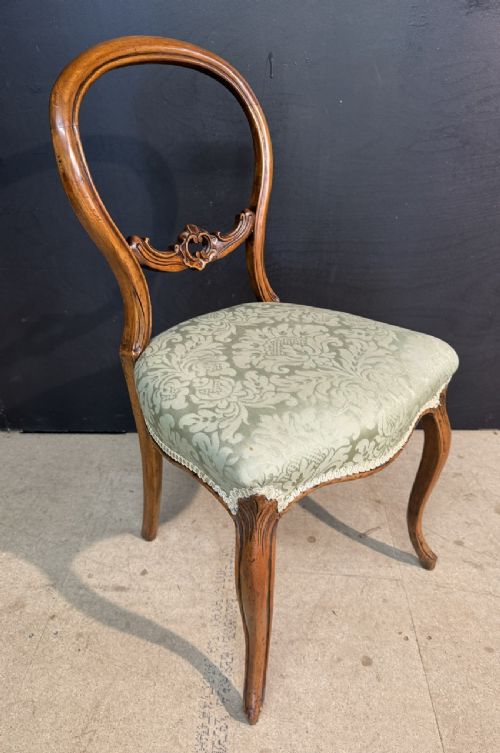
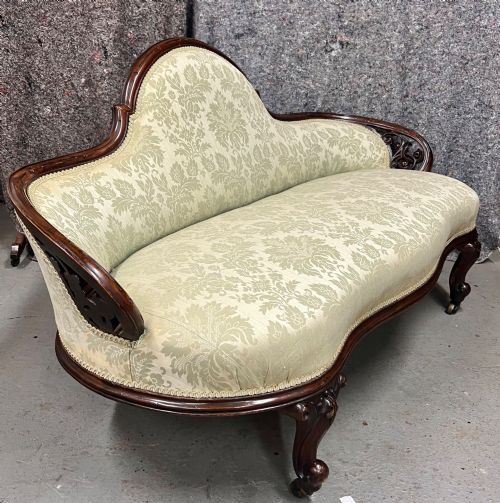
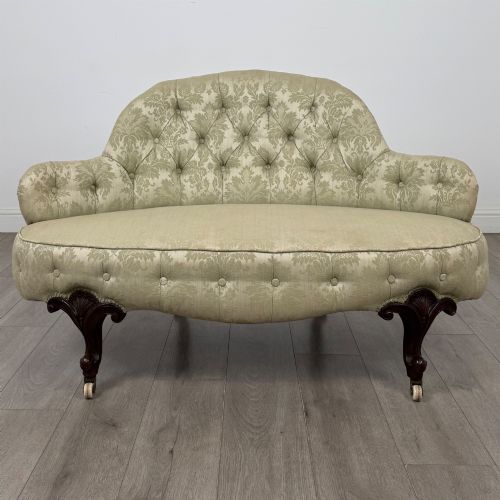
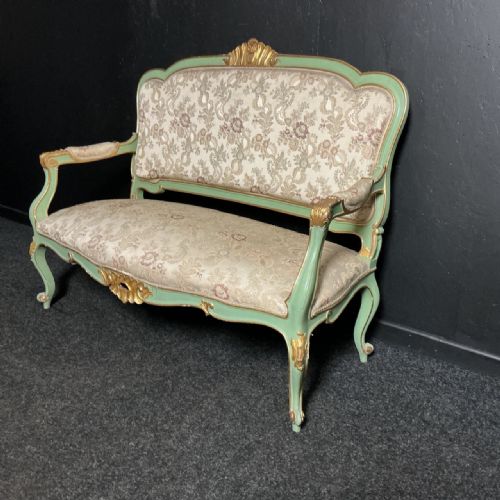
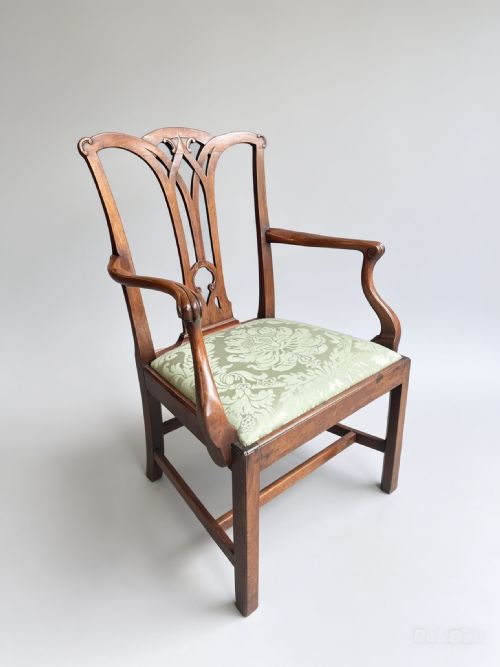
A green damask chair brings together classic seating frames and woven patterned fabric, appearing across 18th century, Victorian, Edwardian, and Georgian periods. Buyers encounter various forms on this page, including wing armchairs, nursing chairs, side chairs, and library seats.
The construction spans multiple styles such as George II, Regency, Chippendale, and Rococo Revival. These seating pieces function well in traditional reception rooms, studies, and drawing rooms where historical character is desired.
Construction and materials
Frames are constructed from hardwoods such as mahogany, walnut, rosewood, and giltwood, often featuring carved cabriole legs, brass details, or decorated surfaces. Structural joinery uses traditional methods suited to each period.
Upholstery relies on damask fabric applied over interior padding and support systems, sometimes incorporating button backing, adjustable backrests, or wing panels to enhance comfort and appearance.
Listings feature frames in mahogany, walnut, rosewood, and giltwood, spanning 18th century, Victorian, and Edwardian periods.
Assessing craftsmanship
Quality rests in the crispness of the timber carving, the structural integrity of the frame joints, and the precision with which the damask fabric is fitted. Finer examples show careful attention to proportions and period details.
The choice of primary timber, such as figured mahogany or walnut, and the richness of the textile weave distinguish higher grade pieces from simpler utility seating.
Jacob Desmalter·Howard and Sons
The Green Damask Chair Glossary
- Damask
- A reversible figured fabric with patterns formed by contrasting warp and weft threads. It provides a distinct tactile surface on period upholstery.
- Cabriole leg
- A furniture leg that curves out and then in, resembling an animal's leg. This form appears frequently on 18th century and revival seating.
- Wing armchair
- An upholstered seat with side panels designed to shield the occupant from drafts. It remains a prominent form in traditional fireside seating.
- Giltwood
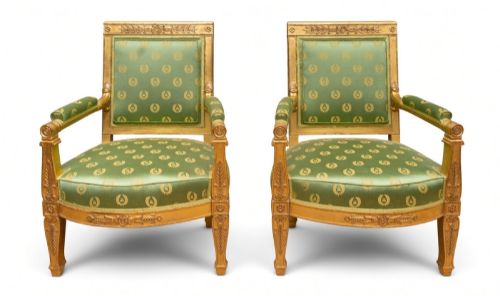
- Timber treated with gold leaf or gilt finish. It creates a decorative, reflective surface on formal salon chairs.
- Button back
- An upholstery method where depressions are created by stitching through the padding to secure buttons. This technique adds texture and holds internal stuffing in place.
Green Damask Chair: Frequently Asked Questions
What periods do these chairs represent?
The selection spans the 18th century, the Georgian era, the Victorian period, and the Edwardian years. Revival styles also appear.
Craftsmanship reflects the design conventions of each respective time.
How do I identify a wing armchair?
Wing armchairs feature extended side panels attached to the backrest. These panels originally blocked draughts around firesides.
The upholstered body sits on wooden legs, often matching period styles like George II.
What timbers are used in the frames?
Frames employ hardwoods including mahogany, walnut, rosewood, and giltwood. Some pieces include brass elements or painted finishes.
These materials determine the weight and structural style of each seat.
Where should I place a salon chair?
Salon chairs suit reception spaces, bedrooms, or drawing rooms where formal seating is required. Their lighter frames make them easy to reposition.
They pair well with traditional interior schemes and period desks.