
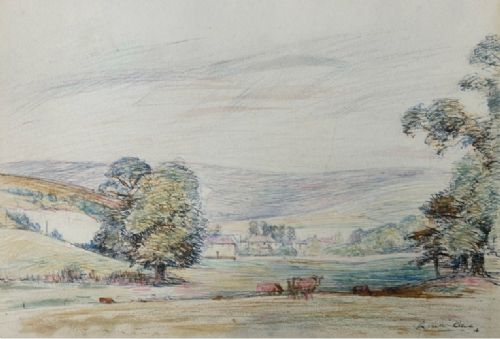


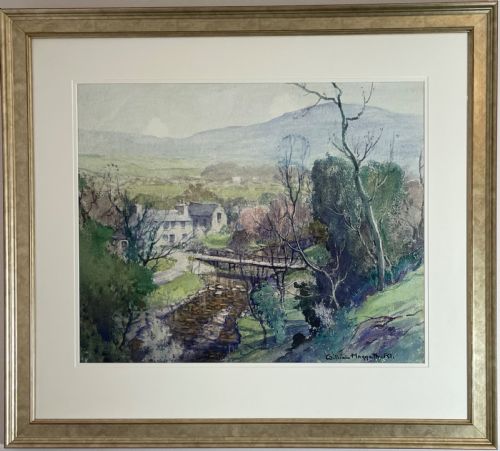


Green Countryside Watercolour
These pieces gather the quiet light and open pastures of green countryside watercolour paintings into framed sheets of pigment on paper.
Green Countryside Watercolour
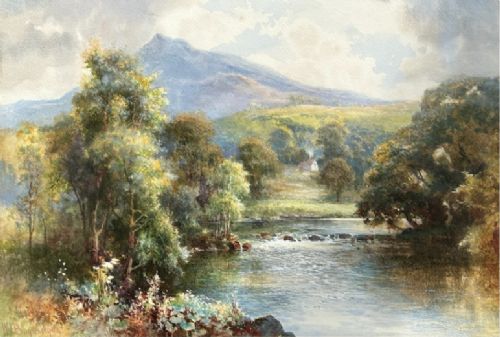
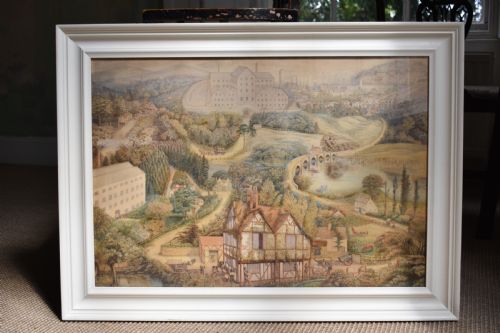
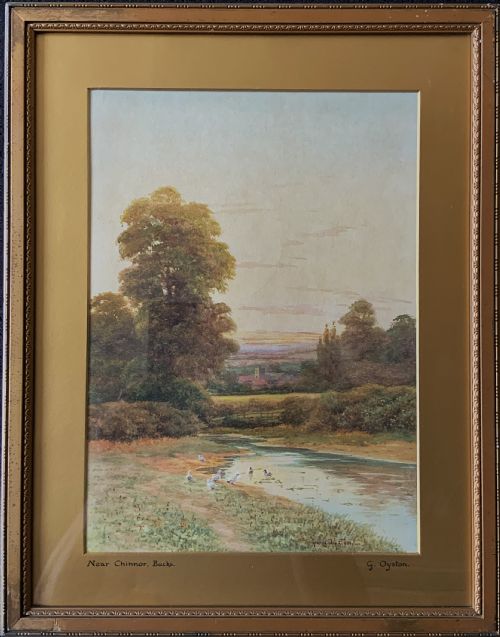
A green countryside watercolour captures pastoral scenes, riverscapes and rural life across Britain, originating primarily from the Victorian era through to the early decades of the twentieth century. These works document specific local views, from Yorkshire valleys and Welsh rivers to Sussex mills and Surrey cottages, executed by regional painters who recorded the changing seasons of the countryside.
Most examples encountered on this page belong to the nineteenth and early twentieth centuries, encompassing periods such as the Edwardian era and late Victorian years. The subjects lean heavily toward cows in fields, thatched cottages, haymaking and rustic paths, reflecting a sustained appetite for idyllic rural tranquility.
How They Were Made
Artists worked primarily with water-soluble pigment applied to paper supports, often building up translucent washes to render skies and distant hills alongside sharper details in the foreground foliage. Many of these works were subsequently framed behind glass, occasionally incorporating gold leaf within the frame moulding to accent the mount.
The physical construction relies on traditional paper preparation and careful handling of pigment density, allowing light to reflect from the white of the paper through thin layers of green and brown watercolour paint. Painters utilised graphite underdrawing in certain instances to map out cottage timbers or livestock before applying the fluid colour.
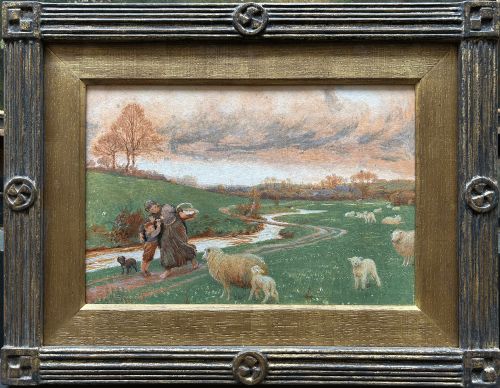
Several sheep and cows appear multiple times across these pastures, painted while waiting patiently in nineteenth-century fields.
What Varies in Quality
Quality rests upon the artist's command of atmospheric perspective and the confident handling of brushwork in complex elements such as foliage, water and livestock. Superior examples demonstrate a careful balance of light and shade that gives depth to valleys and hills, whereas lesser works rely on stiff repetition and muddy washes.
The fidelity of the paper support and the preservation of pigment vibrancy also distinguish finer pieces, as exposure to light over decades can dull delicate greens and blues. Well-executed composition directs the eye naturally through the rural scene, separating masterly topographical observation from routine amateur production.
William Joseph Boyes·Frederick Walker·George Oyston·Russell Sidney Reeves·Edgar Woollatt·Charles Gregory·Cuthbert Crossley·William Hoggatt·Thomas Hunn·James Orrock·Henry Bailey·Harold Lawes·Sidney James Beer·John Edward Bale·Bernard Walter Evans·Harry Sylvester Stannard·Will Anderson·Robert Hollands Walker·John Hobson Nicholson·Alfred W Parsons·John Sowden·William Bradley·Harold Swanwick·Henry John Kinnaird·Amos Green
The Green Countryside Watercolour Glossary
- Watercolour
- A paint consisting of pigment suspended in a water-based solution, applied to paper to create translucent washes of colour.
- Pastoral
- A style of art that idealizes rural life, typically depicting shepherds, livestock, cottages and rolling countryside.
- Topographical
- Pertaining to the accurate depiction of specific places, buildings or local landscapes rather than imaginary scenes.
- Wash
- A thin, fluid layer of transparent watercolour pigment spread evenly across the paper to represent skies, water or distant fields.
- Mount
- A piece of cardboard or heavy paper placed inside the frame around the watercolour to separate the painting from the glass.
Green Countryside Watercolour: Frequently Asked Questions
What subjects appear in these watercolours?
The compositions record rural British life, featuring thatched cottages, riverscapes, livestock in pastures and figures working the land.
Scenes frequently capture specific regional views across Yorkshire, Wales, Sussex and other English counties during the nineteenth and early twentieth centuries.
How should I hang these paintings?
Watercolour pigments are sensitive to direct sunlight, so these framed pieces require placement away from harsh windows to prevent fading.
Keeping them in rooms with stable humidity protects both the paper support and the antique frame moulding from moisture damage.
How do I date an old watercolour?
Dating relies on signatures, artist working dates, framing styles and paper characteristics recorded on the reverse or within the mount.
Victorian and Edwardian works often display specific handwriting, framing materials and pigment mixtures characteristic of those decades.
Are these works original paintings?
The listings comprise original hand-painted works created directly on paper by individual artists rather than mechanical reproductions.
Each sheet bears the unique brushstrokes and pigment variations of the person who painted the landscape.