


Green Canal Oil Painting
These green canal oil painting works capture tranquil water views and busy waterways across European and British scenes from the nineteenth and twentieth centuries.
Green Canal Oil Painting
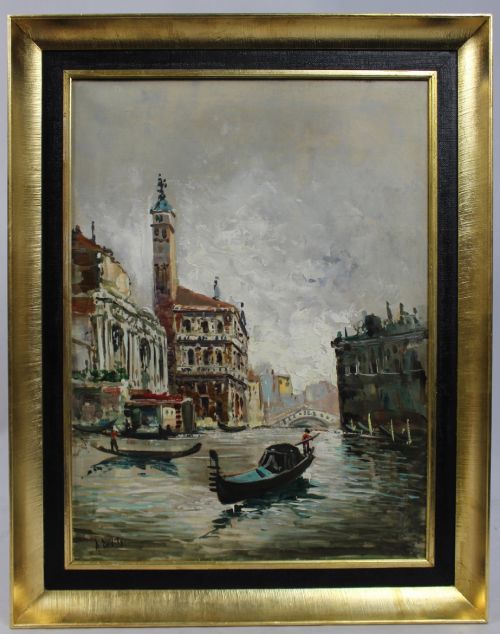
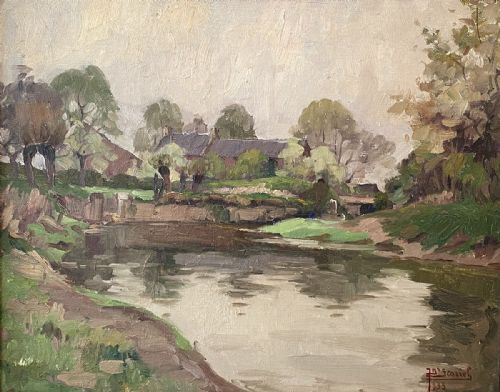
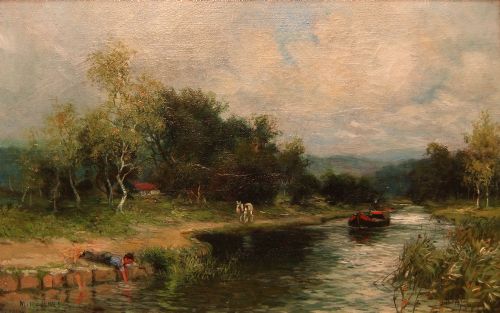
A green canal oil painting depicts waterways, riverscapes, and locks using oil paint on canvas, often housed in wood frames with gilt and gesso. These works range from nineteenth-century Victorian Realism to mid-century Impressionist styles.
Most examples date from the twentieth century, including pieces from the nineteen-tens, nineteen-thirties, and mid-century period. Viewers encounter Dutch, Flemish, and Italian schools alongside British regional river landscapes.
Materials and construction
Artists apply oil paint directly onto canvas supports, building up brushwork that defines the water, barges, and surrounding landscape. Pigments capture the characteristic green tones of stagnant or slow-moving canal water.
Frames combine wood foundations with surface decoration in gilt and gesso, protecting the canvas edges and providing a traditional border for the composition.
Listings feature canvases spanning the nineteenth century, nineteen hundred, nineteen-ten, nineteen-thirty, nineteen-forty, and nineteen-fifty, using oil paint on canvas.
Assessing quality in the range
Quality separates through the confidence of the brushwork and the clarity of the atmosphere created by the artist. Stronger works balance the treatment of the water with the architectural or natural details of the banks.
The integration of the painting with its frame matters, as period frames featuring original gilt and gesso ornamentation enhance the overall presence of the canvas.
Antonio DeVity·William Greaves·Maud Raphael Jones
The Green Canal Oil Painting Glossary
- Oil paint
- A slow-drying paint made with pigments suspended in a drying oil, typically linseed. This medium allows artists to blend tones and build rich surface textures.
- Canvas
- A heavy woven fabric used as a surface support for oil paintings. It is typically stretched across a wooden frame before painting.
- Gesso
- A paint mixture consisting of a neutral binder mixed with chalk, gypsum, or pigment. It is applied to wood frames to create a smooth surface for gilding.
- Impressionism
- A nineteenth-century art movement characterised by relatively small, thin yet visible brush strokes and an emphasis on accurate depiction of light.
Green Canal Oil Painting: Frequently Asked Questions
What periods do these paintings date from?
The available pieces span from the nineteenth century through the mid-twentieth century, including works from nineteen hundred, nineteen-ten, nineteen-thirty, and nineteen-fifty.
This broad timeline encompasses Victorian Realism alongside various phases of Impressionism and Post-Impressionism.
Where were these canal scenes painted?
The subjects include Venetian canals, Dutch waterways, Flemish riverscapes, and French canals, alongside British locations such as Leeds and Marple.
Artists from different European schools travelled to paint these working waterways and tranquil locks.
How should I display an oil painting?
Display the canvas out of direct sunlight to protect the oil pigments and the underlying canvas from fading or drying out over time.
Ensure the room maintains stable humidity levels to preserve both the canvas support and the wooden gilt and gesso frame.
What materials make up these works?
Every piece uses oil paint applied to a canvas support, housed within a wooden frame.
Many of these frames feature traditional gilt and gesso surfaces that complement the period of the artwork.