

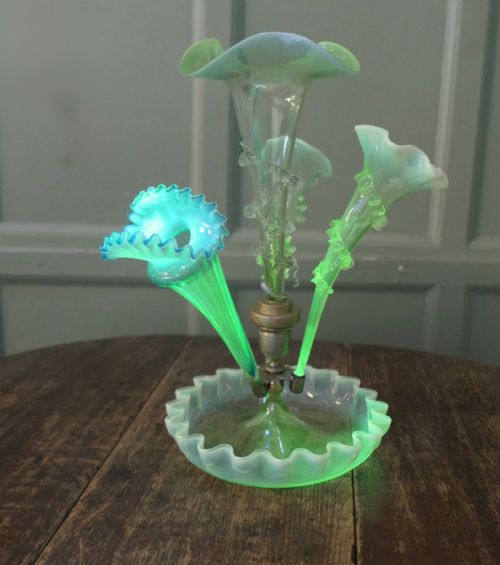


Green Blown Glass Vase
These green blown glass vase pieces range from Georgian utility to mid-century artistry, offering rich colour and tactile depth that collectors prize.
Green Blown Glass Vase
A green blown glass vase brings together centuries of molten manipulation, from Georgian utility vessels to mid-century art glass. When searching for a green blown glass vase, buyers encounter forms ranging from heavy French demijohns and pickling jars to delicate Victorian epergnes and Art Deco creations.
The selection on this page draws heavily from the nineteenth and twentieth centuries, alongside eighteenth-century specimens. Makers across English, French, Bohemian, and Venetian traditions shaped these vessels by hand, creating everything from simple beakers to complex multi-trumpet table ornaments.
Buyers will find that many pieces showcase specific regional techniques, such as the swirling patterns of Scottish glassworks or the vibrant hues of uranium formulations. Each green blown glass vase reflects the domestic or decorative demands of its period, whether designed for grand floral displays or practical storage.
Methods and materials in production
Makers formed a green blown glass vase by gathering molten metal on a blowpipe and inflating it manually, often utilising optical moulds to create ribbed or patterned walls. Artisans added colour oxides to the batch, producing the characteristic emerald, olive, and uranium shades seen across these listings.
Further surface ornamentation required skilled manipulation, including hand-painting with enamel, direct engraving on the wheel, or incorporating shimmering aventurine inclusions within the hot metal. Workers shaped handles, applied trailing, or combined distinct glass layers while the material remained pliable.
Green Blown Glass Vase Retail Price Guide 2026
Typical asking prices for green blown glass vase among the pieces listed under this phrase on Sellingantiques today, from the lower quarter to the upper quarter. They describe what is for sale here now, not the wider market.
Object forms on this page include traditional vases, multi-trumpet epergnes, storage jars, heavy demijohns, goblets, and an Art Deco handbag vase.
Distinctions in craftsmanship and design
Superior quality in a green blown glass vase shows in the balance of the vessel, the uniform thickness of the walls, and the careful control of bubbles within the metal. Master blowers achieved clean pontil marks and graceful proportions that elevate functional items into sculptural objects.
Decoration also dictates standing, where finely executed hand-painted enamelling or complex inclusions like aventurine demonstrate superior workshop standards. Pieces bearing attribution to notable designers or established glasshouses command attention through their refined form and sophisticated colour saturation.
James Powell·Harry Powell·Stuart for Liberty·Vasart Glass·Monart·AVEM
The Green Blown Glass Vase Glossary
- Pontil mark
- The rough scar left on the base of a vessel where the punty rod was detached after blowing. It serves as a key indicator of hand-blown manufacture.
- Uranium glass
- Glass coloured with uranium oxide that glows a vivid green under ultraviolet light. This material gained widespread popularity during the Victorian and Edwardian eras.
- Aventurine
- A glass containing suspended reflective metallic particles, typically copper, which sparkle within the translucent body. Makers incorporated this technique into decorative art glass during the early twentieth century.
- Optical mould
- A tool used to impress a pattern of ribs or flutes into the molten glass before final inflation. This technique added structural rigidity and visual texture to the piece.
- Epergne
- A large table centrepiece featuring a central bowl with multiple detachable trumpets or vases for holding flowers and fruit. Victorian examples frequently utilised coloured and opalescent glass.
Green Blown Glass Vase: Frequently Asked Questions
How do I identify uranium green glass?
Uranium glass exhibits a distinct yellowish-green hue and emits a bright neon green glow when exposed to ultraviolet light. The oxide was added to the molten batch primarily during the nineteenth and early twentieth centuries.
Most pieces with this characteristic show a distinct transparency and vibrancy under normal daylight even before testing. It is a completely normal feature of many antique decorative items from the period.
What is a glass carboy used for?
A carboy or demijohn is a large, sturdy glass vessel originally designed for transporting and storing liquids such as wine or cider. Their robust, heavy-walled construction allowed them to withstand heavy commercial use.
Today, collectors and interior designers use these large glass containers as floor vases or decorative focal points in homes. Their simple, bulbous forms highlight the historical methods of free-blowing and mould-blowing.
How do I date antique blown glass?
Dating involves examining the pontil scar on the base, the style of the form, and the characteristics of the metal itself. Ground and polished pontils often suggest later nineteenth or twentieth-century production, while rougher snaps appear on earlier pieces.
Tool marks, wear patterns on the underside, and the specific chemical composition of the glass also offer clues to the era of manufacture. Comparing the object type to documented regional styles helps narrow down the decade.