

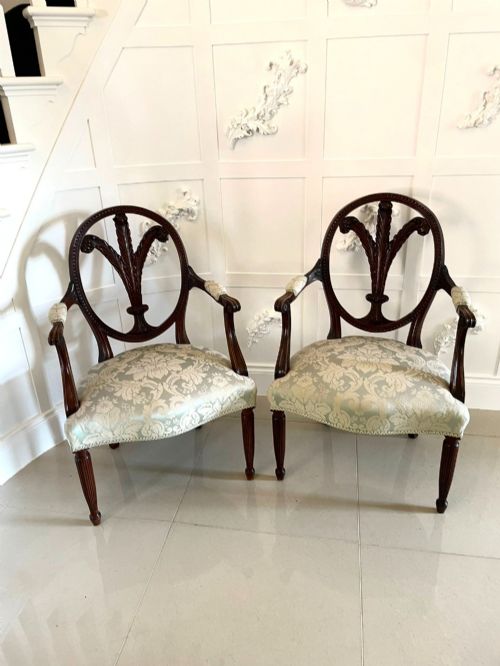
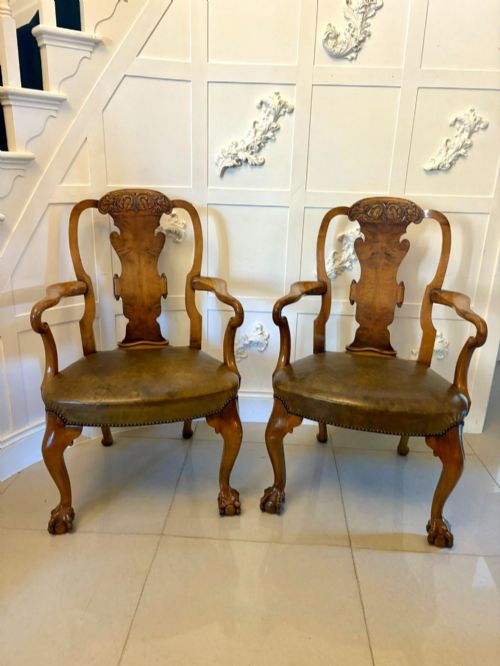
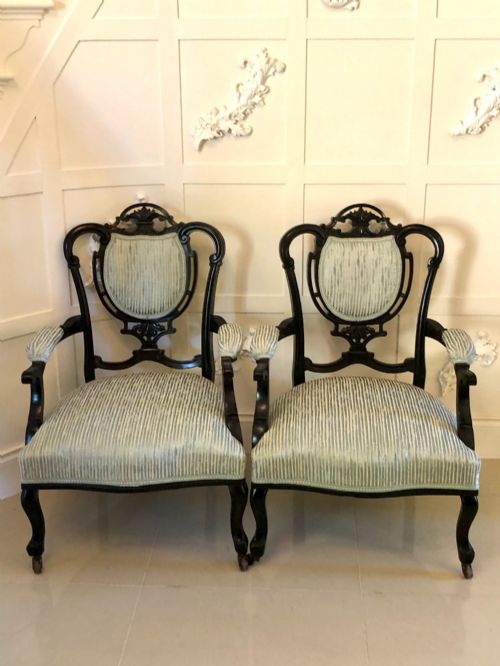
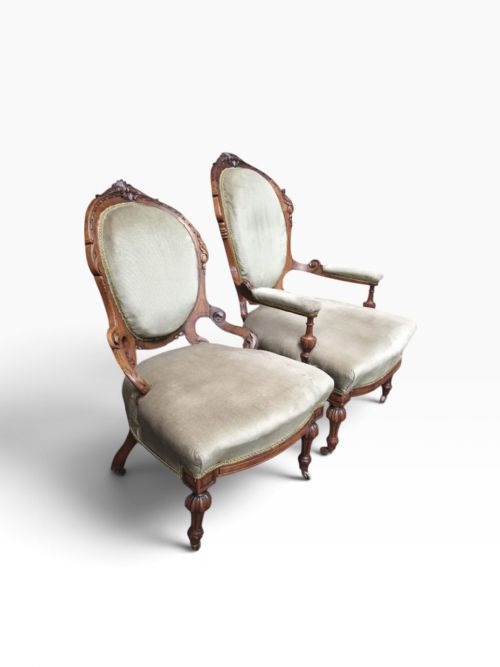
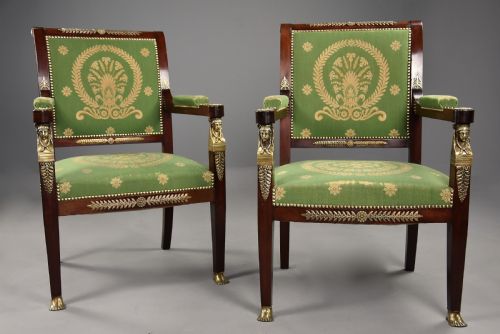


Green Armchair Pair
A green armchair pair brings matching symmetry and deep colour to a room, uniting functional seating with period presence.
Green Armchair Pair
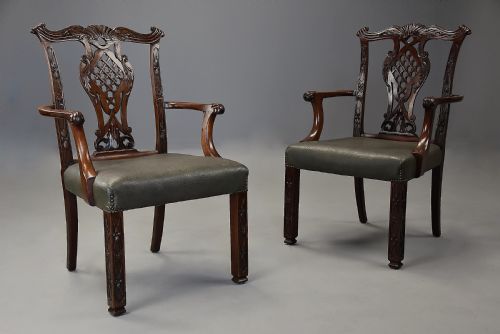
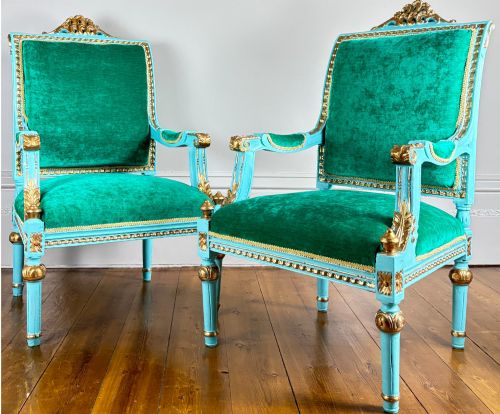
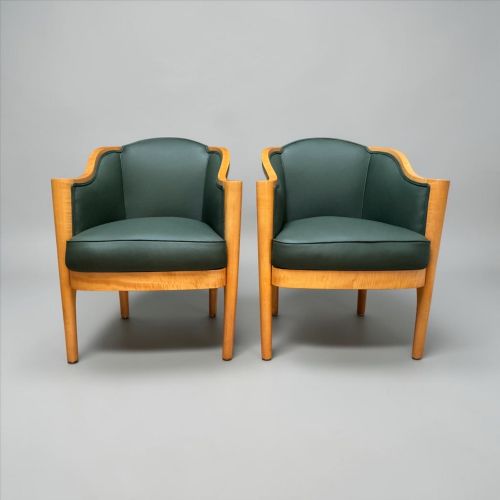
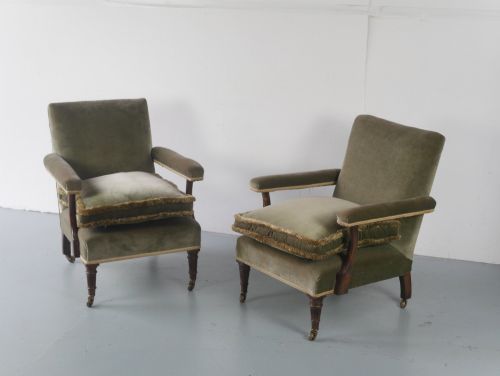
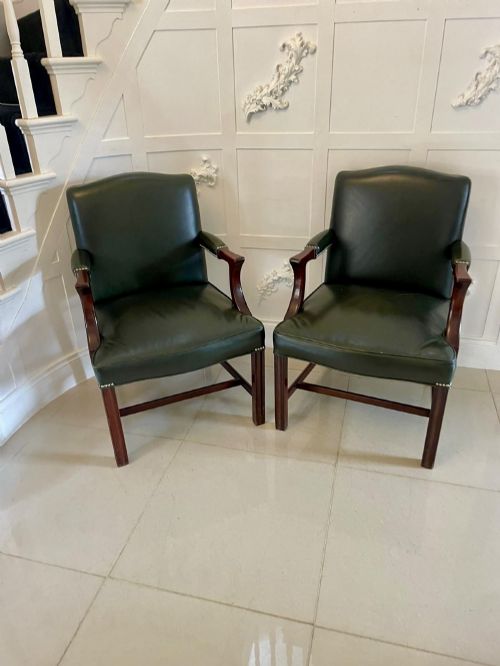
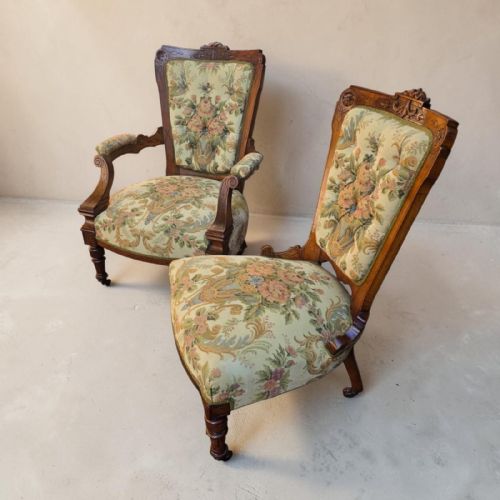
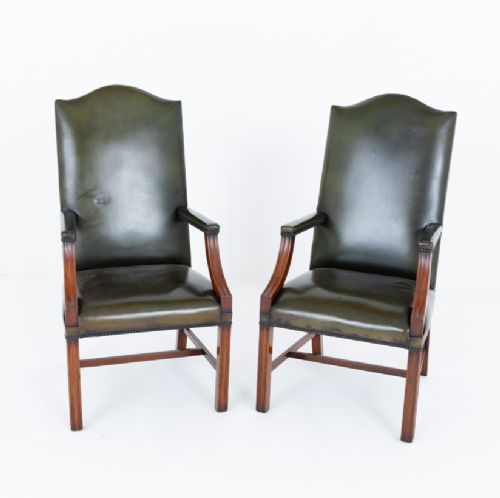
When you search for a green armchair pair, you encounter matched seating spanning the nineteenth century through the early twentieth century, with Victorian examples appearing most frequently. These pieces take various forms, from library and desk chairs to open armchairs and salon suites in mahogany, walnut, and oak.
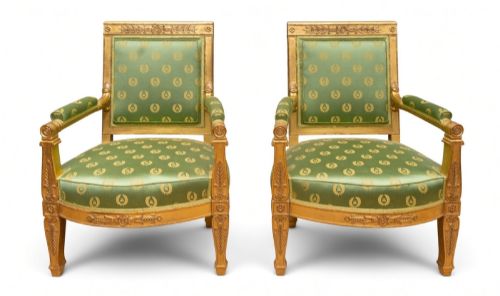
Makers and designers from English workshops and French ateliers shaped these seats in styles ranging from Georgian and Regency revivals to Art Deco. Buyers select them to anchor a study, library, or drawing room with twin seats that share a unified design and verdant upholstery.
Construction and materials
Cabinetmakers constructed the frames of these chairs using dense hardwoods such as mahogany, walnut, rosewood, and oak, often employing hand-carved details on the cabriole legs, arms, and crest rails. Joinery relied on traditional mortise and tenon techniques to ensure structural longevity.
Upholstery materials include supple leather, woven tapestry fabric, velvet, and needlepoint, secured over supportive springing or webbing. Giltwood, brass mounts, and black lacquer also appear on specific revival and continental pieces.
Green Armchair Pair Retail Price Guide 2026
Typical asking prices for green armchair pair among the pieces listed under this phrase on Sellingantiques today, from the lower quarter to the upper quarter. They describe what is for sale here now, not the wider market.
Styles range from Victorian and Edwardian to French Chateau, Regency, and Art Deco.
Evaluating quality
The distinction between standard and superior pieces rests on the crispness of the timber carving and the fidelity of the period style. Master cabinetmakers achieved fluid lines in walnut and mahogany that lesser workshops simply imitated with rigid proportions.
Original upholstery materials and period secondary woods elevate an example above later reconstructions. The weight of the timber and the balance of the proportions indicate the original maker's skill.
Maurice Adams·Howard and sons·Jacob-Desmalter·J. & T. Scott
The Green Armchair Pair Glossary
- Fauteuil
- An open-framed upholstered armchair originating in France, typically featuring exposed wooden arms and a carved frame. These chairs date across various eighteenth and nineteenth-century revival periods.
- Gainsborough chair
- A wide, open-armed armchair with a padded seat and back, designed in the mid-eighteenth century for writing desks. They frequently appear in mahogany with leather upholstery.
- Bergère
- An enclosed armchair with stuffed upholstery on the back and sides, often featuring exposed wooden framing. The style provides a deep, comfortable seat.
- Cabriole leg
- A furniture leg that curves out and then tapers inward, mimicking an animal's leg in motion. This form is common on eighteenth-century and Victorian revival seating.
- Needlepoint
- Hand-stitched canvas embroidery utilising wool or silk yarn to create intricate decorative patterns. It frequently covers the seats and backs of period armchairs.
Green Armchair Pair: Frequently Asked Questions
How do I style a green armchair pair?
Place the two chairs opposite a fireplace or flanking a central table to create a balanced focal point in a reception room. Their matching upholstery brings immediate symmetry to the interior layout.
Allow enough space around each chair for the arms and legs to remain visible, avoiding cramped arrangements that obscure the carved woodwork.
Were these chairs used at desks or in libraries?
Many examples function specifically as desk or library chairs, constructed with sturdy mahogany or walnut frames to support daily reading and writing. Others served in salons and drawing rooms for formal entertaining.
Library versions often feature durable leather or heavy tapestry fabric designed to withstand frequent use, while salon chairs favour lighter silks and needlepoint.
How can I tell Victorian from Georgian revival chairs?
Victorian pieces typically display heavier timber construction, deeper carving, and darker patination on woods like walnut and rosewood. Their forms often lean towards elaborate button-backed upholstery or heavy green man motifs.
Georgian revival pieces, produced later in the nineteenth and early twentieth centuries, emulate the lighter proportions, straight or cabriole legs, and understated elegance of the earlier eighteenth century.
What is the difference between a salon chair and an open armchair?
Salon chairs generally feature lighter frames and smaller proportions, designed for occasional seating and formal conversation rooms rather than heavy daily lounging. Their upholstery often highlights decorative fabrics like tapestry or silk.
Open armchairs provide wider seats and structural arm supports intended for sustained reading or working at a desk, utilising robust hardwoods and durable coverings.