




Grand Tour Marble Top
These grand tour marble top pieces bring neoclassical taste and mineral precision into your room.
Grand Tour Marble Top
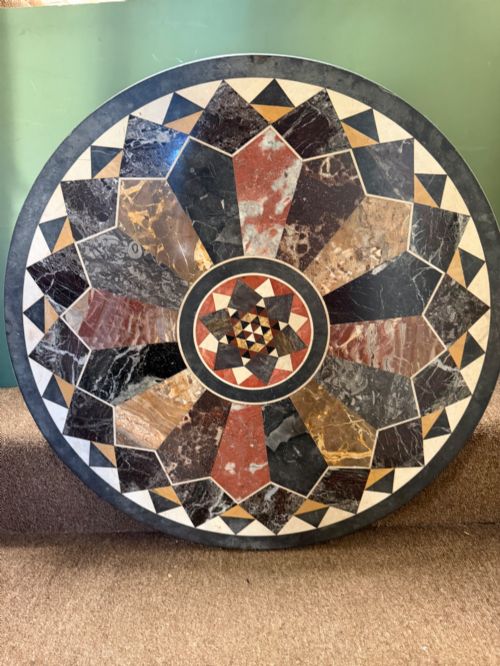
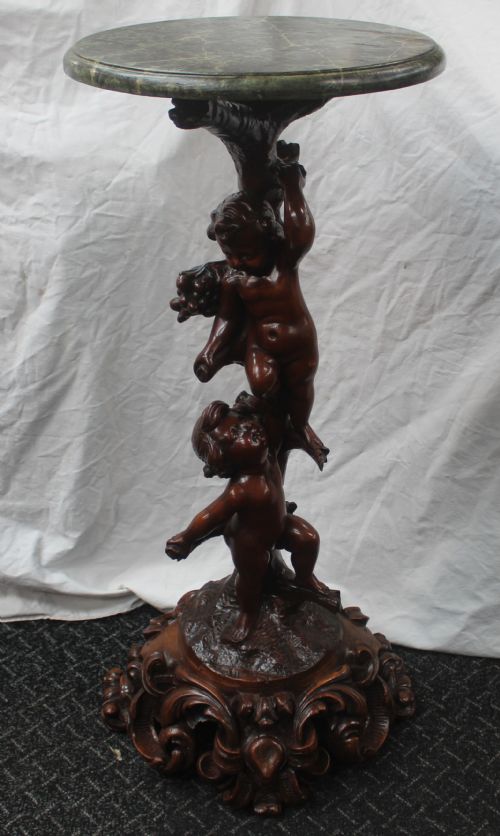
When you search for grand tour marble top items, you are looking at nineteenth century works created for travellers returning from Italy. These pieces take the form of occasional tables, centre tables, games tables, table tops, torcheres and paperweights.
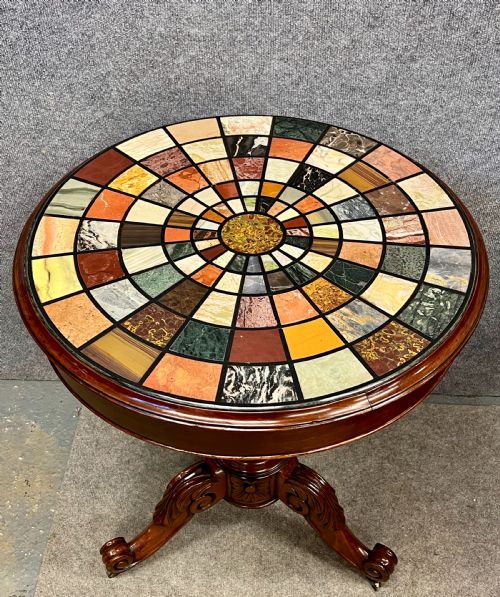
The version you are most likely to meet on this page is an occasional or centre table featuring a circular top. These surfaces display inlaid specimen marble, pietra dura birds or scagliola work.
Originating largely from nineteenth century workshops, these items combine Italian mineral craft with British and continental furniture forms. They range from small paperweights to substantial tables supported by giltwood bases.
How they were made
Makers utilised specimen marble, slate, Ashford black marble and scagliola to construct the decorative surfaces. These mineral segments were precisely cut and fitted together to form geometric patterns or pictorial bird motifs.
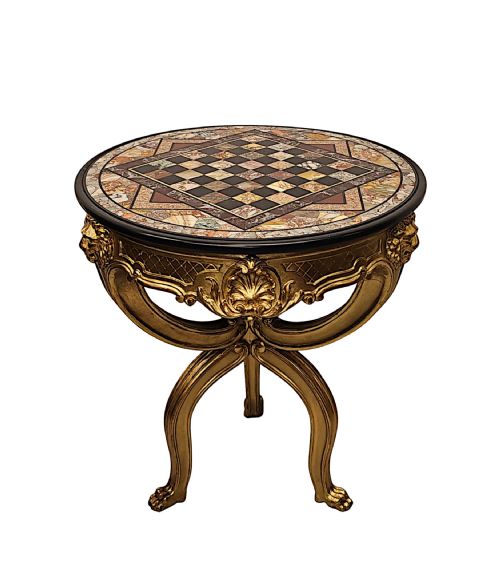
Support structures combine carved wood, giltwood, mahogany, satin birch and brass. Bases incorporate detailed elements such as lion heads and paw feet to carry the weight of the dense stone tops.
Grand Tour Marble Top Retail Price Guide 2026
Typical asking prices for grand tour marble top among the pieces listed under this phrase on Sellingantiques today, from the lower quarter to the upper quarter. They describe what is for sale here now, not the wider market.
Listings feature 19th century periods including specific dates like 1850, 1860, 1870 and 1880, alongside Victorian and Italian baroque revival styles.
What varies in quality
The division between ordinary and exceptional examples lies in the complexity of the stone inlay and the precision of the surface fit. Finer specimens display intricate pietra dura birds and varied mineral specimens rather than simpler geometric arrangements.
The joinery and material of the base also dictate quality. Superior pieces unite elaborate specimen marble tops with carved giltwood bases featuring detailed ornamentation like lion heads and paw feet, whereas simpler items utilise plain timber frames.
The Grand Tour Marble Top Glossary
- Specimen marble
- A tabletop or surface composed of numerous small pieces of different coloured marbles fitted together in geometric or patterned designs. It showcases the variety of mineral colours available to nineteenth century artisans.
- Pietra dura
- An artistic technique using cut and fitted, highly polished coloured stones to create images. This method produces pictorial details such as birds upon the marble surface.
- Scagliola
- A composite substance made from selenite, glue and pigments, plastered onto a core to imitate marble and other fine stones. It allows for smooth, colourful surfaces without the weight of solid stone.
- Giltwood
- Wood that has been coated with a thin layer of gold leaf or gesso and gold paint. It provides a bright, ornate finish for the bases supporting heavy stone tops.
- Ashford black marble
- A dark, fine-grained limestone from Derbyshire used for inlay work and decorative items. It creates a stark, dark background that makes colourful specimen marbles stand out.
Grand Tour Marble Top: Frequently Asked Questions
What is a grand tour marble top?
A grand tour marble top is a nineteenth century decorative surface created for travellers collecting souvenirs in Italy. These items feature inlaid specimen marble, pietra dura or scagliola.
They appear as loose table tops or fitted onto occasional, centre and games tables supported by timber or giltwood bases.
How were these tables used?
These tables served as ornamental centrepieces in nineteenth century drawing rooms and reception spaces. Their decorative stone surfaces were designed to display the owner's refined taste and travel experiences.
Smaller items like paperweights functioned on desks, while torcheres held lighting fixtures to illuminate rooms.
How do I live with one?
Live with these pieces by placing them away from direct sunlight and damp conditions to protect the polished stone and wooden bases. Use coasters and avoid harsh chemical cleaners on the marble or scagliola surface.
Allow the piece to act as a focal point in a study, hallway or sitting room where its mineral colours can be appreciated.
How do I tell periods apart?
Distinguish periods by examining the wood types, base styles and inlay techniques recorded across the nineteenth century. Pieces range from Victorian interpretations to Italian baroque revival designs.
Look for characteristics like lion head and paw detailing on giltwood bases alongside the specific mineral composition of the stone tops.