




Geometric Marble Inlay Top
A geometric marble inlay top brings the rich geological variety of the Grand Tour and nineteenth-century Italian workshops straight into a room.
Geometric Marble Inlay Top
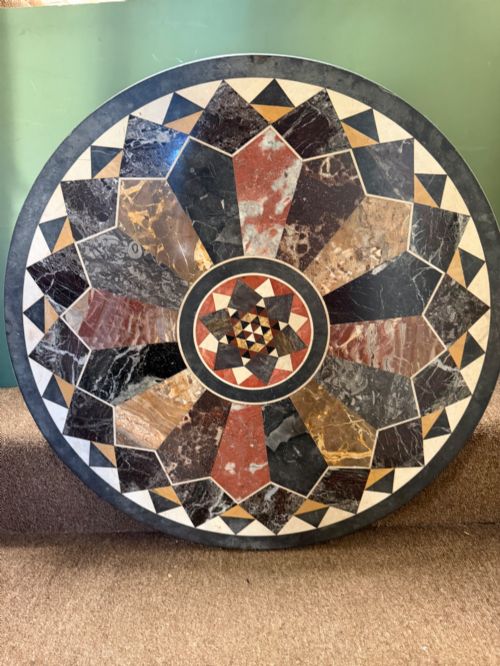
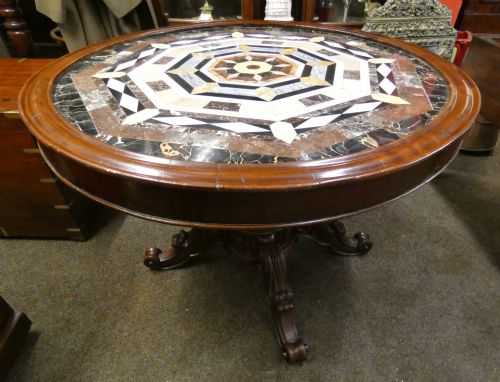
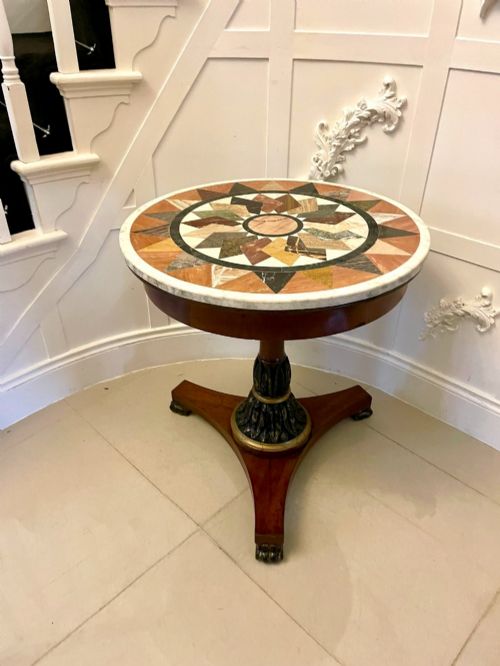
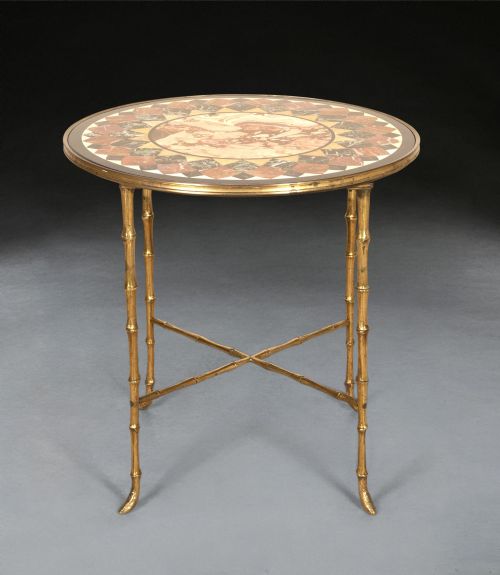
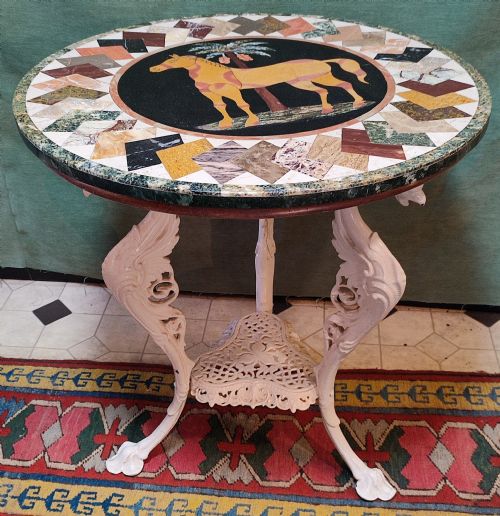
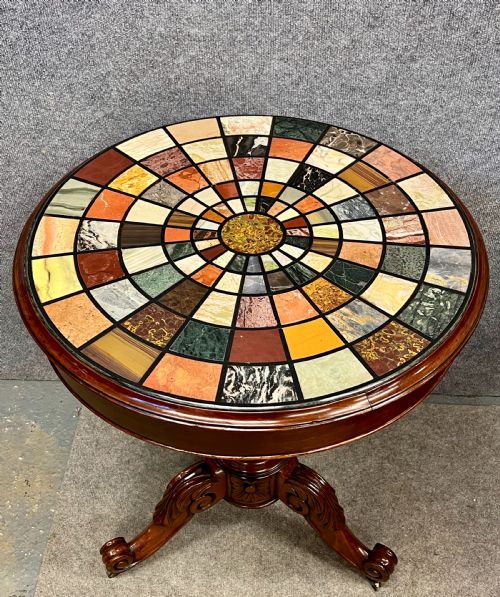
When you search for a geometric marble inlay top, you are looking at substantial stone surfaces composed of numerous individual hardstone fragments arranged in precise patterns. These pieces appear on occasional tables, centre tables, lamp tables, coffee tables, and console tables, as well as standalone tops ready for mounting.
The versions you are most likely to meet on this page span the nineteenth century, including Regency, Victorian, and Edwardian periods, alongside Italianate and Grand Tour pieces. Makers mounted these heavy stone surfaces on timber bases such as mahogany, satin birch, and rosewood, or supported them on cast iron pedestals.
Some examples originate from British workshops utilising Derbyshire and Ashford black marble alongside local specimens, while others reflect the enduring influence of Italian craftsmen. The forms range from compact circular lamp tables to large console tables and low coffee tables.
How they were made
Craftsmen shaped individual pieces of specimen marble, hardstone, and slate with exact precision, fitting them tightly together to form seamless geometric patterns across the table surface. This technique required immense patience and skill to ensure every angle met correctly without gaps.
Workers mounted these intricate stone mosaics onto sturdy wooden bases of mahogany, satin birch, and rosewood, or secured them to cast iron frames for stability. The heavy stone top relied on its own weight and careful adhesive techniques to remain secure within its wooden or metal surrounds.
Geometric Marble Inlay Top Retail Price Guide 2026
Typical asking prices for geometric marble inlay top among the pieces listed under this phrase on Sellingantiques today, from the lower quarter to the upper quarter. They describe what is for sale here now, not the wider market.
Listings feature pieces spanning the nineteenth and early twentieth centuries, incorporating specimen marble, hardstone, slate, mahogany, satin birch, and cast iron.
What varies in quality
The sophistication of the supporting base also influences the overall character, ranging from simple cast iron frames to finely turned mahogany and satin birch pedestals or hand-painted Italian console structures.
The Geometric Marble Inlay Top Glossary
- Specimen marble
- Stone collected from various quarries, cut into specific shapes, and assembled to showcase a broad spectrum of natural colours and geological formations.
- Pietra dura
- An artistic technique using cut and fitted, highly polished coloured stones to create geometric designs or pictorial images.
- Hardstone
- A collective term for semi-precious stones such as jasper, agate, and chalcedon used in fine inlay work.
- Ashford black marble
- A dark, dense limestone from Derbyshire that takes a high polish and serves as a contrasting background for inlaid lighter stones.
- Grand Tour
- The nineteenth-century tradition where wealthy travellers acquired Italian specimen marble tables and decorative arts to bring home.
Geometric Marble Inlay Top: Frequently Asked Questions
How do I care for a marble top?
Clean the stone surface gently with a soft, damp cloth and dry it thoroughly to protect the polished finish. Avoid acidic cleaners or harsh chemicals that can etch the delicate marble and hardstone inlay.
Use coasters and felt pads beneath objects placed on the table to prevent scratching the polished geometric surface. Regular dusting keeps the intricate pattern clear and maintains the natural lustre of the diverse stones.
Can I use a table top on its own?
Some listings offer standalone table tops intended for placement on a suitable base, cabinet, or bespoke stand. Ensure that any supporting structure matches the substantial weight and diameter of the stone.
If you acquire a loose top, consult a specialist to secure it safely to an appropriate base. Proper weight distribution prevents tipping and protects the fragile geometric edges from accidental impact.
How do I identify a nineteenth-century piece?
Examine the underside of the table or top for hand-cut slate foundations, older timber construction methods, and traditional joinery such as hand-cut screws or pegs. Nineteenth-century examples often display specific regional British or Italian geological specimens.
Look closely at the precision of the stone joints and the patina on the surrounding mahogany, rosewood, or cast iron base. Subtle irregularities in the hand-cut geometric patterns typically point towards nineteenth-century craftsmanship rather than modern machine production.