


Grand Campana Urns
Grand campana urns bring classical presence to a room, cast in bronze, marble and ormolu following antique models.
Grand Campana Urns
Grand campana urns take their inverted bell shape from ancient pottery and stone vessels designed for wine or decoration. On this page, they appear chiefly as nineteenth century decorative objects, often linked to the Grand Tour through French and Italian workshops.
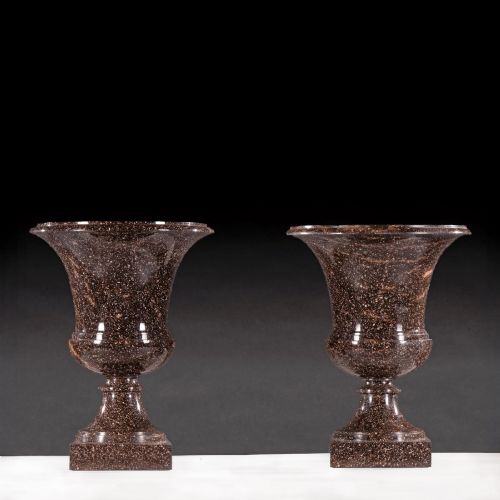
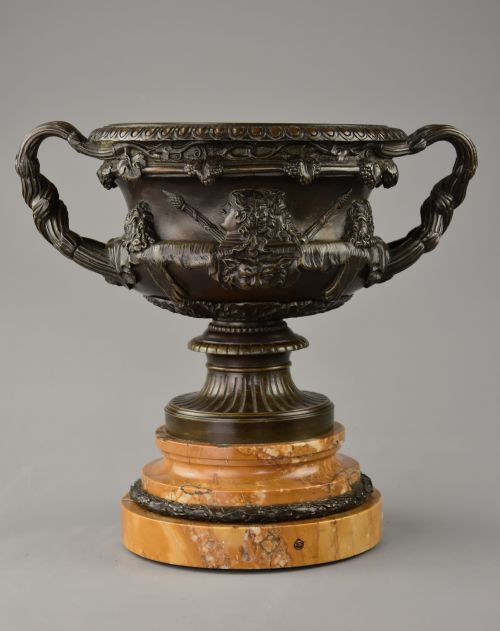
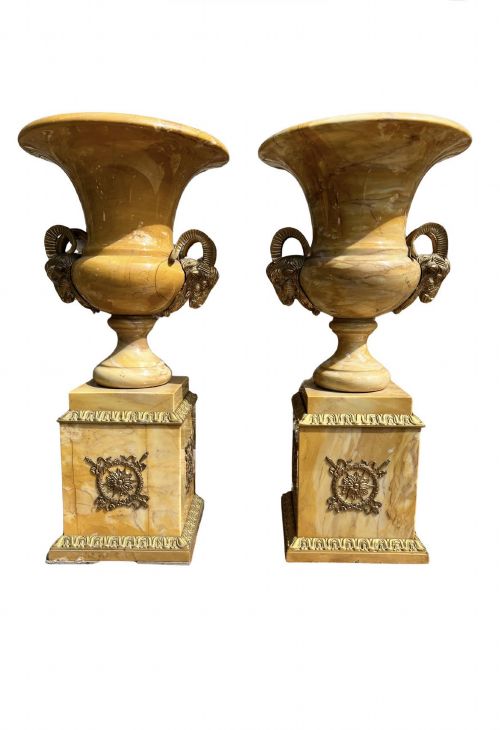
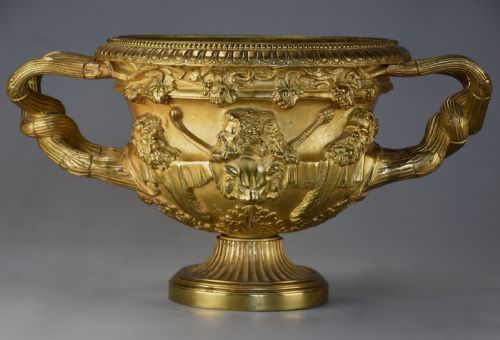
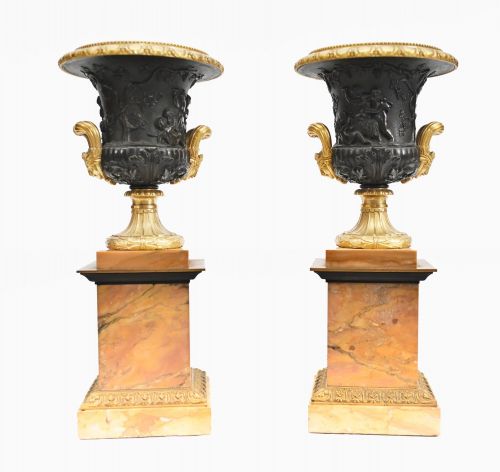
The selection ranges from tall pairs in Swedish Blyberg porphyry and Siena marble to substantial cast bronze reductions of classical models. Makers drew heavily on antiquity, producing campana forms and variations like the Warwick vase for domestic display.
How they were made
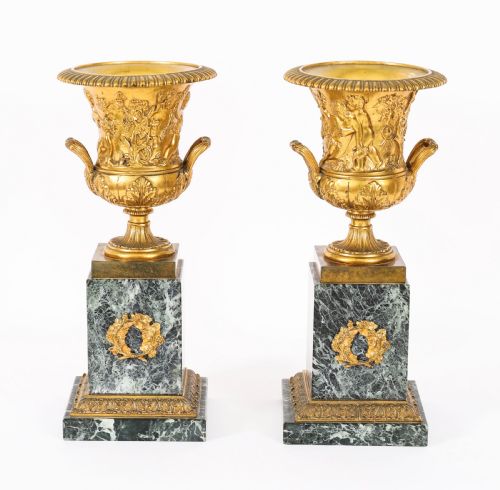
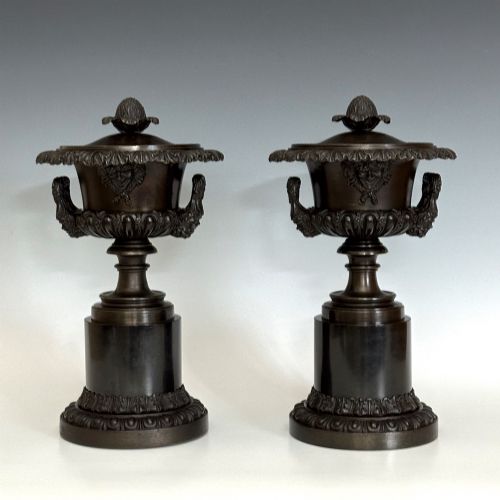
Foundries cast these vessels in bronze, gilt bronze and brass, sometimes combining metals with carved natural stones such as marble, alabaster and porphyry. Skilled artisans finished the metal surfaces through chasing, patination and fire gilding to create rich tonal contrast.
Marble and stone versions relied on precision turning and hand carving to achieve the flared lip and pedestal foot characteristic of the campana profile.
Several bronze campana urns include cast depictions of Bacchus and cherubs, nodding to ancient drinking traditions.
What varies in quality
Quality rests in the crispness of the casting and the depth of the hand chasing on bronze surfaces, where finer examples retain sharp detail in acanthus foliage and classical figures. The choice of materials also dictates standing, with select stones like Swedish porphyry or rich Siena marble elevating a piece above standard brass or patinated metal.
Proportion and weight separate standard decorative castings from exceptional works, particularly in larger proportions where balance across the handles and base is critical.
The Grand Campana Urns Glossary
- Campana
- A bell-shaped vessel with a flared rim and foot, originating in classical antiquity and widely revived during the nineteenth century. This form provides the defining silhouette for classical garden and interior urns.
- Grand Tour
- A traditional trip through Europe undertaken by upper-class travellers who collected classical antiquities and bronzes. Souvenirs from these journeys formed the basis for many nineteenth-century decorative urns.
- Ormolu
- Finely ground high-carat gold applied to a bronze base using a mercury amalgamation technique, producing a rich golden lustre. It appears frequently on neoclassical mounts and handles.
- Porphyry
- An extremely hard igneous rock containing large crystal phenocrysts, prized since antiquity for its deep purple or reddish colour. Swedish Blyberg porphyry is particularly noted in northern European decorative pieces.
- Reduction
- A scale copy of a famous monument or sculpture, such as the Warwick Vase, produced in bronze or marble for domestic display. These allowed collectors to own miniature versions of classical antiquities.
Grand Campana Urns: Frequently Asked Questions
What is a campana urn?
A campana urn is a bell-shaped vessel modelled on ancient pottery and stone vases, featuring a wide mouth, tapering body and pedestal foot.
Nineteenth-century makers adopted this classic silhouette for decorative bronze, marble and brass pieces designed for interior display.
Where were these urns made?
Many of these decorative urns originated in French and Italian workshops, catering to travellers on the Grand Tour.
Swedish foundries and stone-cutters also produced notable porphyry examples during the nineteenth century.
What is the Warwick Vase style?
The Warwick Vase style refers to reductions of a famous Roman marble vase discovered in Hadrian's Villa and later housed at Warwick Castle.
Cast bronze versions of this specific form feature deep relief decoration with mask handles and classical figures.