



Graduated Tier Shelf
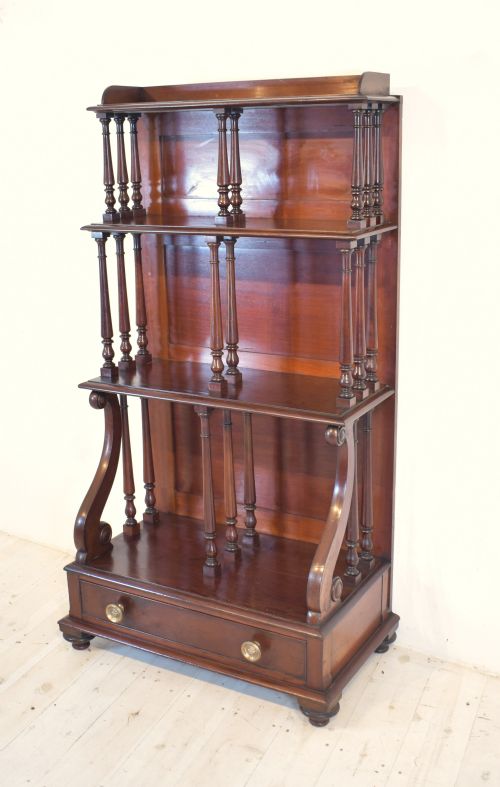
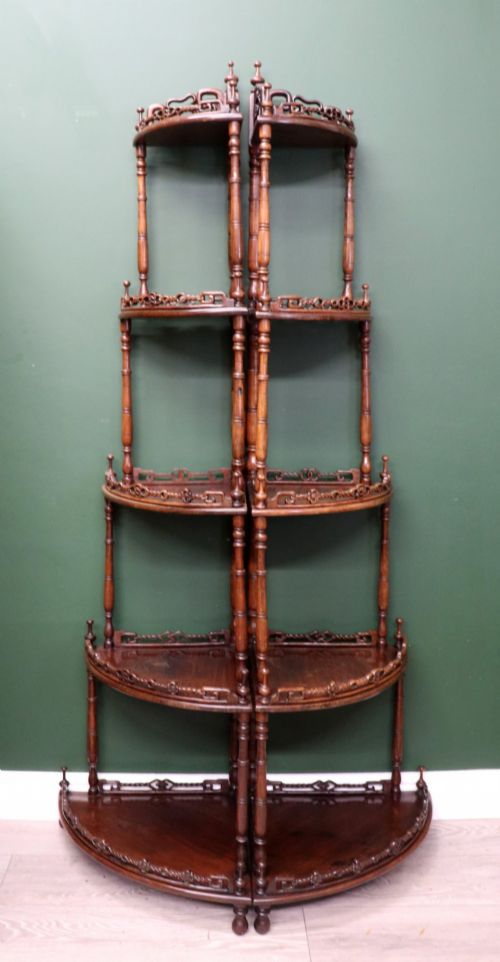
A graduated tier shelf steps down to display books and ornaments with architectural grace.
Graduated Tier Shelf
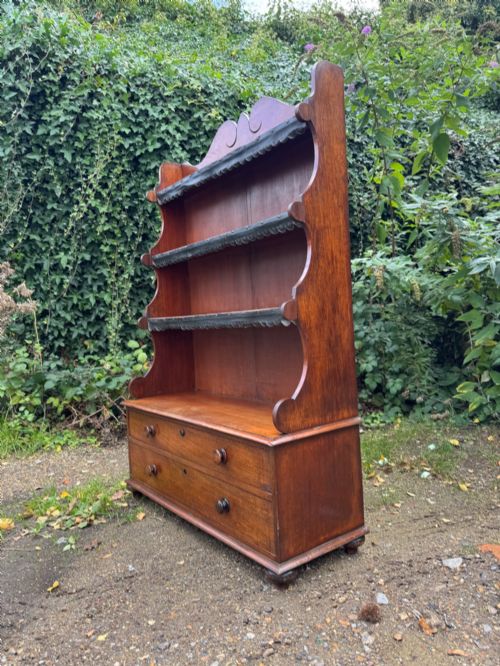
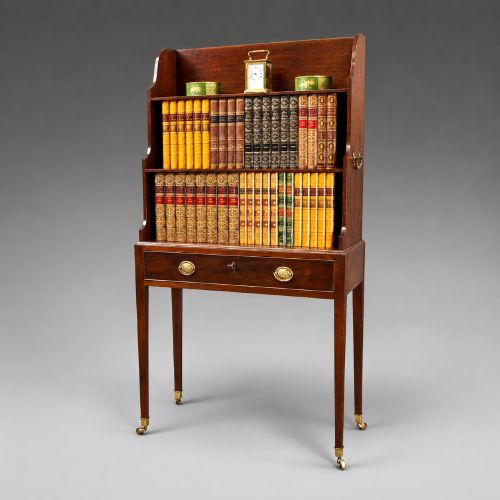
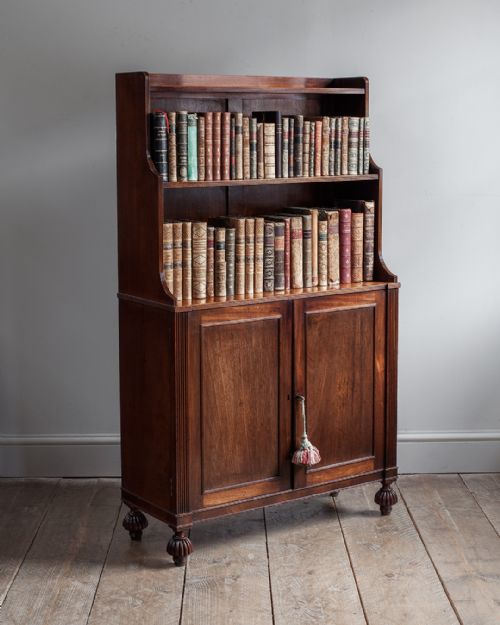
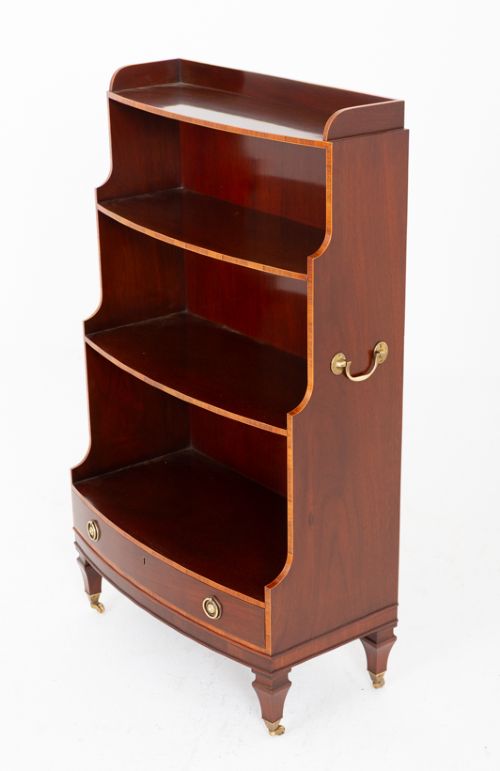
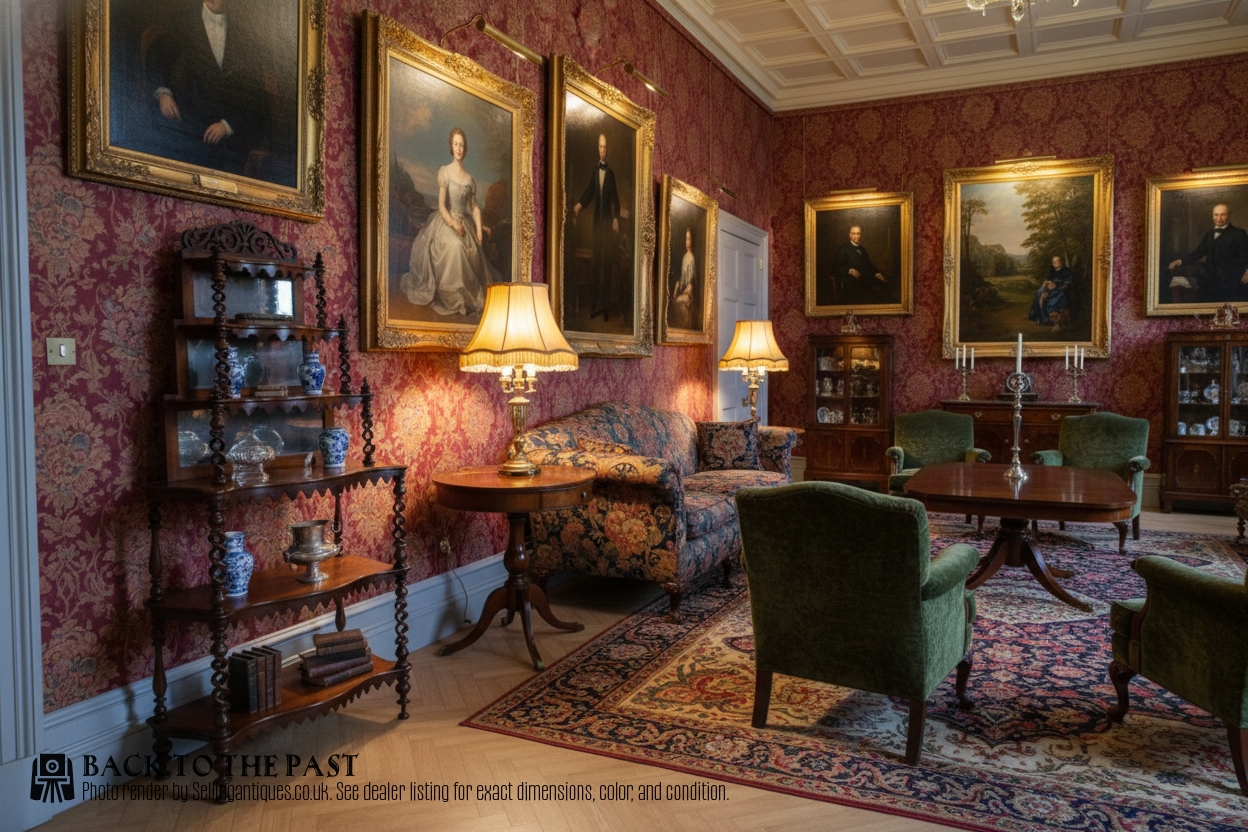
A graduated tier shelf provides ascending levels of open storage, most commonly seen in the form of mahogany waterfall bookcases and multi-tiered whatnots from the Regency and Victorian periods. These pieces step down in depth or height from top to bottom, designed originally for displaying books and decorative objects within drawing rooms and libraries.
The variations on this page span from Georgian and Regency solid mahogany designs with cross-banding to mid-Victorian rosewood and walnut stands featuring barley twist supports. Examples also appear in Edwardian oak, yew wood, and painted finishes, ranging from freestanding corner units to open wall-facing shelves.
Materials and construction
Cabinet makers constructed these tiers primarily using dense hardwoods such as mahogany, rosewood, and walnut, often applying veneers and contrasting boxwood stringing to surfaces. Solid timbers formed the structural uprights and shelves, while brass fixtures occasionally reinforced corners or gallery rails.
Joinery techniques relied on precise fitting to secure the descending levels, incorporating open galleries, turned columns, and occasionally simulated rosewood graining on alternative woods. The graduation of the shelves required careful calibration of depth to maintain balance and structural integrity.
Graduated Tier Shelf Retail Price Guide 2026
Typical asking prices for graduated tier shelf among the pieces listed under this phrase on Sellingantiques today, from the lower quarter to the upper quarter. They describe what is for sale here now, not the wider market.
Victorian makers occasionally added hollow barley twists to a whatnot just to test if dusters possessed genuine patience.
Factors of quality
The calibre of a graduated tier shelf rests upon the choice of timber and the fineness of decorative details such as cross-banding, inlay stringing, and turned gallery supports. Superior pieces display thoughtful grain matching and robust construction that prevents sagging across the descending tiers.
The Graduated Tier Shelf Glossary
- Waterfall bookcase
- A set of open shelves that step back progressively from bottom to top, creating a profile resembling descending water. This form gained popularity during the Regency period.
- Whatnot
- A freestanding piece of furniture consisting of several open shelves used for displaying ornaments. Victorian examples frequently incorporate turned uprights and multiple tiers.
- Cross-banding
- A strip of veneer applied to the border of a shelf or panel so that the grain runs at right angles to the main surface. It provides a neat, decorative frame.
- Stringing
- Thin lines of contrasting wood or light-coloured inlay set flush into the surface of the timber. This technique defines the edges and panels of finer cabinet work.
- Etagere
- A piece of furniture with a series of open shelves for displaying small objects. The term originates from French and often overlaps with the function of a whatnot.
Graduated Tier Shelf: Frequently Asked Questions
What is a waterfall bookcase?
A waterfall bookcase is an open shelving unit where each tier steps back progressively from the one below it. This creates a distinctive sloping profile that houses books while displaying decorative spines.
Originating largely in the Regency and Victorian eras, these pieces combine practical book storage with a lighter visual presence than traditional enclosed cabinets.
How were whatnots used?
Whatnots served as versatile display stands in nineteenth-century drawing rooms for porcelain, silver, and books. Their multi-tiered design allowed owners to exhibit collections in a compact floor footprint.
Positioned in corners or against walls, they functioned primarily as decorative furniture rather than heavy library storage.
What woods are typical?
Mahogany, rosewood, and walnut dominate the construction of antique tier shelves, reflecting prevailing tastes of the Georgian and Victorian periods. Cabinet makers selected these dense hardwoods for their durability and rich grain patterns.
Later Edwardian examples occasionally utilise oak or yew wood, while some pieces feature painted finishes or simulated rosewood graining.
How do I date a tier shelf?
Dating relies on identifying timber choices, construction methods, and stylistic details such as Regency cross-banding or Victorian barley twist supports. Earlier pieces from the early nineteenth century often exhibit solid mahogany construction and hand-cut joinery.
Revival pieces from the Edwardian era or the nineteen-twenties reproduce these forms using slightly different manufacturing tolerances and secondary woods.