
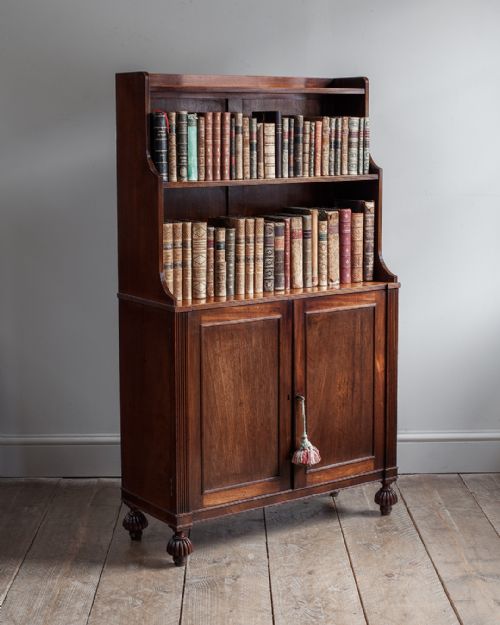
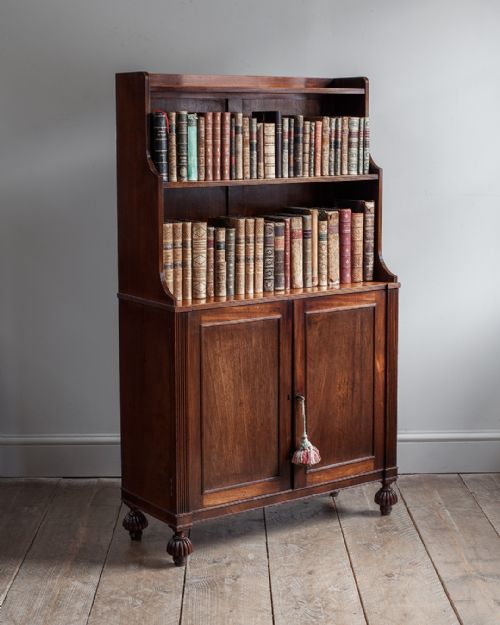
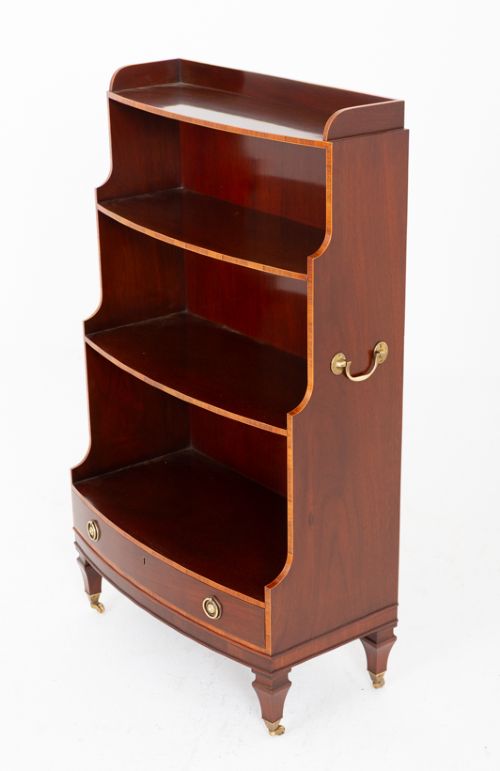
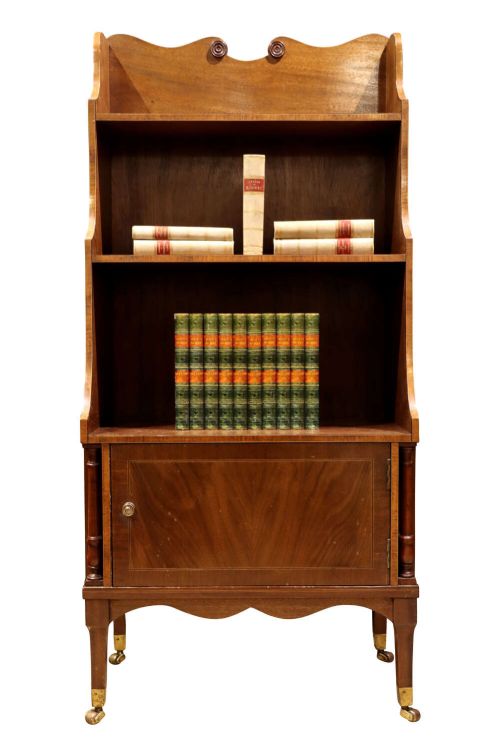
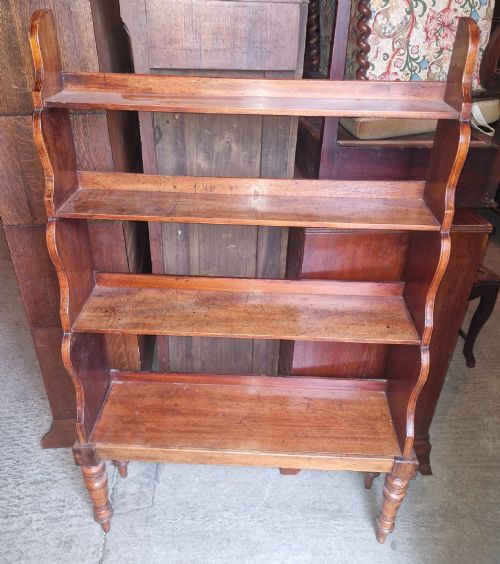
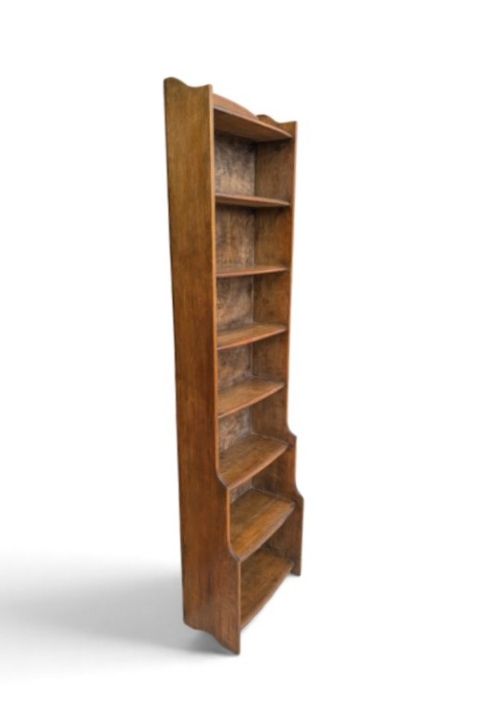
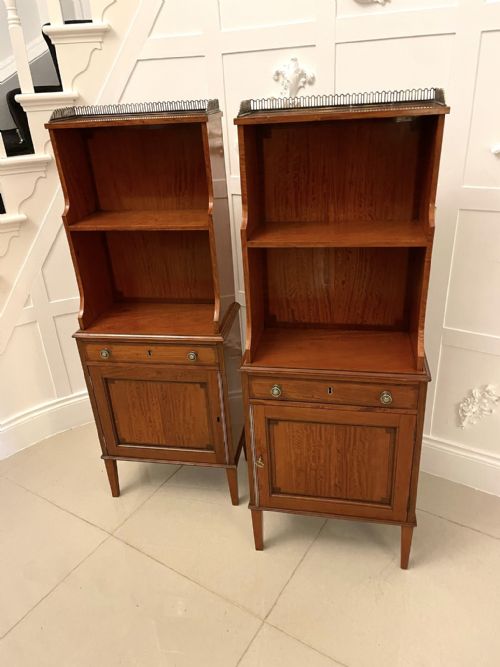
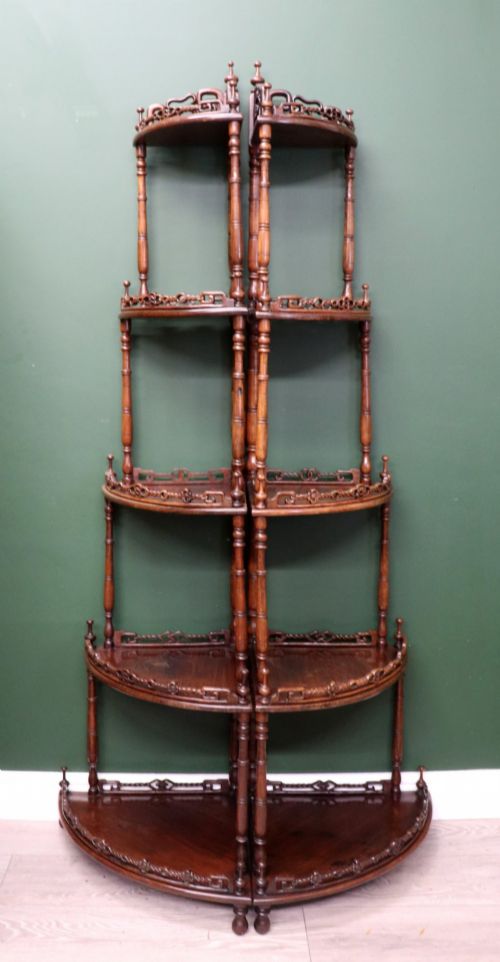

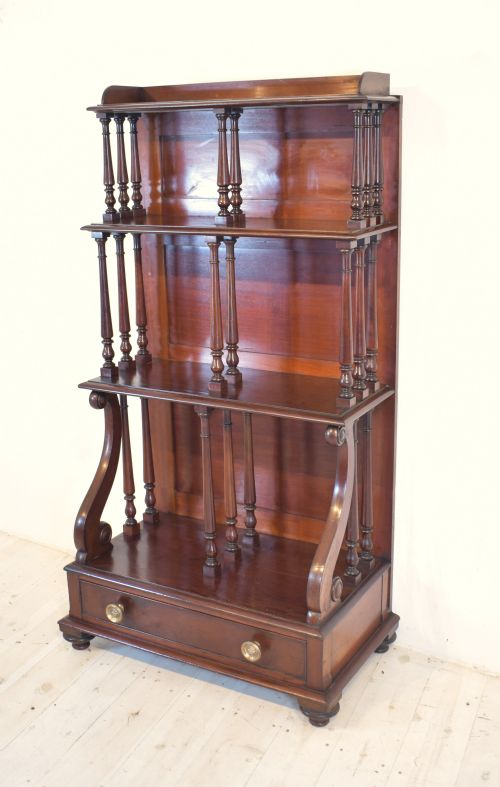


Graduated Open Shelving Unit
These graduated open shelving unit examples present stepped tiers for display, bringing architectural rhythm and practical storage to a room.
Graduated Open Shelving Unit
A graduated open shelving unit most commonly takes the form of a waterfall bookcase or whatnot stand, presenting tiers that step back progressively from bottom to top. These pieces emerge in styles ranging from Georgian and Regency through to the Edwardian era and the early twentieth century.
The selection on this page relies heavily on mahogany, alongside rosewood, oak, walnut, satinwood, and yew wood. Pieces span freestanding bookcases, corner units, and cupboard combinations with open display shelves.
Craftsmanship and distinction
Quality rests in the precision of the graduating tiers and the choice of timber figure, such as well-matched mahogany or burr walnut. Finer examples display meticulous crossbanding, delicate stringing, and integrated architectural details rather than plain assembly.
Makers such as Gillows represent the higher tier of production through superior timber selection and refined execution. Structural integrity across multiple tiers and original brass fittings further separate standard workshop pieces from superior examples.
Listings span the Georgian, Regency, Victorian, Edwardian, and early twentieth-century periods in woods including mahogany, oak, walnut, and rosewood.
Gillows
The Graduated Open Shelving Unit Glossary
- Waterfall bookcase
- A tiered open shelving unit where each successive shelf steps back from the one below it. This creates a cascading silhouette typical of Regency and later revival periods.
- Whatnot stand
- A multi-tiered piece of freestanding furniture designed for displaying ornaments or books. These typically feature three to six open shelves supported by slender uprights.
- Crossbanding
- A strip of veneer applied across the grain of the primary wood to form a decorative border along shelf edges or panels. It frames the central timber and demonstrates refined cabinetwork.
- Stringing
- Inlay work using thin lines of contrasting wood or light-coloured material inserted into grooves on the surface. This technique outlines drawers, shelves, and panels.
- Barley twist
- A turned wooden column carved in a spiral resembling a twist of barley sugar. It appears as a structural support on Victorian display pieces.
Graduated Open Shelving Unit: Frequently Asked Questions
What is a waterfall bookcase?
A waterfall bookcase is a tiered shelving unit where the shelves diminish in depth from bottom to top, following a stepped profile.
This cascading design allows books or objects of varying sizes to be displayed with clear visibility on each level.
How were whatnot stands used?
Whatnot stands served as multi-level display furniture in nineteenth-century drawing rooms for books, ceramics, and ornaments.
Their open tiers kept decorative items accessible and visible from multiple angles within a living space.
Are these units freestanding?
Most pieces on this page are designed to stand independently against a wall or within a corner.
Freestanding formats allow flexibility in placement without requiring permanent wall fixings.
What woods are common?
Mahogany appears most frequently across the Regency and Victorian periods represented here. Walnut, rosewood, oak, and satinwood also feature prominently in various regional and period workshops.