



Rich Mahogany Shelves
Rich mahogany shelves bring warmth and architectural order to a room, spanning open bookcases, tiered whatnots, and wall-mounted ledges.
Rich Mahogany Shelves
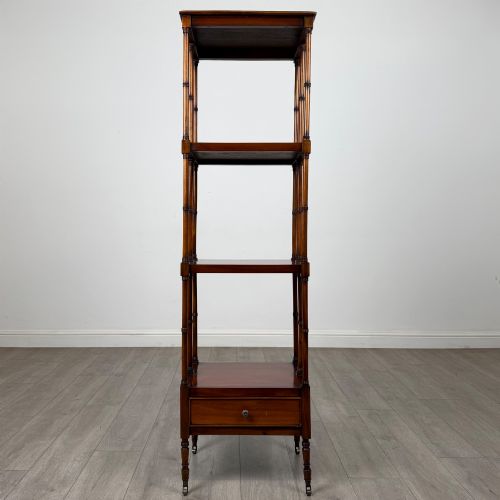
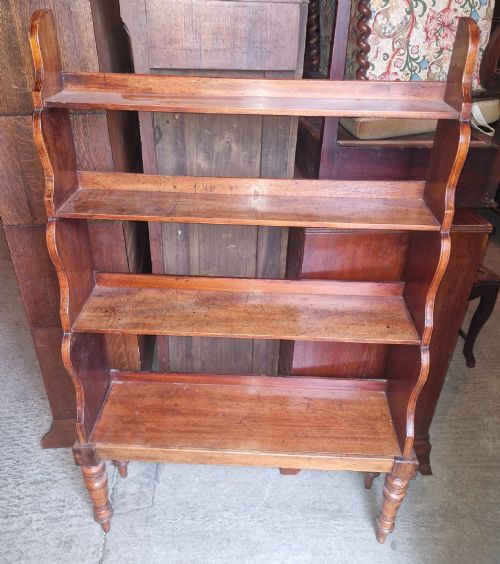
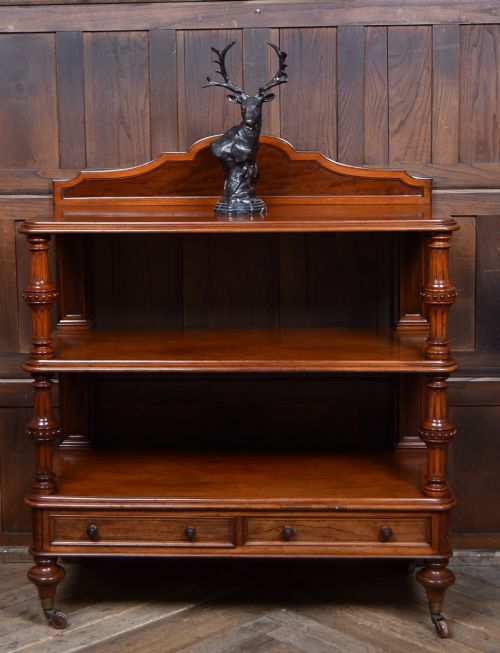
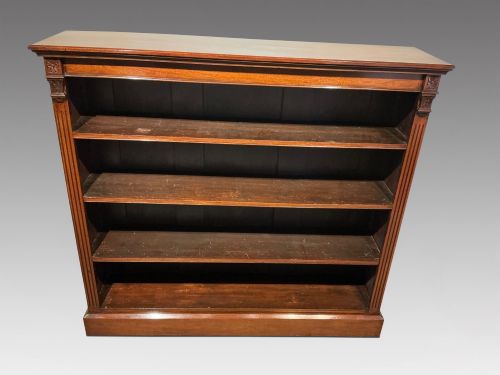
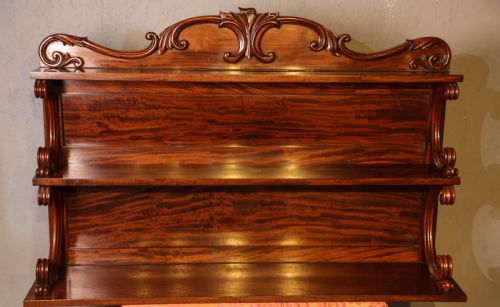
Rich mahogany shelves appear primarily in forms such as open bookcases, multi-tiered whatnots, etageres, and wall shelves spanning the Georgian, Victorian, and Edwardian eras. Buyers searching for rich mahogany shelves typically encounter pieces designed for practical storage and display, ranging from compact wall ledges to large freestanding library bookcases.
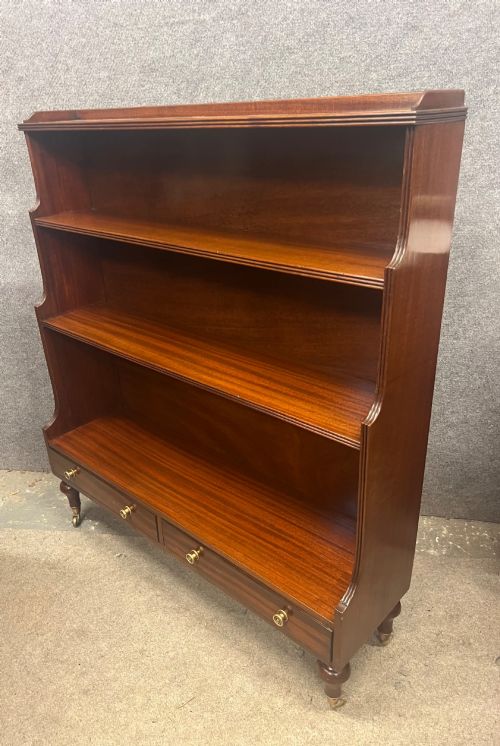
The selection includes specific regional and period interpretations, such as Regency style waterfall bookcases, William IV library bookcases, and late nineteenth-century dwarf bookcases. Pieces incorporate functional additions like single drawers or adjustable shelving systems alongside decorative architectural proportions.
Materials and construction methods
Craftsmen built these pieces using solid mahogany and mahogany veneers, frequently selecting flame mahogany or plum pudding grain patterns for visual depth on primary surfaces. Brass hardware, such as shelf supports and hinges, appears alongside occasional glass elements in related cabinetry.
Joinery techniques suited to each period ensure structural integrity, from freestanding framework in multi-tier whatnots to wall-mounted supports for floating ledges. Surface preparation relied on polishing to accentuate the natural reddish-brown tones and grain figures of the timber.
Assessing quality in construction and timber
Quality rests upon the selection of timber, where striking grain configurations like flame mahogany distinguish superior surfaces from plain boards. The depth of the polish and the crispness of turned or carved details further separate standard utility pieces from fine examples.
Structural refinement dictates everyday utility, evidenced by smoothly operating adjustable shelves, robust joints in multi-tier whatnots, and well-fitted drawer construction where secondary timber is employed. Makers known for high-grade retail output introduce an additional layer of documented provenance.
Shoolbred & Co·J Kingerley Manchester
The Rich Mahogany Shelves Glossary
- Whatnot
- An open, multi-tiered piece of furniture designed for displaying small objects, books, or ornaments. These typically feature three or four vertically stacked platforms supported by turned columns.
- Etagere
- A set of open shelves for displaying ornaments, closely related to the whatnot. This French-derived term often denotes lighter, more decorative multi-level stands.
- Waterfall bookcase
- A shelving unit where each successive tier is set slightly further back than the one below, creating a stepped profile reminiscent of cascading water.
- Dwarf bookcase
- A low open bookcase designed to sit beneath dado height, allowing wall space above for pictures or mirrors. These units keep volumes accessible without dominating the room's proportions.
- Flame mahogany
- A veneer cut from the fork of the mahogany tree where the branch meets the trunk. This produces a distinctive, fiery flame-like pattern highly prized for cabinet fronts and top surfaces.
Rich Mahogany Shelves: Frequently Asked Questions
How do I style a Victorian whatnot?
A Victorian whatnot works well in a corner or beside seating where its stacked tiers can hold books, small ceramics, or trailing plants without crowding the floor plan.
Keep the arrangement balanced by placing heavier volumes on the lowest shelf and lighter decorative items on the upper tiers.
Are these shelves suitable for heavy books?
Freestanding library bookcases and robust nineteenth-century open bookcases handle substantial collections with ease, particularly designs featuring adjustable timber shelving.
Lighter wall shelves and delicate etageres suit display purposes rather than heavy folio storage.
What is the difference between an etagere and a whatnot?
An etagere generally carries a lighter, more decorative French-influenced design intended for ornaments, whereas a whatnot often follows British domestic traditions with sturdy turned supports.
Both utilise tiered open shelving for display purposes.
How do I distinguish a Georgian bookcase from a Victorian one?
Georgian and Regency pieces often display classical architectural proportions, restrained cockbeading, and refined bracket feet or plinth bases.
Victorian iterations frequently incorporate heavier timber dimensions, richer grain selections like plum pudding mahogany, and more pronounced turnings.