




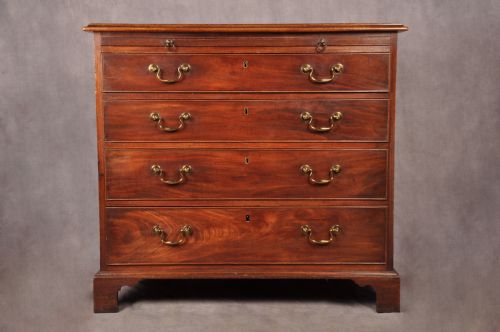

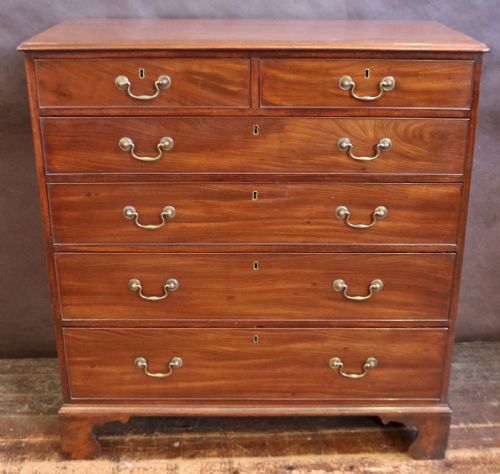
Graduated Drawer Tallboy
A graduated drawer tallboy is a commanding storage piece built with stacked, size-ordered drawers that brings unmistakable period presence to a bedroom.

Graduated Drawer Tallboy
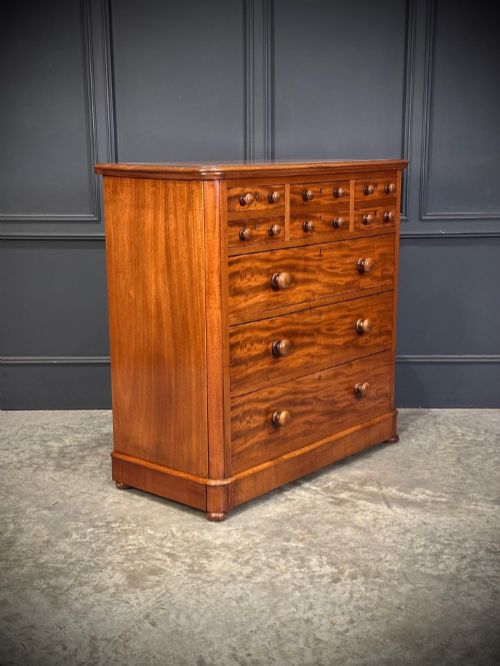
A graduated drawer tallboy is fundamentally a tall storage chest where the drawers diminish in depth from bottom to top, creating a balanced visual hierarchy. These pieces emerge across the eighteenth and nineteenth centuries, spanning Georgian, Victorian, and Scottish Regency eras.
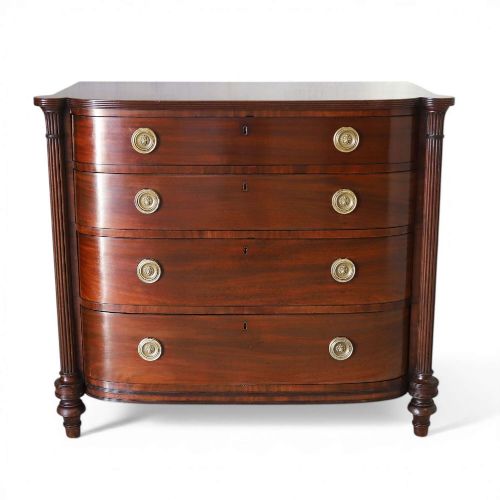
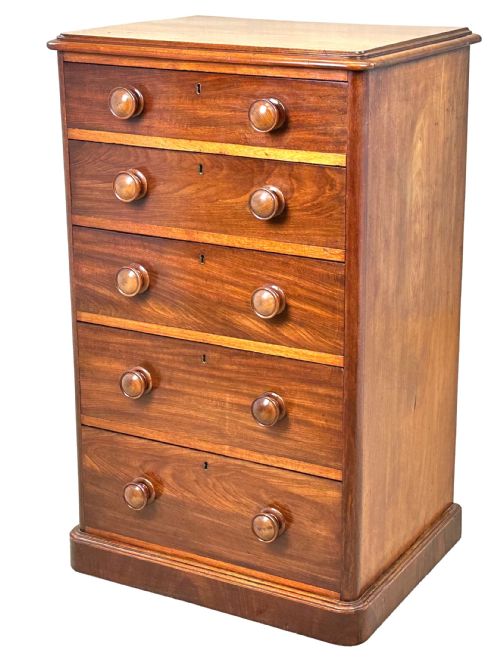
The format appears in several distinct structural forms, including narrow narrow chests, bow fronts, and classic chests on chests, often referred to as tallboys. Mahogany, walnut, and oak dominate the offerings, occasionally supplemented by cedar, pine, rosewood, and yew wood.
Buyers encounter everything from formal George III mahogany examples to late Victorian walnut pieces and shop chests. Each variation offers deep storage capacity while maintaining a vertical footprint suited to period and contemporary interiors alike.
Materials and construction methods
Cabinetmakers utilised dense hardwoods such as mahogany, walnut, and oak for carcass construction, frequently selecting flame mahogany veneers to create striking drawer fronts. Secondary timbers like pine and cedar appear in internal linings and drawer box construction.
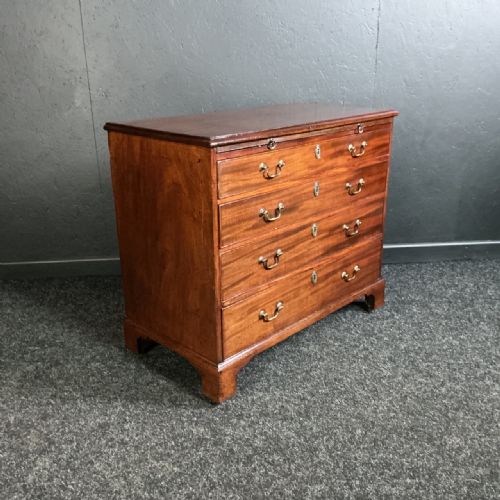
Drawer graduation requires precise joinery to ensure each decreasing drawer fits its individual aperture smoothly. Brass hardware, including drop handles and escutcheons, secures the functional fronts across Georgian and Victorian iterations.
Some nineteenth-century specimens double as specimen collector's drawers, originally designed for butterflies or coins rather than socks.
Distinctions in quality and execution
Quality rests significantly on timber selection and grain continuity across the graduated drawer fronts. Superior pieces display carefully matched veneers and dense, mature hardwoods that maintain structural integrity over centuries of use.
Secondary elements like drawer linings, dovetail precision, and original brass hardware dictate the standing of a tallboy. Refined proportions, particularly in smaller proportions or narrow configurations, separate standard utilitarian storage from finer cabinet work.
The Graduated Drawer Tallboy Glossary
- Graduation
- The proportional decrease in the depth of drawers from the bottom of the chest to the top. This arrangement provides stability in appearance and proportion.
- Tallboy
- A tall chest of drawers, often constructed as a chest on chest or a single elongated vertical carcass. It maximises vertical storage space.
- Flame mahogany
- A veneer cut from the fork of a mahogany tree where branches meet the trunk. It produces a fiery, undulating grain pattern.
- Bow front
- A cabinet front that curves outward in a convex arc. This shape softens the rectilinear profile of a chest.
- Dovetail
- A traditional interlocking joint used to join drawer corners. Hand-cut dovetails indicate earlier craftsmanship and period manufacture.
Graduated Drawer Tallboy: Frequently Asked Questions
How do I date a tallboy?
Dating relies on timber choices, construction techniques, and stylistic markers seen in the hardware and feet. Georgian pieces often feature solid mahogany or oak with hand-cut dovetails, while Victorian examples introduce walnut and different veneer treatments.
Examining the internal secondary woods, such as pine or cedar, also helps determine the manufacturing era of the chest.
Where should I place a tallboy?
A tallboy suits bedrooms, hallways, or dressing rooms where vertical storage is required without occupying excessive floor space. Their narrow footprint allows them to fit into tighter wall spaces while offering substantial drawer capacity.
Ensure the piece is anchored securely to the wall if necessary, particularly taller chest on chest configurations containing heavy hardwood drawers.
Are all tallboys made of mahogany?
Mahogany is prevalent, particularly in Georgian pieces, but makers also utilised walnut, oak, yew wood, rosewood, and cedar. Selection depended on regional availability, period fashion, and the intended function of the furniture.
Secondary timbers like pine and cedar frequently appear inside the carcass and drawer boxes regardless of the primary exterior wood.