



Gouache Landscape Painting
A gouache landscape painting brings opaque pigments and paper together to capture views from the nineteenth and twentieth centuries.
Gouache Landscape Painting
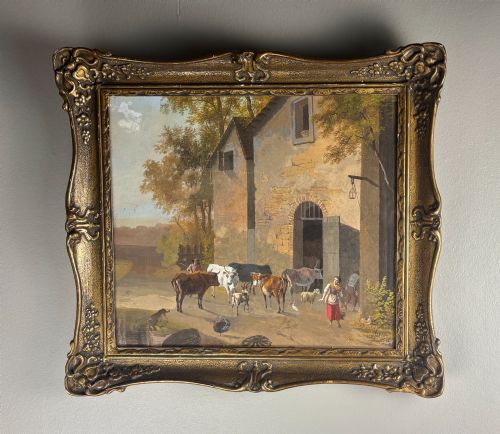
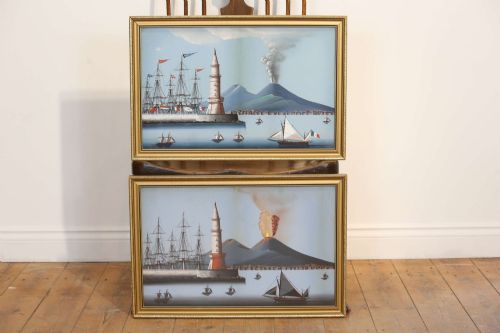
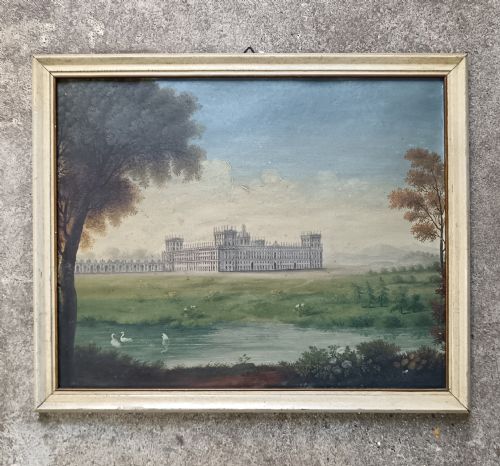
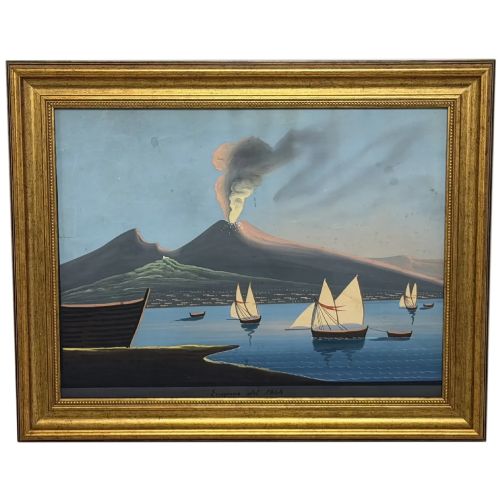
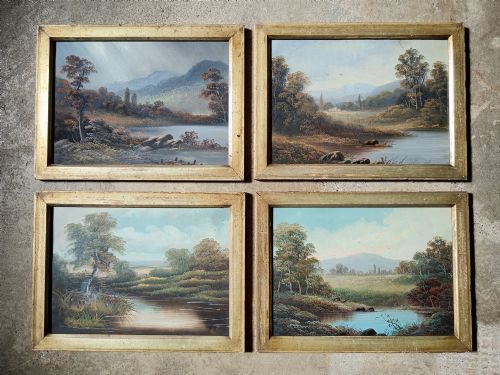
When a buyer searches for a gouache landscape painting, they encounter works executed on paper using heavy opaque water-soluble paint, often spanning nineteenth-century Grand Tour views to twentieth-century abstractions. These pieces frequently depict European scenes such as Italian lakes, Neapolitan eruptions, and English countryside views, alongside Orientalist and Mughal subjects.
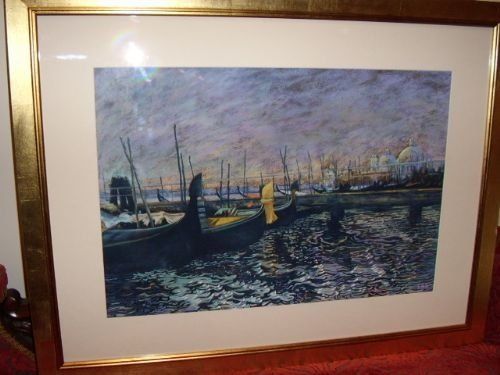
The most common examples on this page are nineteenth-century framed works, particularly Italian school scenes and sets of Neapolitan views produced for travellers. Buyers also find mixed media pieces combining gouache with watercolour, ink, or pastel.
Works range from intimate cabinet paintings to large framed vistas depicting castles, rivers, and mountains. Many arrive housed in period frames of wood and gilt, preserving the paper beneath glass.
How they were made
Artists painted primarily on paper sheets, applying gouache which uses opaque white pigment mixed with gum arabic to create solid, matte colour fields. Painters frequently combined this medium with watercolour washes, ink pen lines, or pastel to build texture and detail.
Makers housed these works behind glass within wooden frames, often incorporating gilt wood moulding to complement the composition. The physical support relies on the combination of heavy paper and protective framing to survive across centuries.
Gouache Landscape Painting Retail Price Guide 2026
Typical asking prices for gouache landscape painting among the pieces listed under this phrase on Sellingantiques today, from the lower quarter to the upper quarter. They describe what is for sale here now, not the wider market.
Listings feature paper supports combined with gouache, watercolour, and ink across nineteenth and twentieth-century periods.
What varies in quality
Quality rests upon the handling of opaque pigment and the preservation of the paper support beneath glass. Stronger examples display confident brushwork and well-defined atmospheric perspective, particularly in complex subjects like volcanic eruptions or expansive lake views.
The sophistication of the accompanying frame influences the overall integrity of the piece, with period gilt wood surrounds marking superior examples. Consistency within multi-part sets, such as pairs or groups of four Grand Tour views, distinguishes finer workshops.
Karel Dujardin·Joseph Knight·Gaston Cornil·AJ Thornton·Milton Drinkwater·Reginald Mills
The Gouache Landscape Painting Glossary
- Gouache
- An opaque water-soluble paint medium made from pigment bound in water-soluble gum, producing a matte, solid finish. It allows artists to apply light tones over dark areas unlike traditional watercolour.
- Grand Tour
- A cultural journey of Europe undertaken by wealthy young men in the eighteenth and nineteenth centuries. It generated a demand for souvenir landscape paintings, particularly views of Italy.
- Neapolitan
- Pertaining to Naples, frequently describing nineteenth-century gouache paintings depicting local scenes such as Vesuvius and the surrounding bay. These were popular keepsakes for travellers.
- Orientalist
- Art depicting scenes and people of the Middle East and North Africa, produced by Western artists. These works often combine watercolour and gouache on paper.
Gouache Landscape Painting: Frequently Asked Questions
What is a gouache landscape painting?
A gouache landscape painting is an artwork created on paper using opaque water-soluble pigments to depict natural scenery. These works range from nineteenth-century Italian views to twentieth-century abstract compositions.
Artists favoured the medium for its ability to deliver rich, matte colour and fine detail. They appear today mounted behind glass within period wooden frames.
How should I care for these paintings?
Protect gouache paintings on paper by keeping them away from direct sunlight and high humidity. The opaque pigments and paper supports remain sensitive to environmental changes.
Display the works in stable indoor conditions behind their protective glass. Avoid removing them from their historical frames where possible.
Where were these paintings made?
These works originate from various European and international schools, with strong representation from nineteenth-century Italy and France. Many pieces record travels across the continent during the Grand Tour.
Other examples stem from British topographical traditions and Orientalist subjects. Each piece reflects the regional materials and styles of its maker.
How do I identify the period?
Dating relies upon the framing style, paper characteristics, and subject matter depicted in the composition. Nineteenth-century pieces often feature Neapolitan subjects or Grand Tour annotations.
Twentieth-century works show shifts towards abstract forms and modern palettes. Comparing the handling of the gouache medium helps place the work within a specific era.