
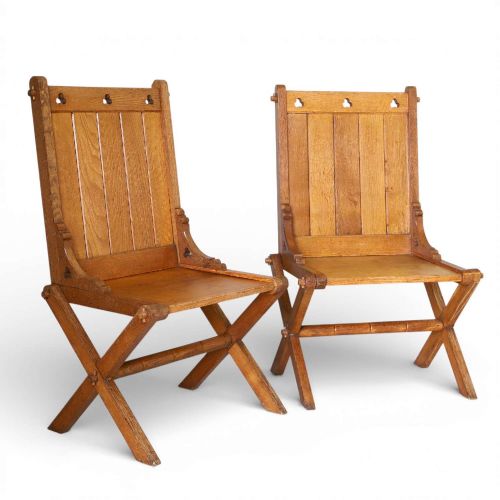
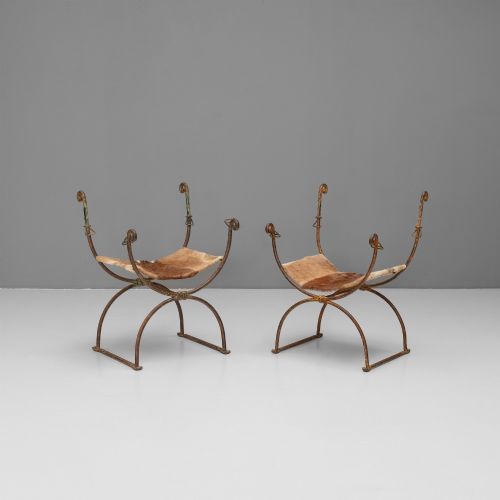


Gothic X Frame Seat
A gothic x frame seat brings dramatic architectural presence to a room through intersecting structural supports and pointed ecclesiastical details.
Gothic X Frame Seat
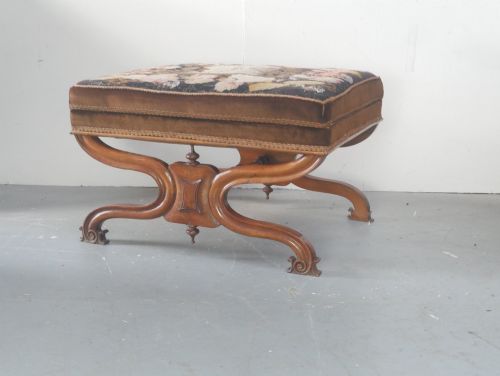
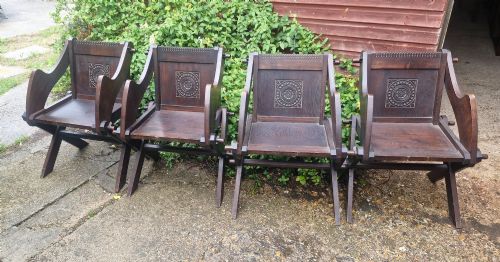
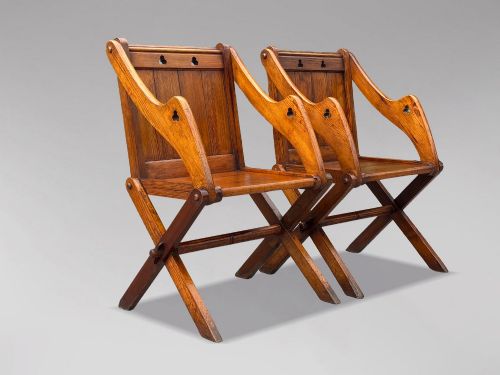
A gothic x frame seat draws on medieval and ecclesiastical forms, appearing most frequently on this page as an oak Glastonbury chair or a walnut stool from the nineteenth century.
The inventory ranges from sturdy pitch pine elbow seats and oak armchairs with trefoil details to walnut window benches carved with hunting dog heads.
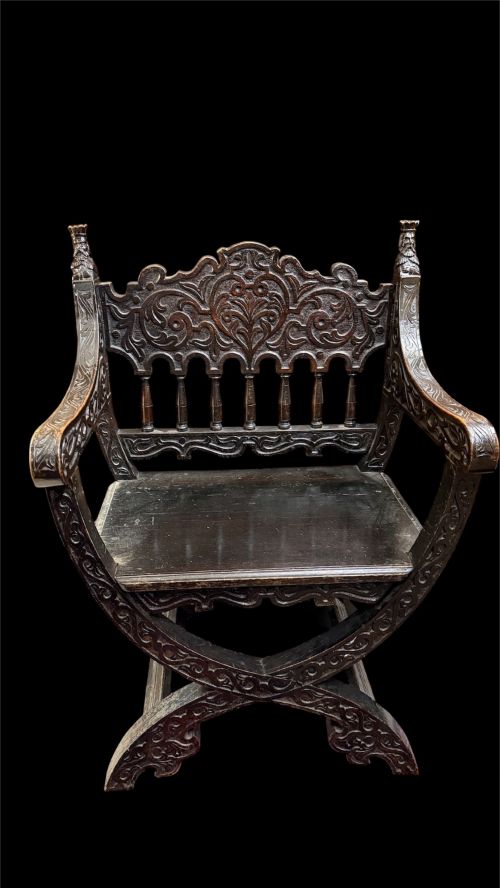
Makers drew on Gothic Revival, Renaissance Revival, and Scottish Baronial idioms, producing substantial seating designed to anchor a room.
How they were made
Craftsmen built these pieces primarily from solid timbers like oak, walnut, pitch pine, and rosewood, often combining structural wood with brass accents and textile upholstery.
Carving and ebonising techniques defined the surface decoration, while folding mechanisms in campaign chairs required precise joinery to allow the frame to collapse.
What varies in quality
Quality rests on the crispness of the carved details, such as trefoil motifs and figural elements, and the structural integrity of the intersecting frame.
The choice of dense timbers like English or Welsh oak versus softer woods distinguishes standard utility pieces from exhibition-level seating.
The Gothic X Frame Seat Glossary
- Glastonbury chair
- An ecclesiastical armchair characterised by a folding X-form base, sloped arms, and a panelled backrest.
- X-frame
- A structural support formed by two intersecting diagonal members that distribute weight downwards to the floor.
- Trefoil
- A three-lobed ornamental design resembling clover leaves, frequently pierced through the wooden back panels.
- Curule
- An ancient X-shape form adapted during the Renaissance and Revival periods for curule chairs and stools.
Gothic X Frame Seat: Frequently Asked Questions
How do I style a gothic x frame seat?
These seats carry substantial visual weight, making them effective as statement pieces in hallways, studies, or libraries. Pair them with neutral walls to let the timber grain and carved details stand out.
They also function well as window stools or occasional seating alongside simpler modern furnishings.
Are these seats actually comfortable?
Glastonbury chairs and wooden X-frame stools offer an upright, supportive sit rather than deep lounging comfort. Many period examples feature fitted fabric cushions or upholstered pads to soften the wooden seat.
Adjustable or folding variants offer flexible support suited for occasional use in a bedroom or parlour.
How do I date a nineteenth century gothic seat?
Dating relies on timber selection, such as pitch pine or heavy oak, combined with the specific revival style executed. Victorian pieces often incorporate ecclesiastical motifs, deep relief carving, and characteristic joinery methods of the period.
Look for hardware details and the wear patterns on the foot members to understand the age of the piece.