




Gothic Walnut Writing Desk
These gothic walnut writing desk examples bring heavy architectural timber and dark timber grain to a study, built to last through generations of correspondence.

Gothic Walnut Writing Desk
A gothic walnut writing desk gathers the substantial presence of nineteenth century Gothic Revival design into a functional workspace, typically taking the form of a centre table, library table, or fitted writing table. These pieces emerge from the Victorian era, specifically spanning the decades around eighteen eighty and eighteen ninety.
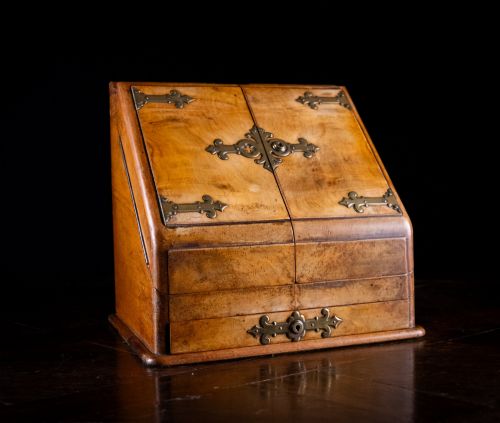
The selections on this page demonstrate the distinct heavy architectural vocabulary of Victorian Gothic, Reformed Gothic, and Pugin designs executed in walnut, burr walnut, figured walnut, or oak. Alongside actual writing tables, buyers frequently encounter related desk accessories and stationery cabinets constructed to match the same robust aesthetic.
Materials and construction
Cabinet makers utilised dense timbers including walnut, burr walnut, and figured walnut to provide a dark, figured foundation that absorbed light and displayed prominent grain patterns. Oak also appears as a primary structural timber in these robust nineteenth century forms.
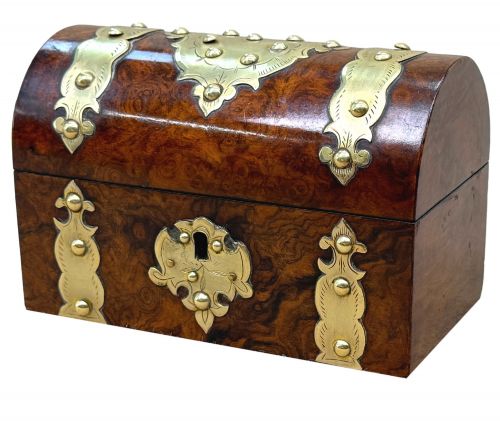
Metalwork played an integral structural and decorative role, with heavy brass mounts, hinges, and bindings reinforcing corners and framing inset panels. Writing surfaces were routinely finished with tooled Moroccan leather inserts, while interior compartments occasionally incorporated materials such as glass and silk lining.
Gothic Walnut Writing Desk Retail Price Guide 2026
Typical asking prices for gothic walnut writing desk among the pieces listed under this phrase on Sellingantiques today, from the lower quarter to the upper quarter. They describe what is for sale here now, not the wider market.
Several boxes on offer include internal compartments once strictly designated for the lost art of storing sealing wax and bone paper knives.
Judging quality in these pieces
The distinction between standard production and exceptional execution lies in the choice of timber figure, such as highly figured or burr walnut selected for prominent display areas. Superior examples also exhibit crispness in the Gothic architectural carving and precision in the hand-cut brass mounts.
Integrity of secondary materials dictates overall caliber, seen in the survival of original tooled Moroccan leather writing surfaces and intact internal divisions within stationery cabinets. Pieces bearing documented maker attributions demonstrate higher atelier standards than unmarked commercial workshop equivalents.
Gillows
The Gothic Walnut Writing Desk Glossary
- Gothic Revival
- A nineteenth century architectural and decorative style drawing inspiration from medieval forms, pointed arches, and heavy structural elements. This aesthetic heavily influenced the proportions and ornamentation of domestic furniture.
- Burr walnut
- A specialised wood cut from walnut tree growths that produces intricate, swirling grain patterns. Cabinet makers prized this timber for veneering prominent exterior surfaces on luxury boxes and cabinets.
- Stationery box
- A desktop container designed to hold writing paper, envelopes, and correspondence accessories, often featuring sloping lids and fitted interior dividers. These pieces matched the broader desk furniture of the period.
- Reformed Gothic
- A later nineteenth century design movement that stripped away excessive medieval ornamentation in favor of simpler, structural forms and flat geometric decoration. It emphasised honest construction and materials.
- Moroccan leather
- A fine goatskin leather traditionally tanned with sumac and hand-tooled with gold leaf patterns. It provided a durable, textured writing surface inset into nineteenth century tables and desks.
Gothic Walnut Writing Desk: Frequently Asked Questions
What periods do these desks and accessories come from?
The pieces originate from the nineteenth century, specifically during the Victorian era between eighteen sixty and eighteen ninety. This period saw a revival of medieval architectural styles adapted for domestic Victorian interiors.
Craftsmen utilised specific regional timbers and distinct revival idioms during these decades, ensuring that pieces share recognizable design characteristics across the era.
How were stationery boxes used on desks?
Stationery boxes sat atop writing tables to keep writing paper, envelopes, and small implements organised and protected from dust. Their sloping lids and divided interiors allowed easy access during daily correspondence.
They formed part of a matched suite of desk accessories that included inkstands and blotters, creating a cohesive workspace in a Victorian study.
What is Reformed Gothic style?
Reformed Gothic represents a refined nineteenth century departure from ornate medieval revivalism, favouring flat geometric ornament and structural clarity. It avoided excessive carving in pursuit of a more rationalized design approach.
Furniture from this movement often displays clean structural lines combined with contrasting timber grains and precise metal mountings.
How do I care for leather desk inserts?
Leather writing surfaces require protection from excessive dryness, direct sunlight, and moisture to prevent cracking or warping of the skin. Regular gentle dusting preserves the surface without disturbing the underlying timber framing.
Original tooled Moroccan leather should be handled with care to maintain the integrity of any historic gold leaf tooling around the edges.