




Gothic Tracery Oak Stand
These gothic tracery oak stand pieces bring heavy ecclesiastical and architectural character into domestic rooms through pointed arches and rich timber.
Gothic Tracery Oak Stand
A gothic tracery oak stand brings architectural motifs directly into home furnishings through pointed arches, cusped patterns, and heavy timber construction. Buyers exploring this category encounter a diverse selection of furniture forms shaped by nineteenth-century ecclesiastical and revival tastes.
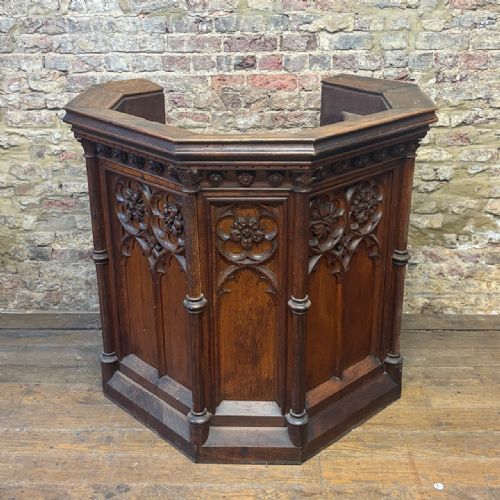
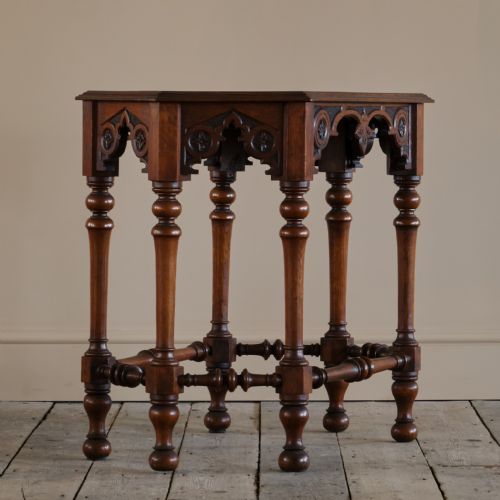
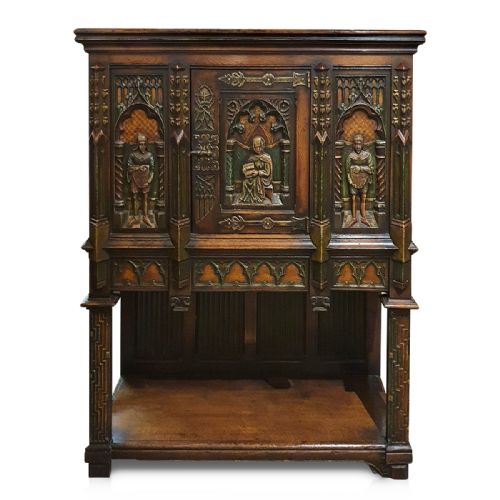
The objects available span functional domestic and church items, including side tables, hall cupboards, occasional tables, umbrella stands, book slides, cabinets, and pulpit remnants. Most examples date from the nineteenth century, specifically the Victorian and Edwardian periods, utilising robust wood frames.
The selection ranges from small tabletop novelties like extending book slides to substantial hall cabinets and church pulpits. Each piece employs revival styles that echo medieval stone window designs translated into sturdy joinery.
How they were made
Cabinet makers constructed these pieces primarily from solid oak, sometimes combining the timber with brass, iron, metal, glass, and fabric elements for functional hardware or decorative panels. The wood was frequently carved by hand to render intricate pointed arches and geometric tracery patterns.
Joinery techniques matched the robust requirements of revival furniture, ensuring structural stability for heavy side tables, cabinets, and umbrella stands. Carvers utilised traditional chisels and gouges to achieve the deep relief work characteristic of the Gothic Revival style.
Gothic Tracery Oak Stand Retail Price Guide 2026
Typical asking prices for gothic tracery oak stand among the pieces listed under this phrase on Sellingantiques today, from the lower quarter to the upper quarter. They describe what is for sale here now, not the wider market.
Even a humble book slide receives full ecclesiastical treatment, turning your novel collection into a portable cathedral.
What varies in quality
The depth and crispness of the carved ornamentation separate standard production items from finer workshop pieces. Sharp, well-defined tracery and balanced proportions indicate superior craftsmanship in handling difficult revival motifs.
The selection of the oak timber itself dictates the character of the piece, with tighter grain and thoughtful board matching elevating the overall presence of cabinets and tables. Integration of secondary materials like brass or iron hardware also marks the distinction between basic utility items and more ambitious decorative furniture.
The Gothic Tracery Oak Stand Glossary
- Tracery
- The stonework ornamentation of window openings in Gothic architecture, translated here into carved wooden panels and furniture fretwork. This pattern forms the primary visual signature of the revival style.
- Gothic Revival
- An architectural and decorative movement spanning the nineteenth century that drew inspiration from medieval forms, pointed arches, and ecclesiastical design. It influenced domestic furniture, church pulpits, and hall cabinets alike.
- Book slide
- An adjustable desktop or table accessory designed to hold volumes upright using expanding wooden frames. Victorian examples often incorporated Gothic carved ends.
- Occasional table
- A small, portable piece of furniture intended for specific, temporary uses around a room. In this category, such tables feature architectural oak legs and carved friezes.
Gothic Tracery Oak Stand: Frequently Asked Questions
What periods do these pieces come from?
The available items date primarily from the nineteenth century, encompassing Victorian and Edwardian eras. Specific production years span from around eighteen hundred through to the end of the nineteenth century and into the twentieth.
Craftsmen during this period drew heavily upon medieval church designs, adapting ecclesiastical aesthetics for domestic interiors and specialised furniture forms.
What types of furniture are included?
The category embraces a varied selection of domestic and ecclesiastical objects fashioned from timber. Common forms include side tables, occasional tables, hall cupboards, display cabinets, and umbrella stands.
More specialised items such as extending book slides and church pulpits also appear within the revival style, all united by their use of oak and architectural detailing.
How do I identify Gothic Revival pieces?
Look for distinct architectural elements carved directly into the timber, such as pointed arches, cusping, and geometric tracery patterns. These motifs mirror the stone windows found in medieval cathedrals.
The predominant use of solid oak combined with heavy proportions and dark finishes further defines the nineteenth-century revival aesthetic across tables and cabinets.
Where were these stands used originally?
Many pieces served practical domestic functions in grand Victorian and Edwardian hallways, libraries, and principal rooms. Items like umbrella stands and hall cabinets met the organizational needs of nineteenth-century households.
Other objects originated directly from ecclesiastical settings, such as church pulpits repurposed or adapted for later architectural collections.