


Gothic Style Sideboard
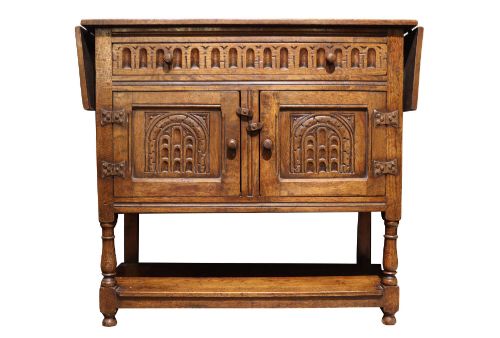
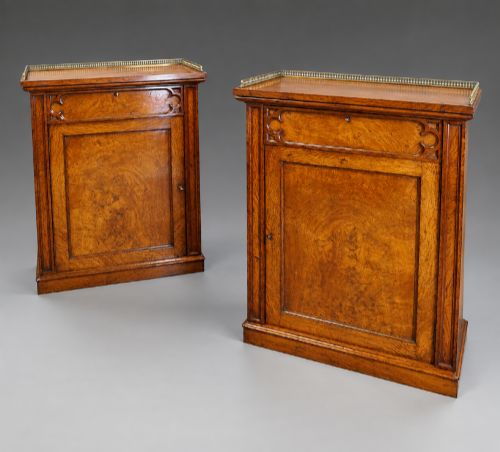
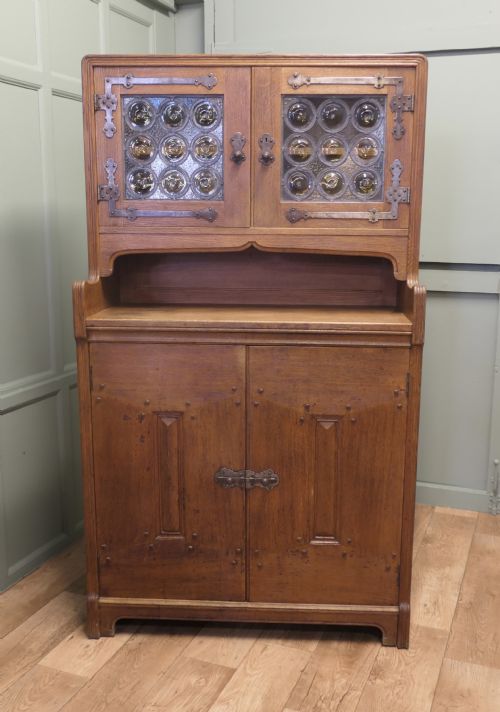
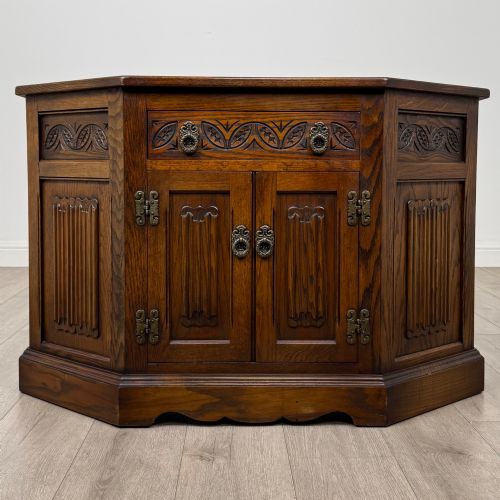
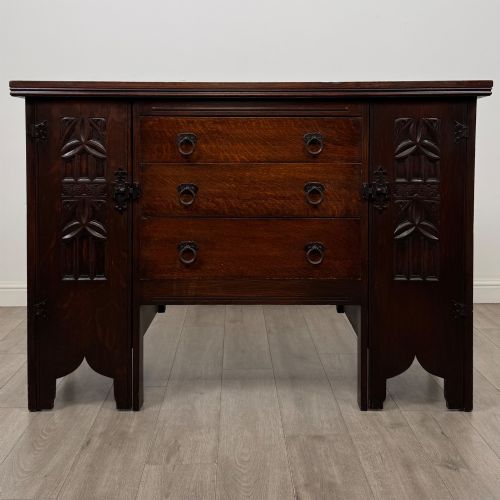
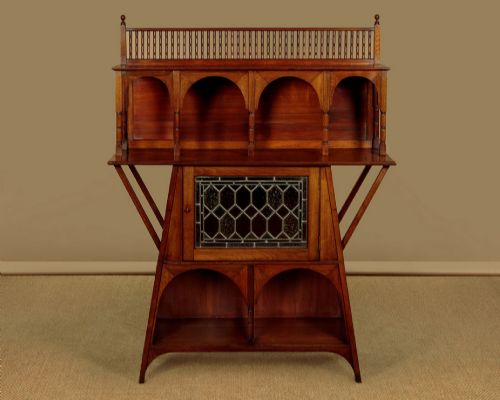
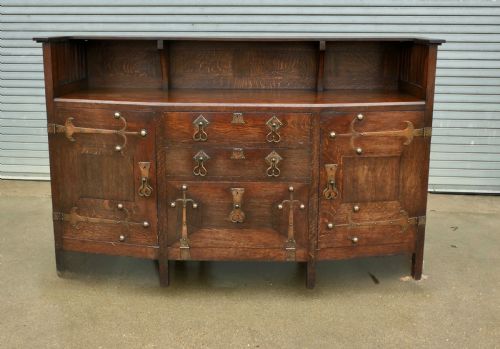
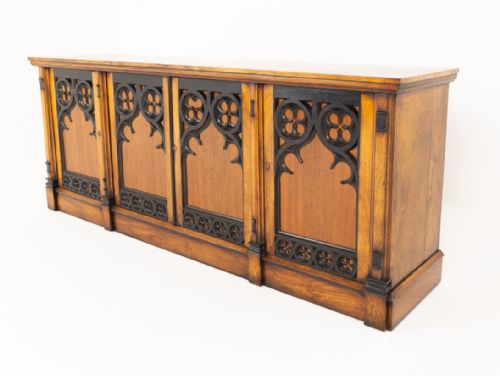
These gothic style sideboard pieces combine heavy architectural timber with medieval tracery, bringing substantial historic presence into a room.
Gothic Style Sideboard
A gothic style sideboard brings together heavy storage cabinetry and the pointed arches, linenfold panels and traceried doors characteristic of medieval architecture. You will encounter these pieces executed in solid oak, walnut and elm, frequently spanning periods from the mid nineteenth century through to the Edwardian era.
The forms range from compact side cabinets and creedence cupboards to expansive three door sideboards and dressers. Many examples draw directly on Gothic Revival, Arts and Crafts and Tudor Revival idioms, incorporating iron and brass hardware alongside carved timber.
Makers working within these movements utilised proportions and structural joinery that echoed ecclesiastical and domestic furnishings of earlier centuries. The typical piece provides enclosed shelving behind heavy panelled doors, often elevated on short feet or a plinth base.
Materials and construction
Carpenters constructed these heavy storage pieces primarily using solid oak, alongside walnut, elm and ebonised wood. Timber boards were joined using traditional mortise and tenon framing to support the deep relief carving characteristic of the style.
Metalwork played a structural and decorative role, with wrought iron hinges, copper mounts and brass drop handles fitted to doors and drawers. Glass panels occasionally appeared in upper display sections, while lead secured individual panes within traceried frames.
The documented pieces span multiple revival movements, including Victorian Renaissance Revival, Pre-Raphaelite Revival, and Arts and Crafts.
Assessing quality and execution
The distinction between standard commercial production and finer work lies in the depth and crispness of the hand carving. Superior examples exhibit undercut mouldings and crisply rendered linenfold panels, whereas lesser pieces rely on shallow machine routing.
Material selection significantly influences the overall character of the piece, with figured golden oak, pollard oak and multi wood marquetry marking out the more ambitious workshop productions. Original hardware, hand beaten copper straps and signed design attributions further elevate the standing of an individual cabinet.
Liberty & Co.·Leonard Wyburd·Augustus Pugin
The Gothic Style Sideboard Glossary
- Linenfold
- A style of wood carving representing folded parchment or linen, commonly used on cabinet doors of this period. This technique creates a textured surface that catches the light across flat panels.
- Creedence cabinet
- A small medieval style side table or cupboard originally used for holding food or communion wine before testing. In later revivals, it translates to a compact sideboard with architectural legs and open or enclosed lower tiers.
- Tracery
- Architectural stonework patterns adapted for woodwork, featuring intersecting ribs and pointed arches. It defines the glazed or carved openings on many cupboard doors.
- Ebonised wood
- Timber treated with chemical stains or dark finishes to imitate ebony. Cabinetmakers employed this technique to create sharp visual contrast against lighter carved details.
Gothic Style Sideboard: Frequently Asked Questions
How do I date a gothic revival sideboard?
Dating relies on examining the construction methods, timber selection and secondary woods used inside the drawers and backboards. Earlier nineteenth century examples often feature hand sawn timbers and pegged joinery, while twentieth century pieces reveal machine cut components.
Style markers also shift across decades, moving from heavy Victorian Renaissance revival forms toward cleaner Arts and Crafts interpretations by the Edwardian period.
What is the difference between a sideboard and a credence cabinet?
A sideboard is a wide, low storage piece designed primarily for dining rooms to hold tableware and serve food. A credence cabinet is typically smaller and taller, featuring doors enclosing shelves for display or storage.
Both pieces utilise similar gothic tracery and linenfold carving, but their proportions and historical functions differ significantly.
How should I care for heavy oak sideboards?
Maintain the timber by applying a microcrystalline wax polish periodically to nourish the dry wood and protect the surface from moisture. Avoid placing heavy antique furniture near direct heat sources or in fluctuating sunlight to prevent timber splitting.
Dust intricate carvings regularly with a soft brush to prevent dirt accumulation within the recessed linenfold and tracery.
Are these pieces suitable for modern interiors?
The rich tones of golden oak and walnut allow these dark wood cabinets to anchor contemporary spaces when balanced with neutral walls. Their deep storage capacity makes them practical for organising dining accessories, media equipment or hallway clutter.
Pairing a heavily carved cupboard with minimalist surroundings highlights the architectural timber work without overwhelming the room.