




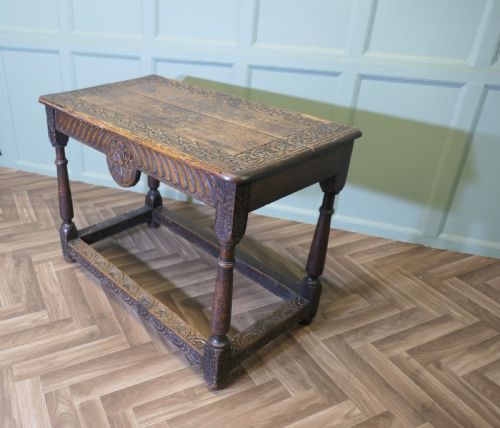


Gothic Style Hall Table
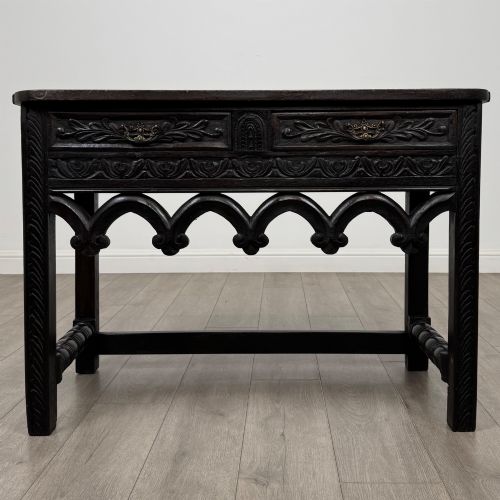
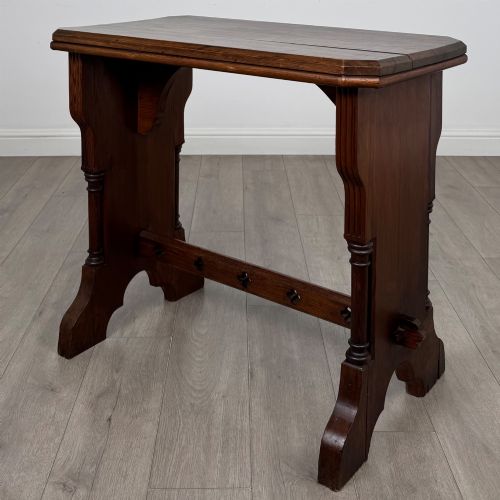
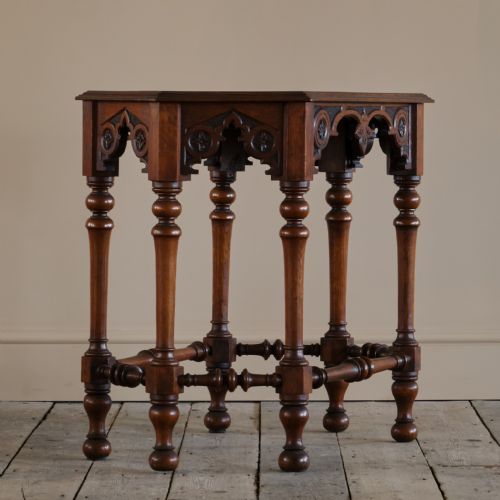
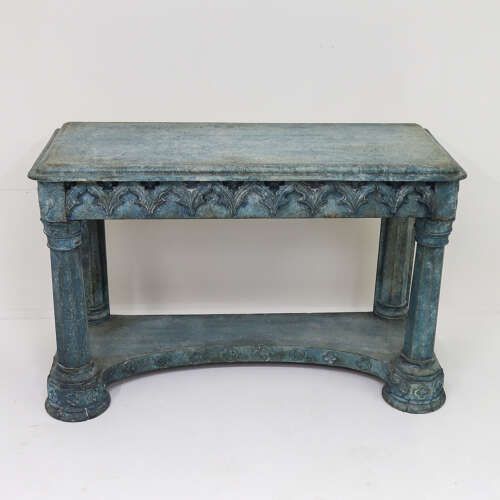
These gothic style hall table pieces combine architectural heft with practical surface space, offering an imposing focal point for an entranceway.
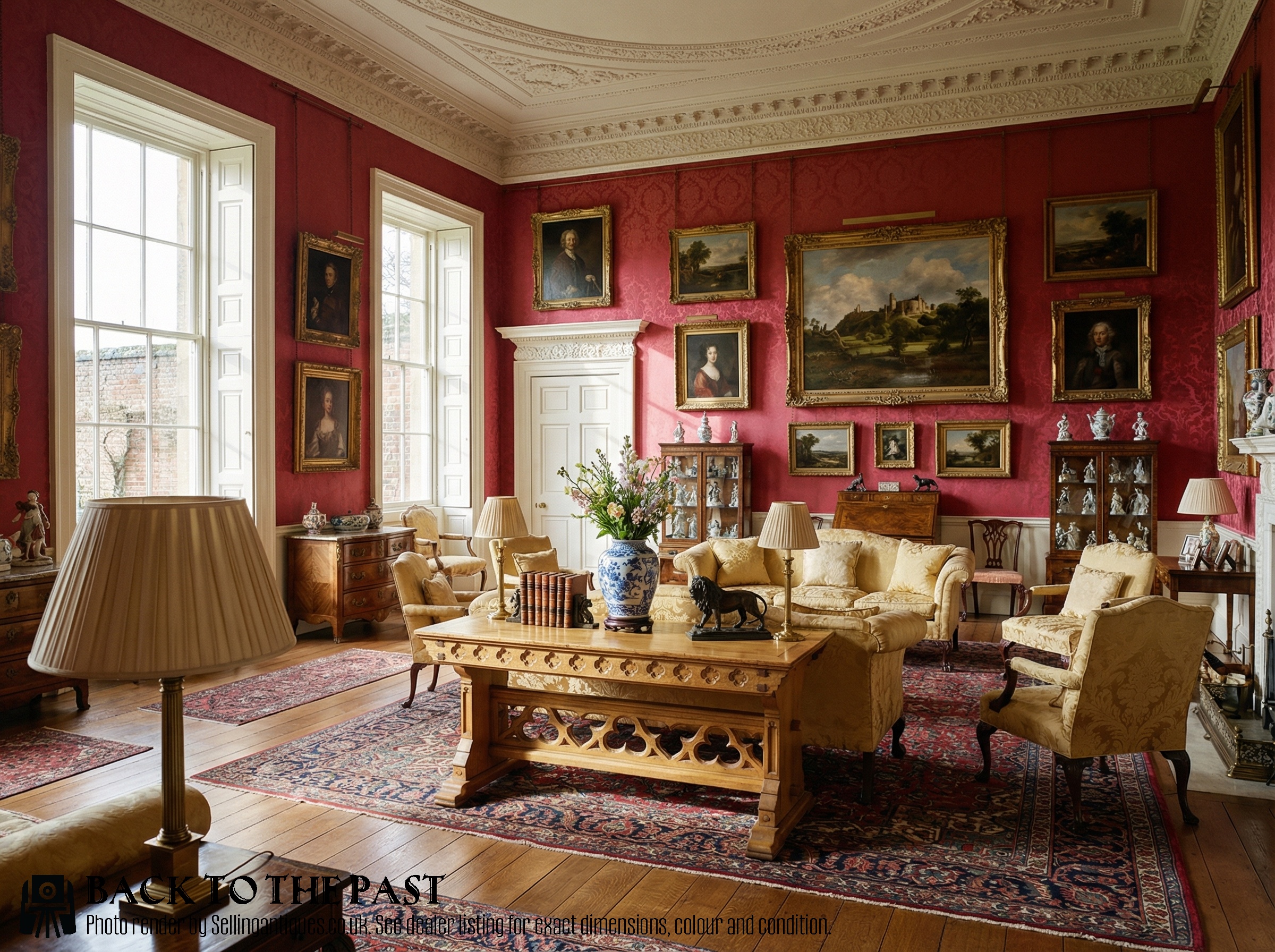
Gothic Style Hall Table
A gothic style hall table serves as a sturdy surface for entryways, drawing on medieval architectural motifs for its decorative language. When searching this phrase, buyers encounter various forms including side tables, console tables, and occasional tables.
The pieces appearing here stem primarily from the nineteenth century and the Victorian era, extending into Edwardian times and the early twentieth century. Common formats range from compact country oak examples to substantial walnut centre tables and monks benches.
Stylistic influences span Gothic Revival, Reformed Gothic, Arts and Crafts, and Celtic Revival traditions. Makers often channelled architectural aesthetics through pointed arches, tracery, and heavy timber construction.
How they were made
Carpenters relied heavily on solid oak, pitch pine, and walnut, often accentuating the grain with ebonised finishes or paint. Structural integrity was paramount, resulting in heavy timbers and sturdy joins designed for daily use.
Carving formed the primary method of ornamentation, featuring intricate tracery, linenfold panels, and geometric motifs. Selected pieces incorporate brass hardware or retain original tooled Moroccan leather inset tops to complete the design.
Gothic Style Hall Table Retail Price Guide 2026
Typical asking prices for gothic style hall table among the pieces listed under this phrase on Sellingantiques today, from the lower quarter to the upper quarter. They describe what is for sale here now, not the wider market.
Several tables manage to look remarkably like small altars, ready to receive a chalice rather than your house keys.
What varies in quality
Quality rests upon the crispness of the hand-carving and the selection of timber, where tightly grained oak or figured walnut elevates a piece. Superior examples display thoughtful proportions and architectural coherence rather than surface decoration alone.
The preservation of original finishes, such as patinated oak or early tooled leather inserts, distinguishes finer specimens from later alterations. Construction depth and weight also indicate the tier of craftsmanship, from simple country workshop items to architect-designed furniture.
AW Pugin·Charles Bevan
The Gothic Style Hall Table Glossary
- Reformed Gothic
- A nineteenth-century movement that simplified medieval motifs and emphasised structural honesty over excessive ornamentation. This style appears frequently in library and centre tables from the period.
- Tracery
- Openwork stonework patterns translated into wooden furniture decoration, commonly seen on panels and aprons. It mimics the stone window designs found in medieval architecture.
- Monks Bench
- A multifunctional piece of furniture featuring a hinged top that converts a bench into a table. These items often incorporate gothic carving on the backrest and panels.
- Pitch Pine
- A dense, resinous softwood utilised for nineteenth-century tables, offering a distinct grain pattern. It provided a durable alternative to hardwood while taking dark finishes effectively.
- Altar Table
- A heavy ecclesiastical form adapted for domestic use, frequently associated with nineteenth-century Gothic Revival designs. These long tables often display rigorous architectural framing.
Gothic Style Hall Table: Frequently Asked Questions
How do I identify a Reformed Gothic table?
Reformed Gothic tables display simplified structural lines, geometric incised decoration, and often contrasting ebonised highlights rather than heavy medieval carving.
They emerged in the later nineteenth century and prioritize functional clarity while maintaining architectural roots.
Where were these tables used originally?
These tables served primarily in grand entrance halls, libraries, and country houses as functional surfaces for incoming correspondence or decorative objects.
Sturdier iterations also functioned in dining rooms or domestic studies alongside matching seating.
How do I care for an oak table?
Maintain timber surfaces by applying appropriate beeswax sparingly and buffing with a soft cloth to preserve the natural grain and patina.
Keep tables away from direct heat sources and strong sunlight to prevent the timber from splitting.
Are these pieces strictly Victorian?
While the majority originate in the nineteenth century and Victorian period, designs extend into Edwardian times and the early twentieth century.
Revival styles persisted across decades, drawing on earlier medieval and Gothic aesthetics with varying construction techniques.