

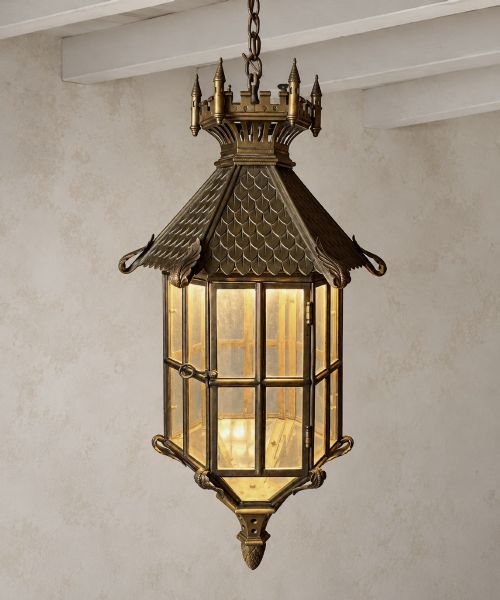
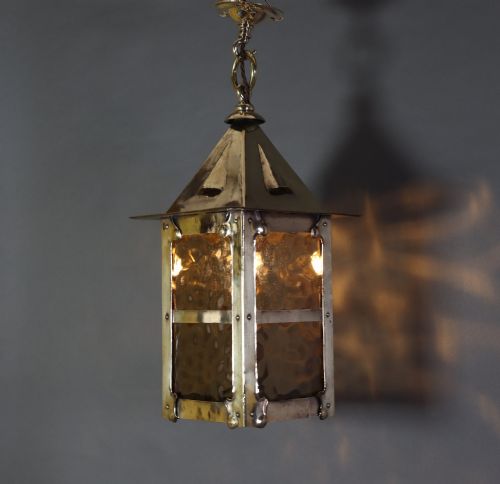
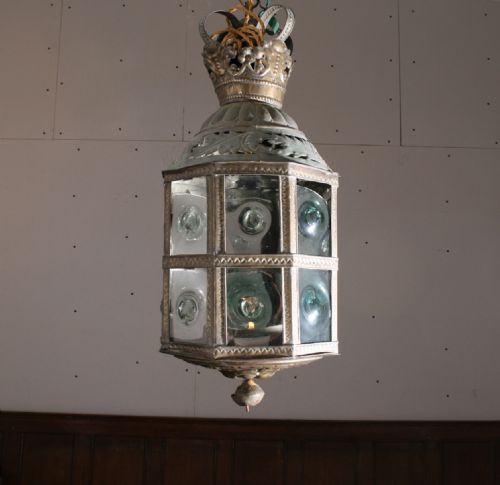


Gothic Style Hall Lantern
These gothic style hall lantern examples bring striking ecclesiastical shadow and historic weight straight to an entranceway, built to cast steady light through deep ironwork and heavy glass.
Gothic Style Hall Lantern
A gothic style hall lantern forms a commanding hanging light designed specifically for entrance halls, corridors, and high-ceilinged porches. These pieces draw directly on medieval architectural motifs, translating stone tracery and pointed arches into hanging illumination.
The versions most commonly met on this page date from the nineteenth century through the early twentieth century, spanning Victorian production, Arts and Crafts workshops, and French chateau influences. Makers of this period favoured strong vertical proportions, heavy metal framing, and protective glass panels suited to draughty passageways.
Forms range from simple square and hexagonal iron cages to elaborate pendant lights featuring hand-blown bulls eye glass or coloured leaded panes. Buyers encounter both domestic English examples and continental French pieces, each bringing a distinct regional interpretation to the medieval revival.
How they were made
Workshops relied on forged wrought iron, cast brass, and steel to construct the rigid skeletal frames that support the weight of the glazing. Blacksmiths and metalworkers hammered, riveted, and soldered these metals by hand, creating robust structures intended to endure decades of use in damp entranceways.
Glazing techniques involved heavy hand-blown glass, including bullseye panes and stained glass sections held securely within lead cames. This combination of thick metal and textured glass diffused the internal light source while throwing intricate patterns across surrounding walls.
Gothic Style Hall Lantern Retail Price Guide 2026
Typical asking prices for gothic style hall lantern among the pieces listed under this phrase on Sellingantiques today, from the lower quarter to the upper quarter. They describe what is for sale here now, not the wider market.
Materials recorded across these lighting fixtures include wrought iron, brass, steel, lead, hand-blown glass, and stained glass.
What varies in quality
Quality rests in the architectural ambition of the frame and the integrity of the original metalwork. Pieces with crisp hand-forging, balanced proportions, and integrated decorative brackets stand apart from simpler utility lights.
The glass contributes significantly to the character of the object, with heavy hand-blown bulls eye panels or intact stained glass sections indicating superior craftsmanship. Furthermore, the presence of matching pairs and documented stylistic attributions elevates the standing of an individual lantern.
Pugin·Voysey
The Gothic Style Hall Lantern Glossary
- Bulls Eye Glass
- A circular lump or lens in blown glass formed at the centre of a glass disc by the pontil rod. It creates distorted, highly textured patterns that obscure direct vision while catching the light.
- Wrought Iron
- Iron that has been heated and hammered by hand into shape by a blacksmith. This material shows subtle surface irregularities and hammer marks that distinguish it from cast alternatives.
- Stained Glass
- Glass coloured by the addition of metallic oxides during its manufacture, traditionally assembled using lead cames. It creates deep, coloured projections when illuminated from within.
- Lead Came
- A slender channel of lead used to hold together pieces of glass in a window or lantern shade. These flexible strips allow for intricate geometric or figurative designs.
- Arts and Crafts
- A design movement promoting handcraftsmanship, traditional materials, and vernacular forms over mass production. Pieces from this tradition emphasise visible construction methods and honest utility.
Gothic Style Hall Lantern: Frequently Asked Questions
Where should a gothic style hall lantern be hung?
These lanterns suit high-ceilinged entrance halls, stairwells, and covered porches where their vertical proportions and heavy metal frames have sufficient surrounding space.
Because they project strong shadows and cast directional light through patterned glass, positioning them centrally allows the historic ironwork and glass to make a clear architectural statement.
How do I date a gothic style hall lantern?
Dating relies on examining the metal construction methods, the type of glass panels, and the stylistic vocabulary of the period. Nineteenth-century examples often display hand-forged wrought iron and heavy leaded glass, while early twentieth-century pieces incorporate steel and simpler Arts and Crafts lines.
Comparing the suspension hardware, fixings, and overall patination to documented examples from Victorian or Edwardian production helps narrow the decade of manufacture.
What is the difference between English and French gothic style lanterns?
English lanterns from the nineteenth century frequently reflect the rigorous archaeological revival championed by designers like Pugin, favouring solemn ecclesiastical ironwork. French examples, often labelled as chateau pieces, lean towards decorative flair and lighter wrought iron scrolls.
Both traditions utilise heavy glass and medieval motifs, but the French variants often incorporate whimsical decorative touches into the metal framework.