


Gothic Style Cabinet
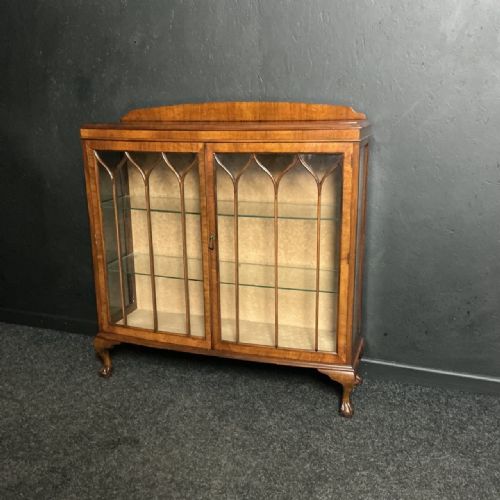
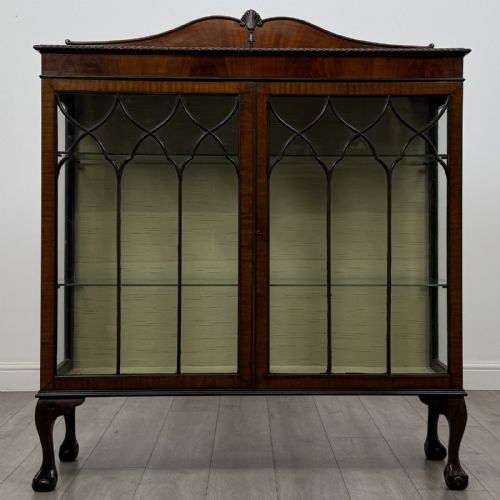
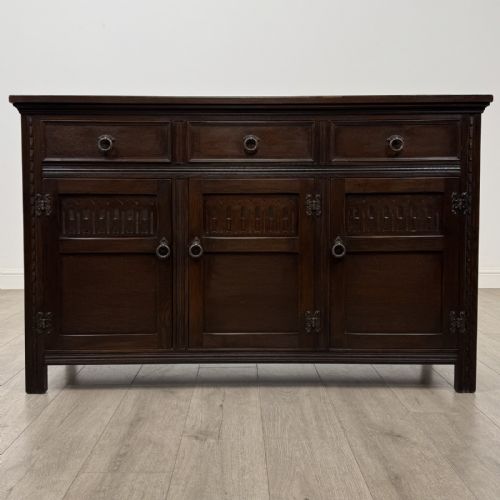
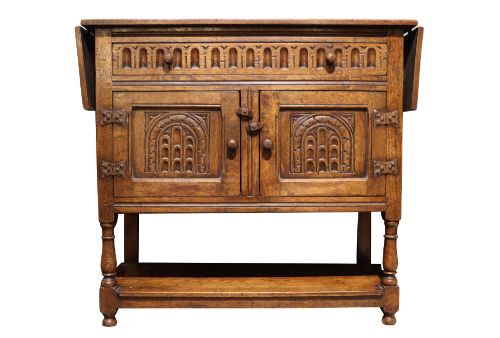
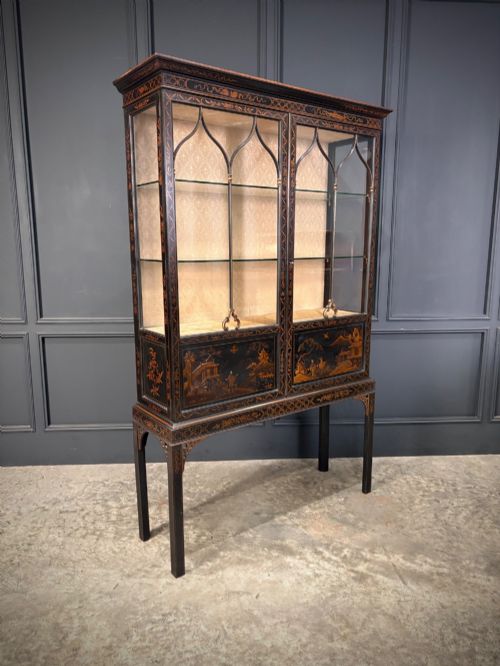
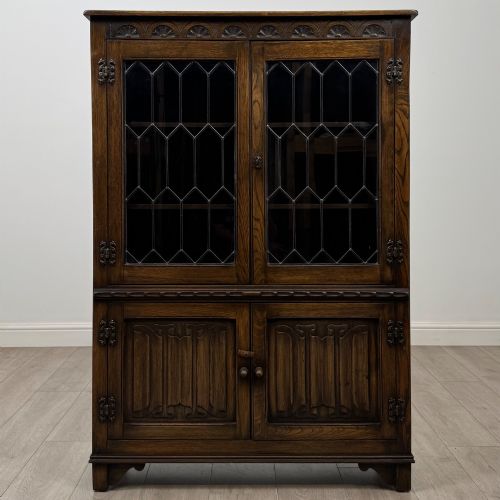
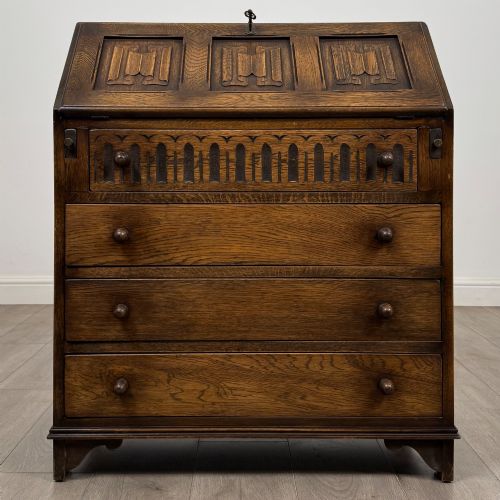
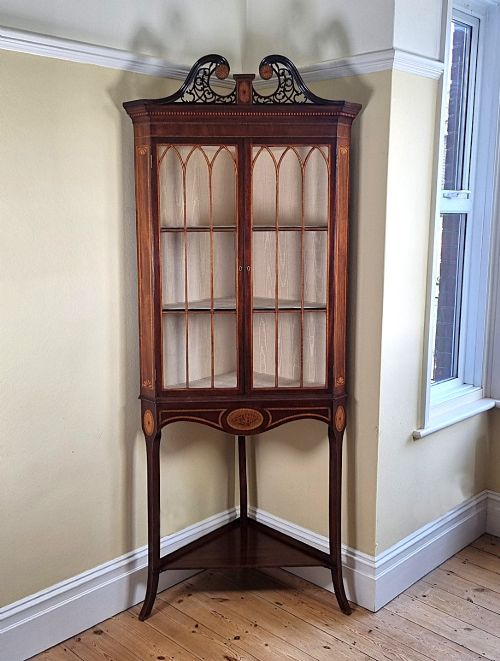
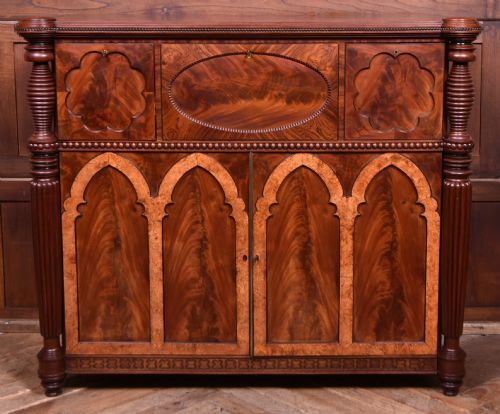
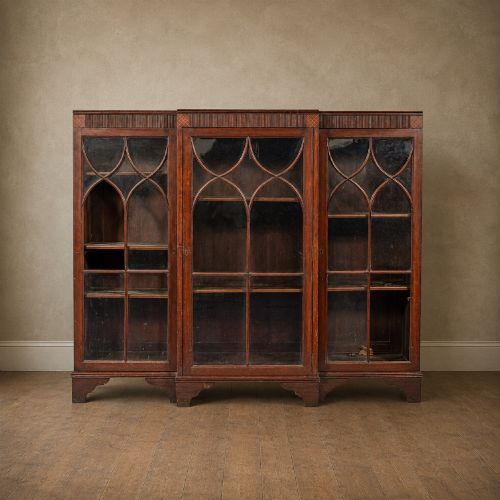
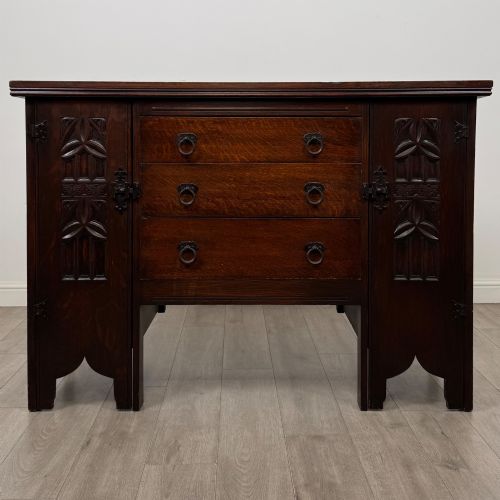
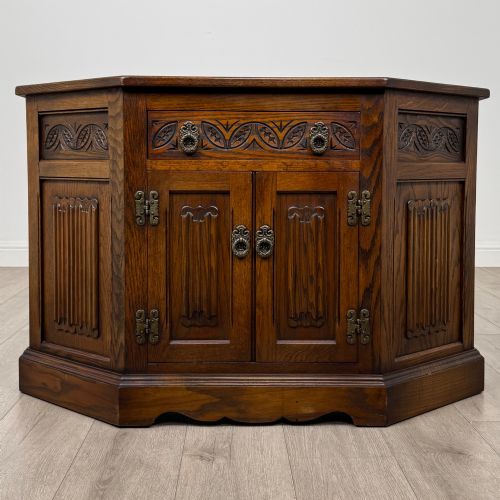
These gothic style cabinet examples bring ecclesiastical presence indoors through pointed arches, linenfold panels and dark timber.
Gothic Style Cabinet
A gothic style cabinet draws upon medieval ecclesiastical architecture, translating pointed arches, tracery and robust proportions into domestic storage. These pieces emerge predominantly in oak and mahogany across the nineteenth and twentieth centuries, spanning revivals from the Victorian era through the Edwardian period to nineteen-thirty.
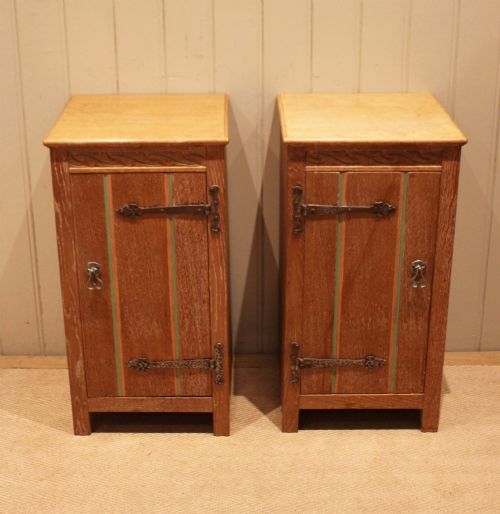
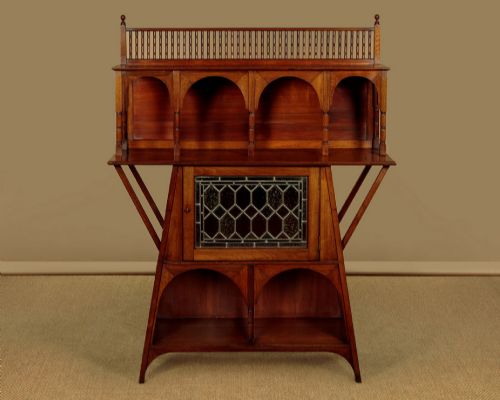
Forms vary widely across the selection, ranging from compact bedside units and corner cupboards to expansive breakfront bookcases and sideboards. Pieces often integrate display glass, leaded panes or brass hardware, serving both practical storage and architectural display within a room.
Materials and Construction
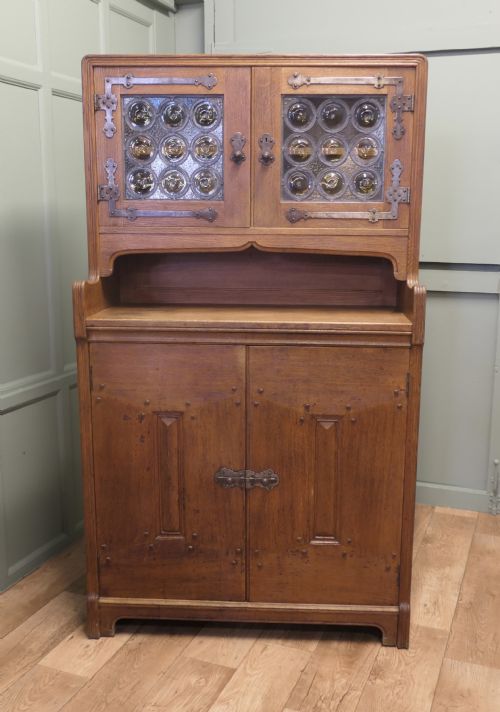
Construction relies heavily on solid oak and mahogany, occasionally supplemented by pine, walnut, yew and ebonised finishes. Metalwork employs brass and iron for hinges, handles and structural reinforcement, while glass appears in astragal-glazed or leaded doors.
Carving technique defines the surface ornamentation, utilising deep relief work to render linenfold panels, tracery and botanical motifs. Joinery incorporates traditional framing methods, allowing substantial timber carcasses to house heavy books, plate or provisions securely.
Gothic Style Cabinet Retail Price Guide 2026
Typical asking prices for gothic style cabinet among the pieces listed under this phrase on Sellingantiques today, from the lower quarter to the upper quarter. They describe what is for sale here now, not the wider market.
The selection spans from seventeenth-century provincial pieces up to nineteen-thirty designs, utilising oak, mahogany, pine and walnut.
Assessing Quality
The distinction between tiers rests upon the depth of timber selection and the sharpness of the carving. Hand-carved linenfold and crisp architectural mouldings indicate superior workshop input compared to mechanical pressing.
Proportion and structural integrity separate routine commercial items from exceptional commissions. Integrated glazing bars, unblemished glass panes and well-fitted internal shelving elevate the execution of the design.
Liberty and Co·Leonard Wyburd·Gillows·George Edmund Street·James Winter and Sons
The Gothic Style Cabinet Glossary
- Linenfold
- A style of wood carving that mimics folded linen or parchment. It frequently decorates the door panels of cupboards and sideboards.
- Tracery
- Openwork stonework patterns translated into wooden furniture framing. It supports glass panels and divides cabinet doors.
- Breakfront
- A piece of furniture whose central section projects forward from the flanking wings. This layout creates depth in large library bookcases and sideboards.
- Astragal
- Moulding profiles that hold glass panes within a door frame. They form geometric glazing patterns across bookcases.
- Crenelated
- Architectural battlements carved along a cornice or top rail. This detail directly references medieval fortification.
Gothic Style Cabinet: Frequently Asked Questions
Where should I place a gothic style cabinet?
These cabinets suit libraries, dining rooms and hallways where substantial timber furniture anchors the space.
Their architectural presence works well against plain walls that allow the carved details and dark wood to stand out.
How do I care for antique oak furniture?
Keep wooden surfaces away from direct heat sources and sudden humidity shifts to prevent timber splitting.
Apply a traditional beeswax polish periodically to nourish the grain and maintain the surface sheen.
What is the difference between revival periods?
Nineteenth-century pieces often lean towards heavy ecclesiastical proportions and deep relief carving.
Twentieth-century examples tend to simplify these architectural elements for more domestic interior scales.
Can I store books in these cabinets?
Many versions feature glazed doors or open shelving designed specifically for libraries and collections.
Ensure shelf supports are secure before loading heavy volumes onto wooden tiers.