



Gothic Revival Server Table
A gothic revival server table brings sturdy timber work and medieval lines into a modern room, offering a solid surface with distinct architectural character.
Gothic Revival Server Table
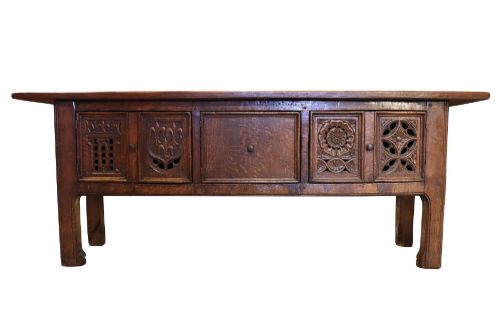
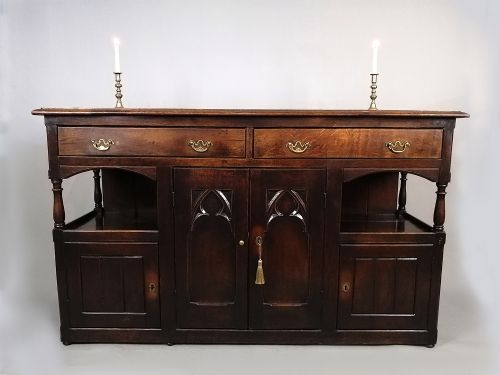
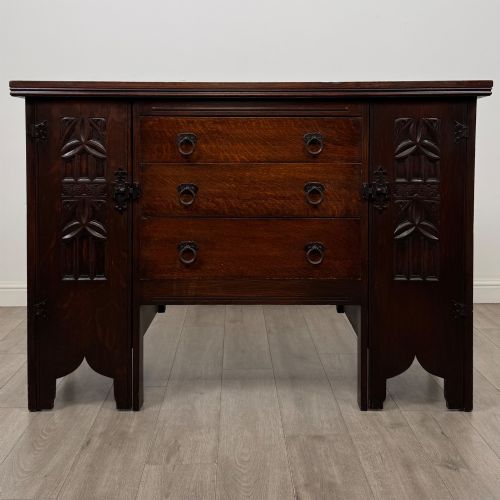
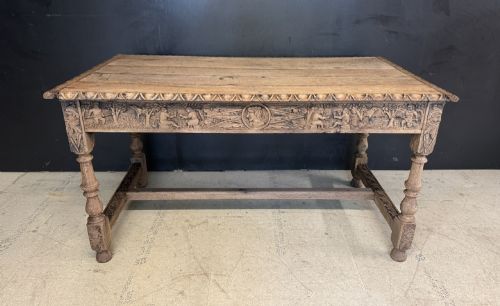
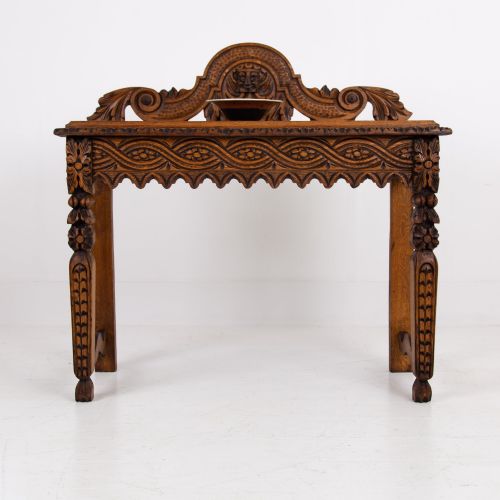
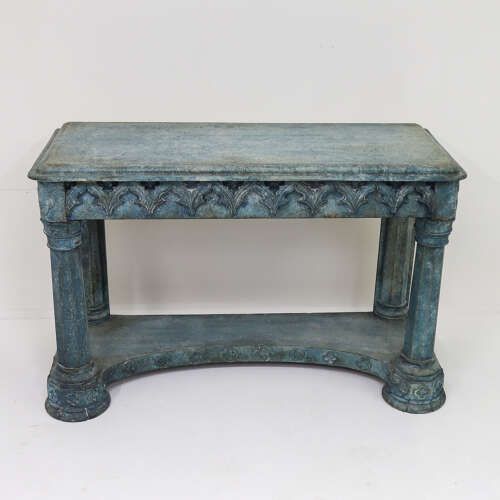
A gothic revival server table stands as a heavy, architectural piece of furniture designed for serving or display, drawing heavily on medieval ecclesiastical and structural motifs. When searching for a gothic revival server table, buyers encounter forms ranging from narrow dresser bases to console tables, hall tables, and serving tables.
The pieces appearing on this page span the nineteenth century, Victorian era, and early twentieth century, including styles that cross into Jacobean Revival and Renaissance Revival. Oak forms the primary body of these works, complemented by pitch pine, walnut, painted wood, and iron hardware.
Makers and workshops constructed these serving pieces with substantial proportions, often incorporating carved details, galleries, and underframes that reflect nineteenth-century and early twentieth-century interpretations of gothic design.
What varies in quality
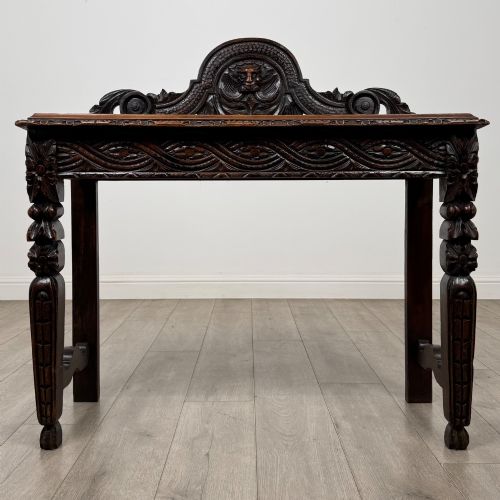
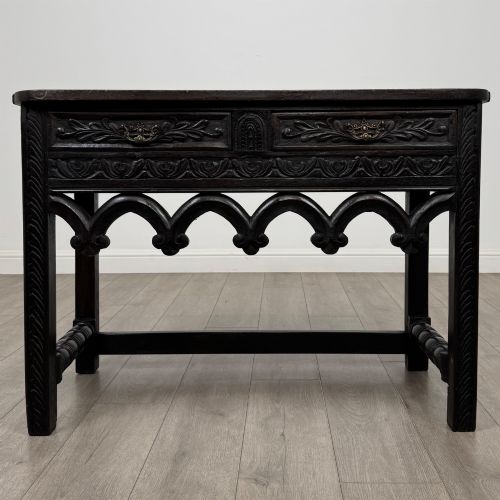
The depth and crispness of the hand-carving separate standard utility furniture from finer architectural examples, particularly where figures, foliage, and tracery are rendered with high definition. Timber selection also dictates grade, with dense quarter-sawn oak and figured walnut holding greater presence than simpler painted or plain timber constructions.
Proportion and structural integrity define the upper tier, where narrow depths, balanced galleries, and original brass or iron hardware remain intact without heavy alteration. Pieces retaining rich natural colour and patination on the timber surface command stronger architectural interest.
The documented pieces span from the late eighteenth-century George III period through the Victorian era and into the early twentieth century.
PHILLIPS BRISTOL
The Gothic Revival Server Table Glossary
- Dresser base
- A low sideboard or serving table typically fitted with cupboards or drawers beneath a heavy top. These pieces served practical storage and display functions in dining rooms and halls.
- Console table
- A table designed to stand against a wall, frequently supported by brackets or architectural legs rather than four standard posts. Such forms suited narrow hallways and reception spaces.
- Green Man
- A sculptural architectural motif depicting a face carved from or entwined with leaves and vines. This pagan symbol frequently appears on nineteenth-century carved woodwork.
- Pitch pine
- A resinous softwood utilised for furniture and architectural joinery during the Victorian period. It offers high durability and a prominent grain pattern.
- Tracery
- Openwork architectural stone or timber patterns, commonly associated with gothic windows and replicated in furniture panels and galleries. It provides linear geometric decoration.
Gothic Revival Server Table: Frequently Asked Questions
Where did people use these tables?
These tables stood primarily in dining rooms, entrance halls, and large reception spaces where they functioned as serving surfaces or display consoles for heavy dishes and household goods.
Their solid construction allowed them to bear significant weight, making them practical pieces for domestic service in large nineteenth-century houses.
How do I date a gothic table?
Dating relies on examining the timber species, joinery methods, and the specific evolution of the gothic revival style across the nineteenth and early twentieth centuries. Victorian examples often display heavier, deep-relief carving, while Edwardian pieces may show lighter proportions.
Hardware elements such as brass handles and iron hinges also provide chronological clues, though replacements are common in older furniture.
Are these tables suitable for small rooms?
Certain forms, particularly narrow hall tables and console variations, are specifically proportioned to fit compact spaces without dominating a room. Their shallow depth allows them to sit flush against walls in hallways and tight corridors.
However, their heavy timber construction and dark finishes still create a strong visual presence that requires careful placement.
What is the difference between a server and a sideboard?
A server table typically offers an open underframe or simpler drawer configuration beneath the main top, functioning primarily as a surface for presenting food or objects. Sideboards and dresser bases incorporate extensive enclosed cupboard space for storing dining ware.
Both forms share the same gothic revival architectural vocabulary and heavy timber construction.