

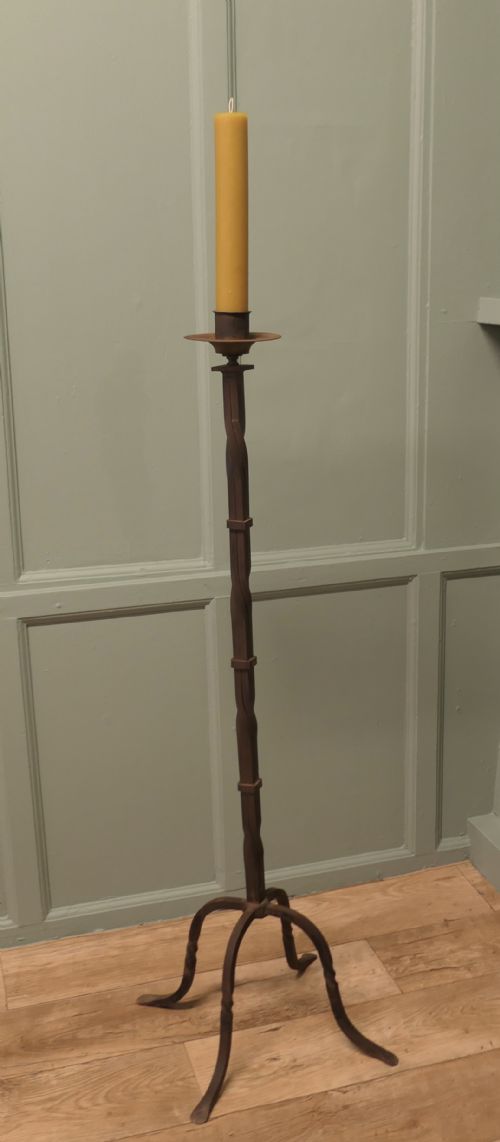

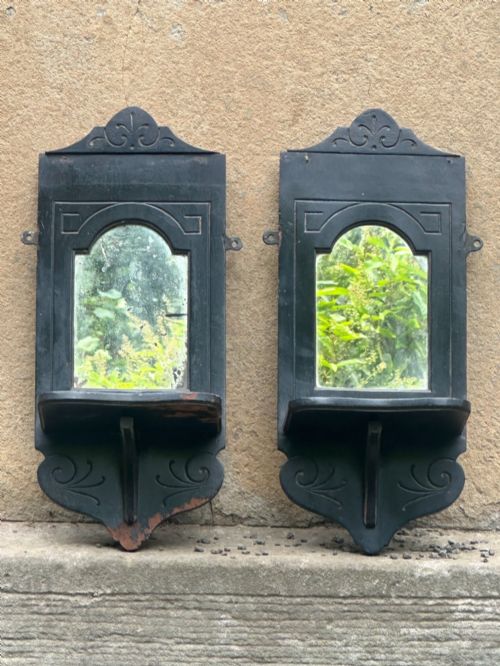
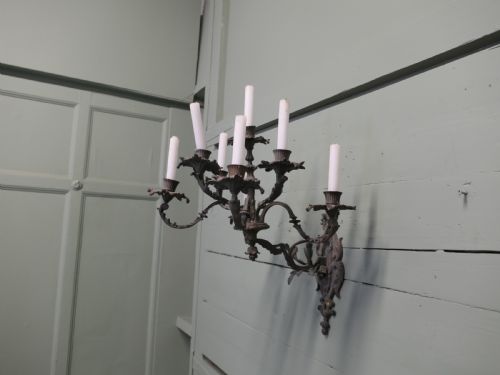


Gothic Revival Sconce
These gothic revival sconce pieces bring medieval character to modern walls through heavy cast metal and ecclesiastical brass.
Gothic Revival Sconce
A gothic revival sconce provides illumination while channelling medieval architectural forms through heavy metalwork and ecclesiastical design. These wall lights emerge primarily from the nineteenth century and Victorian periods, often taking the form of church candlesticks adapted for domestic use.
Buyers frequently encounter pairs of brass wall sconces or heavy iron castle wall lights alongside single carved wooden examples. The selection spans straightforward ecclesiastical brass and copper creations through to more ornate aesthetic movement and arts and crafts interpretations.
How they were made
Maker construction relies heavily on cast brass, wrought iron, and bronze, often combined with glass elements or ebonised wood. Metal components are forged, cast, and hand-carved to achieve the characteristic ecclesiastical motifs and robust structural forms.
Surviving examples demonstrate careful hand-carving in wooden pieces and detailed metalwork in the brass and iron wall lights. These techniques ensure the structural integrity required to support multiple candle arms or heavy glass elements.
Gothic Revival Sconce Retail Price Guide 2026
Typical asking prices for gothic revival sconce among the pieces listed under this phrase on Sellingantiques today, from the lower quarter to the upper quarter. They describe what is for sale here now, not the wider market.
Listings feature brass, wrought iron, bronze, and ebonised wood across nineteenth-century and twentieth-century periods.
What varies in quality
Quality differences appear in the crispness of the cast metal details, such as grotesque masks and tracery, and the weight of the brass or iron. Substantial gauge metal and deeply defined hand-carving distinguish superior examples from simpler production pieces.
The sophistication of the stylistic integration also marks out better pieces, where arts and crafts or aesthetic movement influences blend seamlessly with strict gothic revival forms. Proportion and balance in multi-arm sconces dictate the overall presence on the wall.
The Gothic Revival Sconce Glossary
- Gothic Revival
- An architectural and decorative style drawing inspiration from medieval design, featuring pointed arches and heavy ornamentation. This aesthetic dominated much nineteenth-century interior metalwork.
- Girandole
- A branched wall light or sconce, frequently incorporating a mirror to reflect the candlelight. These pieces often feature decorative brass or gilt metal frames.
- Ecclesiastical
- Pertaining to a church or chapel, describing items originally intended for religious spaces. Many sconces and candlesticks were adapted from church furnishings.
- Aesthetic Movement
- A late nineteenth-century design current emphasising visual beauty over narrative content. It produced refined brass candlesticks and wall fixtures.
Gothic Revival Sconce: Frequently Asked Questions
How do I hang a heavy iron wall light?
Heavy iron wall lights require secure mounting directly into wall studs or solid masonry using appropriate fixings. The substantial weight of nineteenth-century metalwork demands professional installation to ensure stability.
Consult a qualified electrician if the piece has been adapted for modern electrical wiring. Proper load-bearing support protects both the antique fixture and the plaster wall.
Are these sconces electrified or for candles?
Many pieces originate as church candlesticks or candle holders subsequently adapted for wall mounting or electrification. Listings include both original candle brackets and later conversions.
Check the individual description to determine whether a piece retains its original candle fittings or accommodates modern wiring. Professional rewiring is often necessary for safe domestic use.
How do I date a brass sconce?
Dating relies on manufacturing techniques, material composition, and stylistic markers associated with Victorian, arts and crafts, or twentieth-century periods. Heavy cast brass and specific patination indicate nineteenth-century origins.
Compare the construction methods and decorative motifs, such as grotesque masks or gothic tracery, with dated examples in the archive. Subtle shifts in design help separate Victorian production from later twentieth-century revivals.
How do I clean antique brass?
Cleaning antique brass should be approached with caution to preserve the accumulated patination and historic surface character. Dust gently with a soft dry cloth rather than using harsh commercial polishes.
Aggressive cleaning removes the aged finish that collectors value. Consult a specialist restorer if deeper cleaning is required for safe handling.