



Gothic Revival Reading Chair
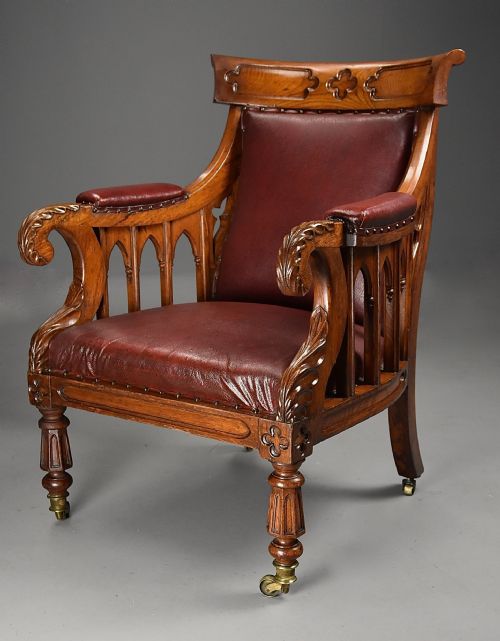
A gothic revival reading chair brings heavy timber and pointed arches straight into the study, offering a solid seat built for serious books.
Gothic Revival Reading Chair
When you search for a gothic revival reading chair, you encounter sturdy timber armchairs shaped by nineteenth-century tastes for medieval design.
The versions you meet on this page hail primarily from the Victorian era, spanning the nineteenth century with notable examples from eighteen-eighty and eighteen-fifty.
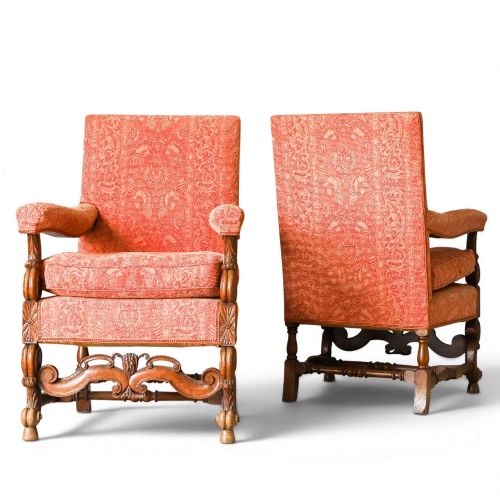
Makers fashioned these library and open armchairs in oak, walnut, rosewood, and brass, often pairing timber frames with leather, fabric, hessian, and textile upholstery.
How they were made
Carpenters and joiners built these frames from dense hardwoods like oak, walnut, and rosewood, applying deep carving to enrich the structural uprights and armrests.
Upholsterers finished the seating with button leather, fabric, and hessian textiles, securing elements with brass details and high backs designed for comfort.
Gothic Revival Reading Chair Retail Price Guide 2026
Typical asking prices for gothic revival reading chair among the pieces listed under this phrase on Sellingantiques today, from the lower quarter to the upper quarter. They describe what is for sale here now, not the wider market.
Some nineteenth-century readers clearly demanded extra breathing room, as evidenced by library armchairs proudly catalogued with generous proportions.
What varies in quality
The distinction between standard seating and superior library armchairs lies in the depth of the timber carving and the richness of the selected wood.
Refined pieces display careful proportion and harmonious integration of architectural details, whereas simpler examples rely on basic joinery and plain surfaces.
The Gothic Revival Reading Chair Glossary
- Gothic Revival
- A nineteenth-century design movement drawing inspiration from medieval architecture, pointed arches, and ecclesiastical motifs. This style heavily influences the structural lines of the chairs listed here.
- Arts and Crafts
- A design movement valuing traditional craftsmanship, simple forms, and visible construction methods over mass production. Pieces from this tradition often feature unpretentious carved walnut or oak.
- Library Armchair
- A substantial seating form designed for prolonged reading in private studies or institutional libraries. These chairs typically incorporate high backs and generous proportions.
- Hessian
- A coarse woven fabric, traditionally made from jute fibres, utilised as a foundation or secondary covering beneath primary upholstery materials. It supports the internal padding of nineteenth-century seating.
Gothic Revival Reading Chair: Frequently Asked Questions
How were these armchairs used historically?
Historically, patrons placed these sturdy armchairs in private libraries, studies, and drawing rooms for reading and writing. Their high backs provided substantial support during long hours of study.
The robust timber construction ensured durability for daily use by scholars and readers.
How do I live with a gothic revival chair?
Integrating a nineteenth-century library armchair into a modern room requires balancing its heavy timber presence with simpler surroundings. Place it in a study or corner where its architectural lines can stand clear.
Maintain the wood with appropriate oils or waxes and protect the leather or textile upholstery from direct sunlight.
How do I tell Victorian gothic from arts and crafts?
Victorian gothic pieces lean heavily on ecclesiastical ornamentation, pointed arches, and elaborate carved tracery. They project a formal, architectural presence.
Arts and crafts examples tend to emphasise simpler construction, exposed joinery, and a more straightforward celebration of the walnut or oak material.