


Gothic Revival Oak Mirror
These gothic revival oak mirror pieces bring architectural gravity and dark timber warmth into a room.
Gothic Revival Oak Mirror
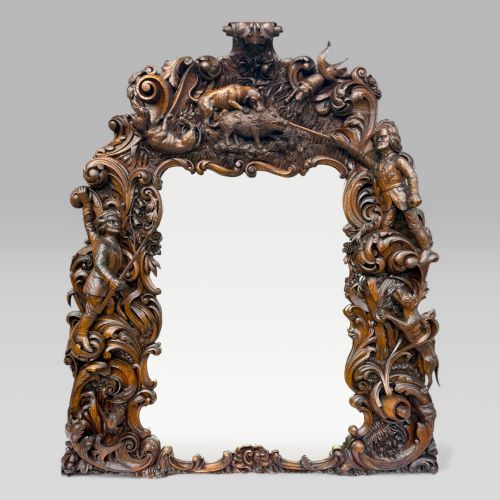
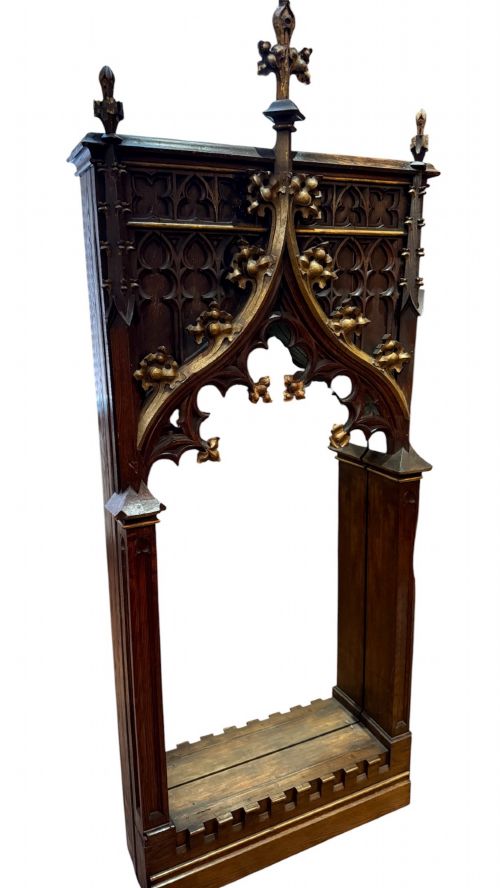
A gothic revival oak mirror combines medieval architectural motifs like pointed arches and tracery with the dense grain of timber. Most examples on this page date from the nineteenth century, spanning Victorian and Edwardian periods.
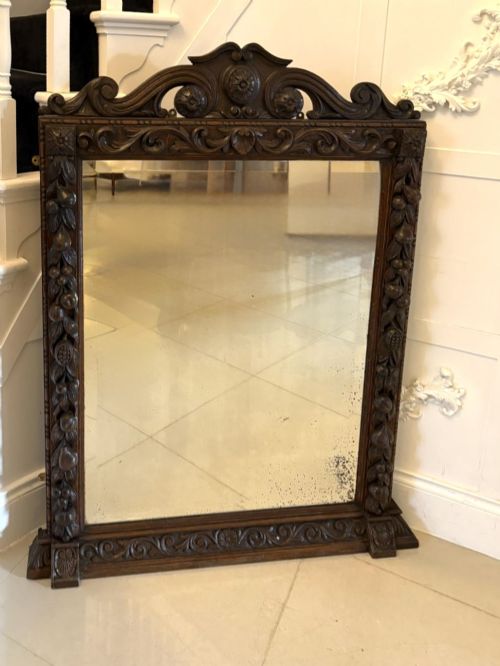
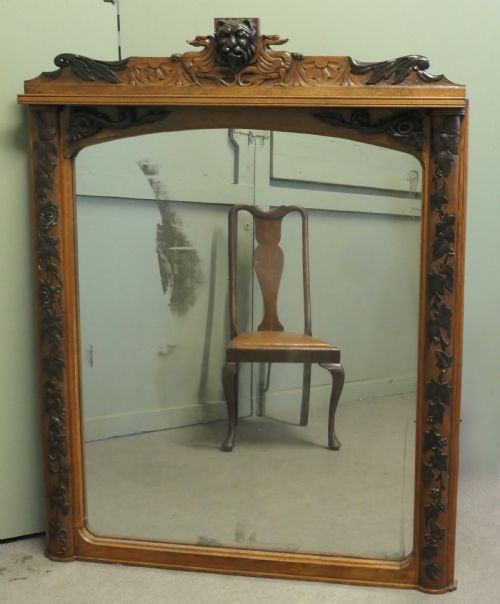
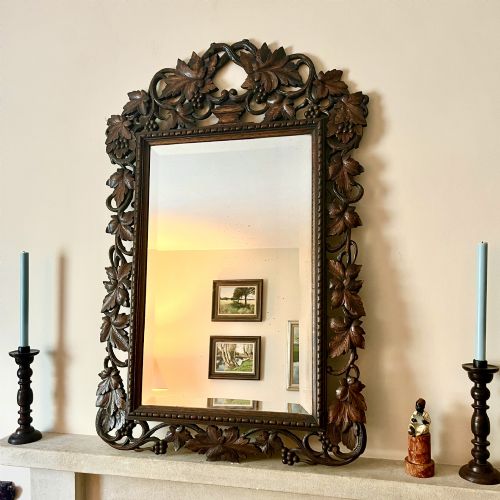
Forms range from compact wall-hanging frames to grand overmantel pieces designed for sitting above a fireplace. Some pieces integrate carved figures such as Green Men or dragons alongside traditional pointed surrounds.
Sideboards and hall stands also appear with built-in mirror backs and carved oak frameworks. These larger items extend the gothic vocabulary into heavy domestic furniture.
How they were made
Makers utilised solid timber for the structural frames, often working with oak and occasionally pollard oak or specimen woods for inlaid details. Carving was executed by hand to render deep undercut relief foliage and tracery.
Glass panels were inserted into the rebated timber, frequently featuring bevelled edges. Brass hardware and gesso detailing occasionally supplement the construction to provide contrast against the polished wood.
Keep watch for unexpected beasts hiding in the grain, including carved dragons and curious Green Men.
What varies in quality
Depth and crispness of the hand carving separate standard production from exceptional pieces. The finest works display sharply defined architectural mouldings and complex figures rather than shallow stamped ornamentation.
Proportion and scale dictate the visual impact of each frame, particularly on larger overmantels and sideboards. The integrity of the timber joints and the retention of original mirror glass influence the overall character.
L Blondie
The Gothic Revival Oak Mirror Glossary
- Overmantel mirror
- A large mirror designed specifically to be hung on the wall directly above a fireplace mantelpiece. They often feature extended horizontal proportions and heavy architectural cornices.
- Gesso
- A plaster-based material applied to wood surfaces and moulded or carved to create decorative relief details. It provides a smooth base for subsequent gilding or painting.
- Green Man
- A sculptural architectural motif depicting a human face emerging from or entwined with foliage and vines. It appears frequently in carved woodwork of this period.
- Tracery
- Openwork stonework patterning translated into woodwork, characterised by intersecting arched ribs and geometric shapes. It forms a primary decorative language in gothic design.
- Bevelled glass
- A mirror plate with edges ground and polished at an angled slope to catch the light. This technique adds depth and a distinct refractive border to the reflection.
Gothic Revival Oak Mirror: Frequently Asked Questions
Where should I hang a large overmantel mirror?
These large architectural frames work best mounted securely above a functioning or decorative fireplace in a principal reception room. Their substantial weight requires anchoring directly into structural wall studs.
Positioning them opposite a window helps maximise the reflection of natural light around darker interior spaces.
How do I care for antique oak frames?
Dust the carved surfaces regularly with a soft, dry brush to prevent accumulation within the deep recesses of the relief work. Avoid using modern silicone sprays or heavy liquid polishes on the timber.
Applying a traditional beeswax sparingly once or twice a year helps nourish the grain without building up a sticky residue.
Are these mirrors original to the nineteenth century?
Most examples originate from the Victorian and Edwardian eras, spanning from the mid-nineteenth century into the early twentieth century. Stylistic markers such as construction joints and hand-carved details help confirm their age.
Some pieces incorporate later replacement mirror glass while retaining their historic timber frames.
What is Puginesque design?
Puginesque refers to the design influence of Augustus Pugin, a key architect and theorist of the Gothic Revival movement. It prioritises structural honesty and authentic medieval architectural ornament.
Pieces in this style draw directly from ecclesiastical and medieval precedents rather than generic historicism.