






Gothic Revival Dining Set
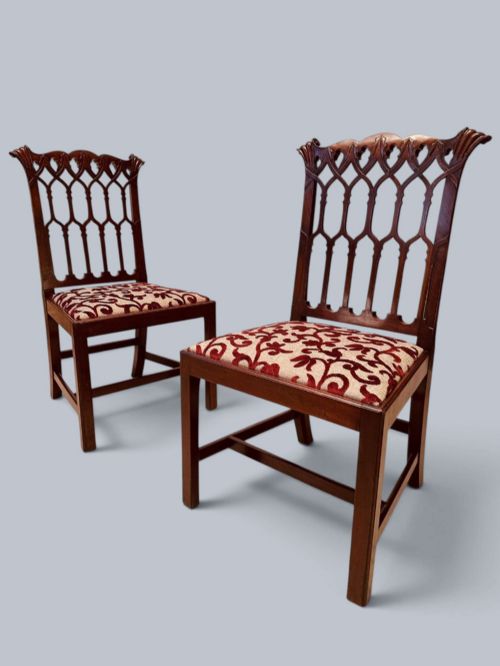
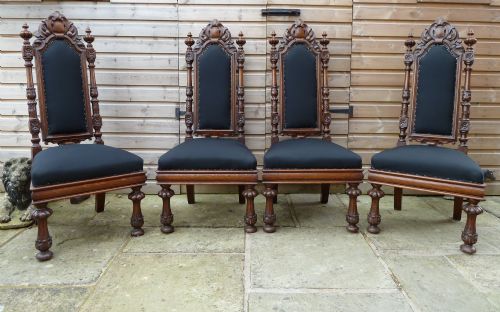
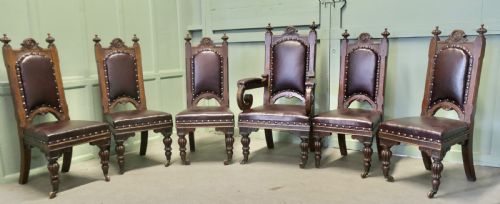
These gothic revival dining set pieces bring serious architectural presence to a room, built from solid timbers with pointed arch details and high carved backs.
Gothic Revival Dining Set
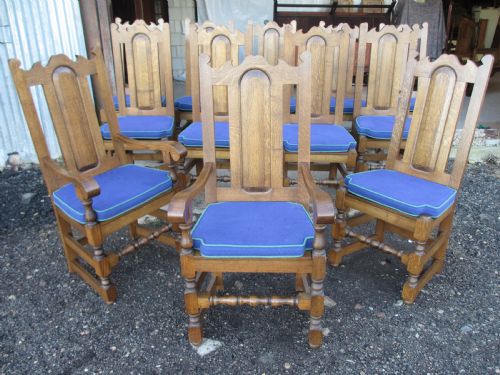
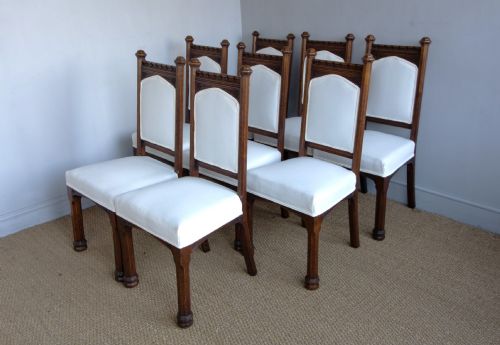
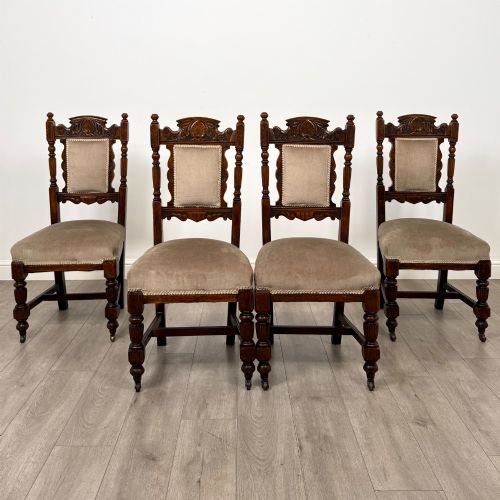
When you search for a gothic revival dining set, you are looking at substantial groupings of chairs, tables and benches created in the nineteenth and early twentieth centuries, drawing heavily on medieval architectural forms. The most frequent meetings on this page are sets of oak dining chairs featuring high backs, pointed arch motifs and carved panels.
The evidence spans the nineteenth century, Victorian era and Edwardian periods, alongside later twentieth century expressions, incorporating related styles such as Jacobean revival, Chippendale style and Spanish revival. Alongside standard dining chairs, you encounter hall chairs, armchairs and occasional tables designed to anchor a formal dining space.
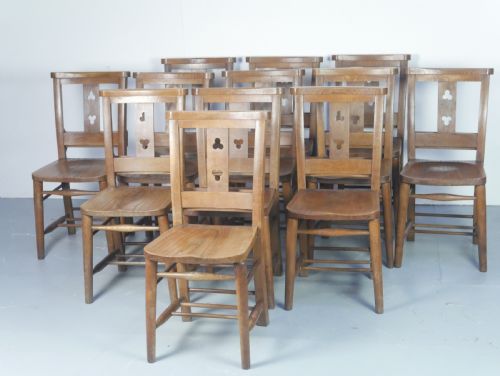
Origins stretch across English workshops, Scottish makers and continental examples, demonstrating how widely the medieval aesthetic travelled. These groupings range from smaller sets of three or four up to substantial sets of twelve or fourteen chairs.
Materials and construction
Oak is the dominant timber across the listings, paired with mahogany, pitch pine and occasional metal elements such as brass fixtures. These dense woods provided the structural integrity needed for heavy high-backed chairs and robust dining tables.
Joinery relied on traditional pinned mortise and tenon construction to support the considerable weight and daily use expected of dining furniture. Carving was executed by hand directly into the solid timber, forming linenfold panels, tracery and heraldic motifs.
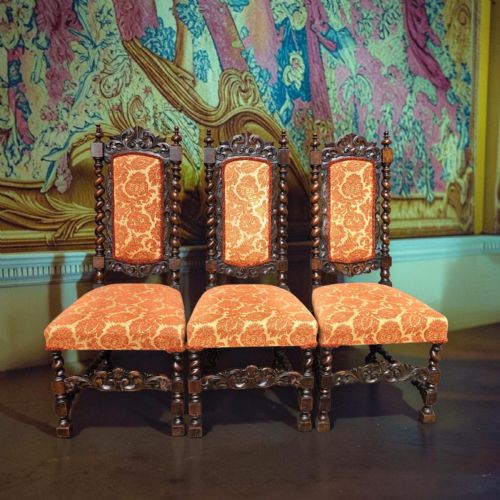
Seating surfaces were frequently upholstered in leather, fabric, velvet or woven materials, secured with brass studs, whilst others relied on plain timber or shaped wooden panels.
Gothic Revival Dining Set Retail Price Guide 2026
Typical asking prices for gothic revival dining set among the pieces listed under this phrase on Sellingantiques today, from the lower quarter to the upper quarter. They describe what is for sale here now, not the wider market.
Oak and mahogany are the primary timbers recorded across these listings, accompanied by leather, velvet and brass details.
Distinctions in quality
The upper tier of these pieces is defined by the crispness of the hand carving and the selection of timber with strong medullary rays in the oak. Workshops known for documented design, such as those associated with recognised cabinet makers, exhibit superior proportional balance and refined joint work.
Simpler provincial sets show broader, less intricate tool marks and utilise plainer secondary woods. The thickness of the timber in the stiles and rails and the integrity of the original upholstery framework further separate everyday utility items from exhibition grade furnishings.
Lamb Of Manchester·Charles Bevan·Liberty And Co·Goodall Lamb And Heighway·Shapland And Petter·George Morant
The Gothic Revival Dining Set Glossary
- Gothic Revival
- An architectural and decorative style drawing inspiration from medieval design, featuring pointed arches, trefoils and heavy carved tracery. This aesthetic dominated nineteenth century furniture production.
- High Back
- A chair design featuring an extended vertical backrest, often rising well above the seat level to emphasise verticality and architectural dignity.
- Barley Twist
- A turned wooden furniture leg or stretcher carved in a spiral resembling a twisted rope. This technique was popular in seventeenth century furniture and revived during the Victorian era.
- Tracery
- Openwork ornamentation of stone or timber, typically consisting of intersecting ribwork in the gothic window style. Furniture makers translated this architectural motif into carved chair backs.
- Hall Chair
- A rigid wooden seat, often un-upholstered, designed for placement in an entrance hall rather than continuous dining comfort. These pieces frequently display heraldic crests or family badges.
Gothic Revival Dining Set: Frequently Asked Questions
How do I care for antique oak dining furniture?
Feed the dry timber occasionally with a traditional beeswax polish, avoiding modern silicone sprays that build up a residue over time.
Keep the seating away from direct heat sources and strong sunlight to prevent the timber from splitting and the leather or fabric from drying out.
Were these sets originally made with matching tables?
Many large sets were commissioned together with a matching dining table and benches, though surviving groups often consist solely of chairs.
Tables and benches matching the exact timber and carved vocabulary do appear, but chairs were frequently gathered or supplemented over time.
How do I spot a Victorian piece from an Edwardian one?
Victorian examples tend to display heavier, deeper hand carving and darker finishes, often incorporating dramatic architectural elements like heavy tracery and linenfold panels.
Edwardian interpretations generally lean toward lighter construction, simpler proportions and a more restrained application of period motifs.
Can I use these dining chairs every day?
Solid oak construction and pegged joints give these historical chairs remarkable structural strength, making them well suited for regular daily use.
Ensure the frame remains tight at the joints and check that any historical leather or fabric upholstery is stable enough to support daily sitting.