


Gothic Revival Cross
These gothic revival cross pieces are substantial devotional objects that bring solemn historical presence into a modern interior.
Gothic Revival Cross
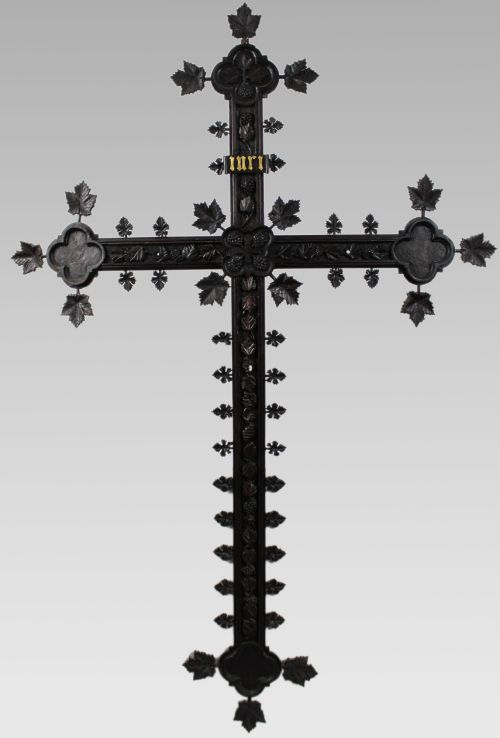
A gothic revival cross stands as a significant devotional object drawn primarily from the nineteenth century, capturing the serious ecclesiastical aesthetic of the period. These items typically manifest as altar crosses or wall sculptures designed for private contemplation or church service.
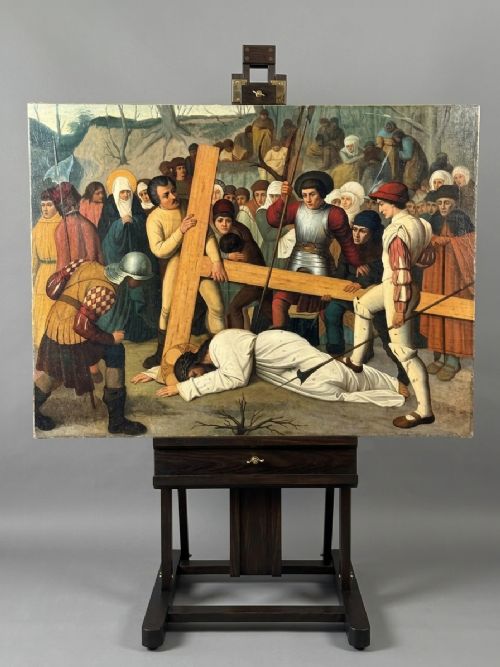
Buyers encountering this search phrase will most frequently meet brass examples and wooden pieces from the Victorian era. The selection also extends to related devotional works such as oil paintings on canvas and prayer chairs.
How they were made
Makers utilised cast brass to form the structural elements of metal altar crosses, often achieving sharp architectural lines through traditional foundry methods. Woodworking techniques of the period are evident in carved dark wood and oak constructions.
Surface decoration frequently involved gilding to highlight the intricate motifs characteristic of the Victorian Gothic style. Oil paint on canvas was employed for associated devotional artwork from the same centuries.
Listings for this phrase include items from the nineteenth century alongside later twentieth-century examples in brass, oak, and metal.
What varies in quality
The standard of a gothic revival cross depends greatly on the crispness of the casting in brass pieces and the depth of the carving in wooden examples. Finer items demonstrate deliberate proportions and careful attention to the architectural details inherent in the style.
The choice of materials also dictates the overall character of the piece, with substantial metals and rich dark woods representing the higher end of the range. Simpler constructions offer a more understated presence without losing the period aesthetic.
The Gothic Revival Cross Glossary
- Gothic Revival
- A nineteenth-century architectural and decorative style that revived medieval forms, pointed arches, and ecclesiastical motifs. This movement shaped the design of furnishings and metalwork across the Victorian period.
- Altar Cross
- A freestanding crucifix placed upon or near an altar during religious services. These objects formed a central focus for ecclesiastical interiors.
- Prie Dieu
- A prayer chair designed with a slanted shelf for kneeling and resting devotional books. These pieces often feature upholstered elements such as velvet.
- Parian Ware
- A fine-grained bisquefine porcelain resembling marble, utilised for decorative objects and small sculptures. It gained popularity during the Victorian era for its smooth finish.
Gothic Revival Cross: Frequently Asked Questions
What materials are used for a gothic revival cross?
These pieces are predominantly constructed from brass or dark wood, reflecting the ecclesiastical origins of the design.
Surface finishes often include gilding to accentuate the traditional architectural detailing.
How are these crosses used in a home?
They serve as striking decorative wall sculptures or freestanding table focal points within a room.
Many collectors place them alongside period seating and devotional oil paintings to create a cohesive interior.
How do I date a Victorian cross?
Dating relies on observing the specific manufacturing methods, material choices, and stylistic traits associated with the nineteenth century.
Items from this era often bear the distinct influence of Victorian Gothic revival architecture.
What is the difference between a crucifix and a cross?
A cross is a simple geometric intersection without a figure, whereas a crucifix specifically depicts the corpus or figure of Christ.
Both forms appear within nineteenth-century devotional contexts.