


Antique Christian Cross
An antique christian cross connects you directly to centuries of devotion through brass, silver and carved stone.
Antique Christian Cross
When you search for an antique christian cross, you encounter a diverse group of devotional objects spanning personal jewellery and church furnishings. The items range from portable pendants and lockets to substantial brass altar crosses and framed oil paintings.
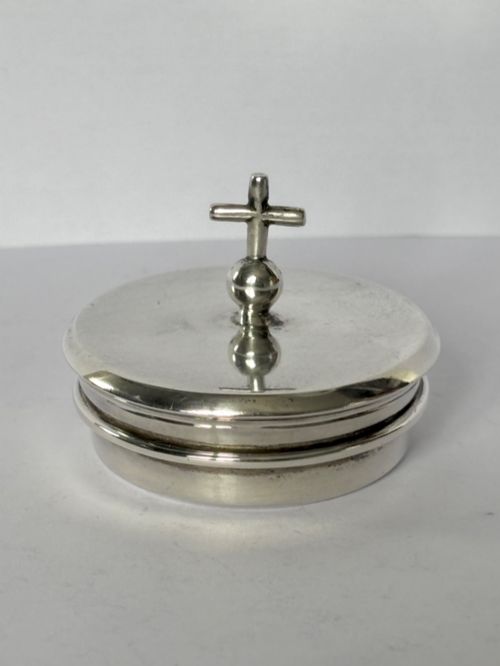
The pieces on this page draw from periods including the eighteenth and nineteenth centuries, alongside mid-twentieth-century artefacts. You find domestic items like rolled gold lockets alongside formal religious pieces such as silver gilt pyx boxes and bronze plaques.
Stylistic influences vary significantly across the selection, encompassing Gothic Revival, Victorian, Rococo Revival, Baroque and German Folk Art. This mix reflects how makers adapted traditional religious iconography to suit changing domestic and ecclesiastical tastes over two hundred years.
Materials and construction methods
Metalwork dominates the material record, utilising brass, sterling silver, silver gilt, bronze and rolled gold. Makers shaped these metals through casting, chasing and plating to create altar crucifixes and pendant lockets.
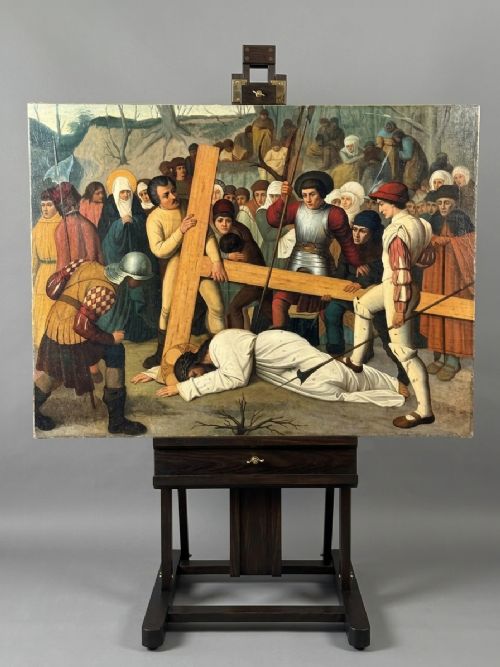
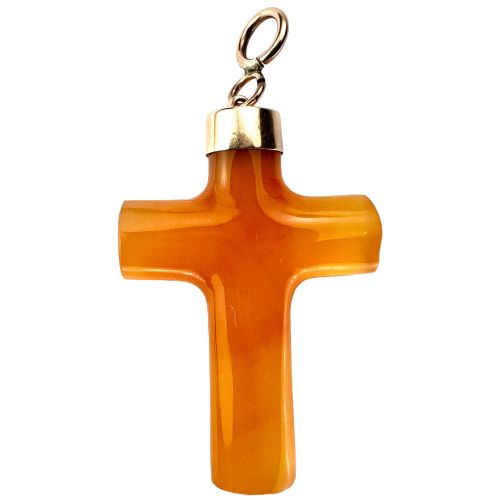
Organic and mineral materials appear in specific forms, such as carved agate and rosewood combined with gilt metal mounts. Artisans also worked on canvas using oil paint for devotional paintings depicting scenes like the journey to Calvary.
Workmanship ranges from detailed hand-carved German wooden panels to structured metal casting by known ecclesiastical silversmiths. These techniques combine durability with intricate surface decoration appropriate for sacred items.
The listings feature nineteenth-century devotional oil paintings, sterling silver pyx boxes, and Victorian agate pendants.
Assessing quality in devotional objects
Quality rests upon the precision of the metalwork or carving and the clarity of the maker's intent. Superior pieces display crisp detailing in cast bronze or silver and deliberate proportions in architectural elements.
The integration of materials dictates the hierarchy of craftsmanship. Items combining precious metals with fine gemstones like agate or intricate enamel work stand apart from simpler mass-produced variants.
The depth of artistic execution in figurative elements, such as the depiction of Christ or devotional scenes, separates standard pieces from exceptional works of religious art.
F. Osbourne & Co London·Henry Cook
The Antique Christian Cross Glossary
- Pyx box
- A small round container used in the Christian church to carry the Eucharist. These vessels are typically fashioned from precious metals like silver gilt.
- Ecclesiastical
- Relating to the Christian Church or its clergy. This term describes items created specifically for use in worship rather than personal wear.
- Rolled gold
- A method where a thin layer of gold is mechanically bonded to a base metal core. This technique provided the appearance of solid gold at a lower cost.
- Gothic Revival
- An architectural and decorative style that draws inspiration from medieval design. It frequently appears in nineteenth-century crosses and church metalwork.
Antique Christian Cross: Frequently Asked Questions
What is an altar cross?
An altar cross is a freestanding crucifix designed to stand upon or behind the altar table in a church during services. These pieces often feature substantial bases and brass or bronze construction.
Such items served a central ritual function in Christian worship, guiding the focus of the congregation and clergy during ceremonies.
How do I wear a cross pendant?
Pendant crosses from the nineteenth century are typically suspended from a compatible chain or ribbon. Many examples from this era, such as those set with agate or paste enamel, were designed specifically for personal adornment.
Ensure the suspension loop and jump rings are secure before wearing antique jewellery daily.
What distinguishes Victorian crosses?
Victorian examples frequently incorporate symbolic ornamentation, varied materials like rolled gold and carved agate, and distinct Gothic Revival styling. They reflect the period's intense interest in historicism and personal sentiment.
These pieces range from modest mourning wear to elaborate ecclesiastical pendants.
How do I date a metal crucifix?
Dating relies on stylistic markers, hallmarks stamped into the silver or gold, and manufacturing techniques like casting methods. Eighteenth-century pieces often show different patination and casting roughness compared to Victorian production.
Maker marks and town assay stamps provide the most reliable chronological anchors.