




Gothic Revival Carved Throne
These gothic revival carved throne chairs bring ecclesiastical and medieval presence into a room through heavy timber and architectural detail.
Gothic Revival Carved Throne
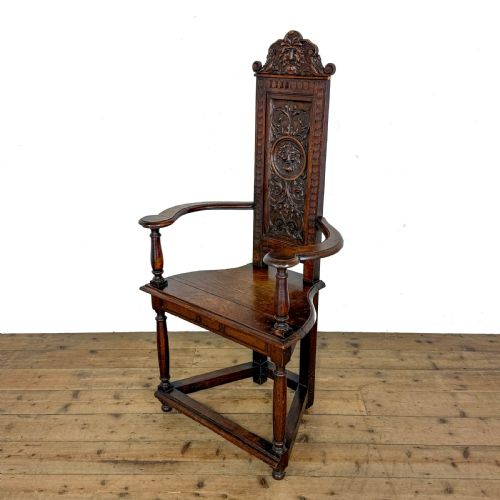
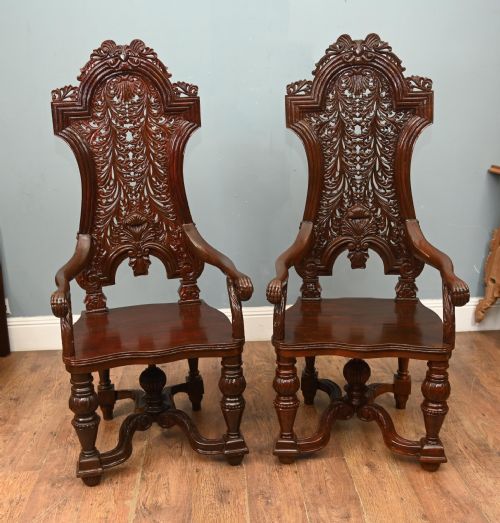
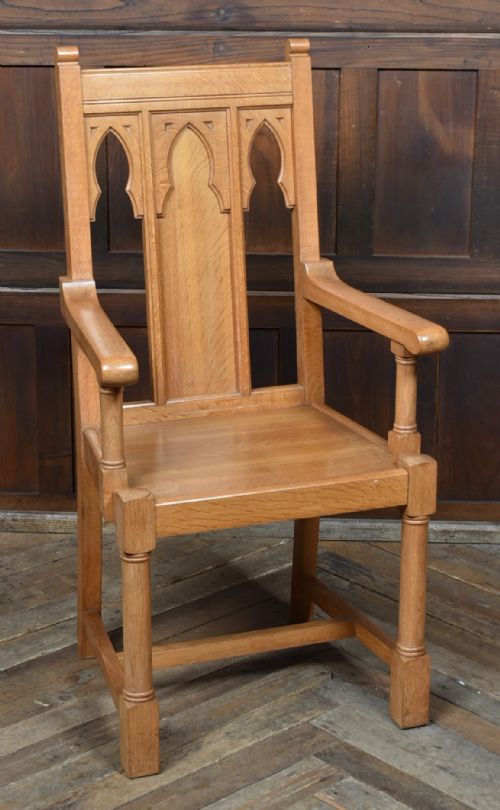
A gothic revival carved throne takes architectural motifs from medieval cathedrals and applies them to heavy seating designed for domestic display. You will most frequently encounter nineteenth century examples rendered in solid oak, often featuring high backs and deep armrests.
Makers drew on historical styles ranging from Jacobean and Renaissance revivals to French Gothic, producing large armchairs and chapel seats. These pieces range from ecclesiastical thrones to domestic armchairs intended for libraries, halls, and morning rooms.
Materials and Construction
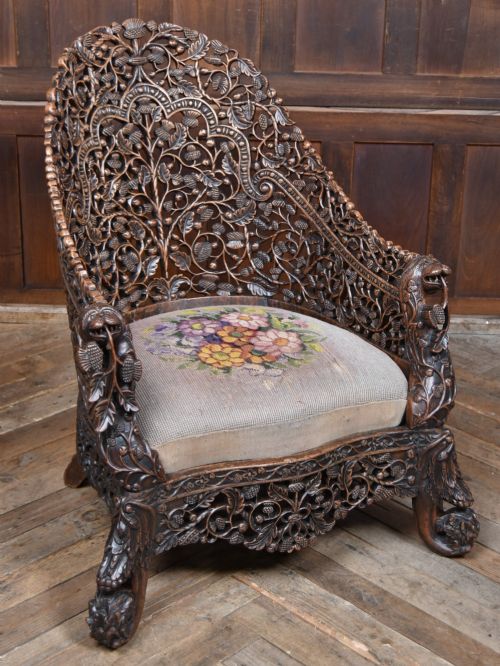
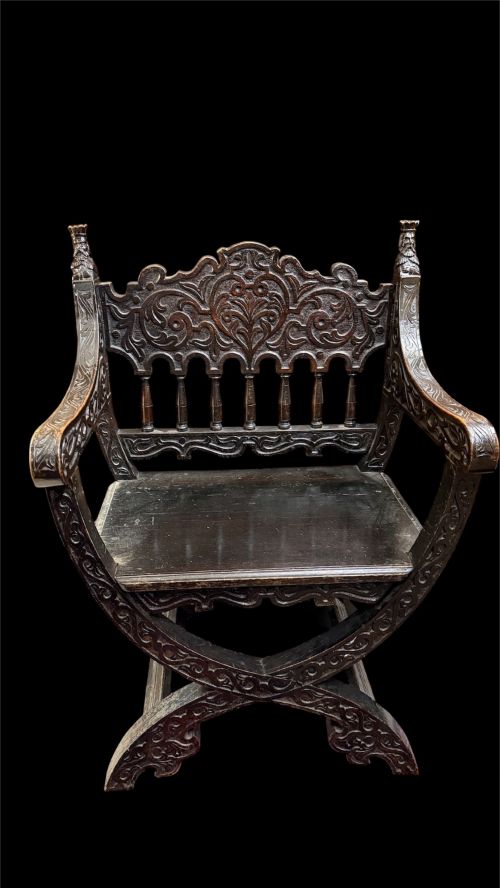
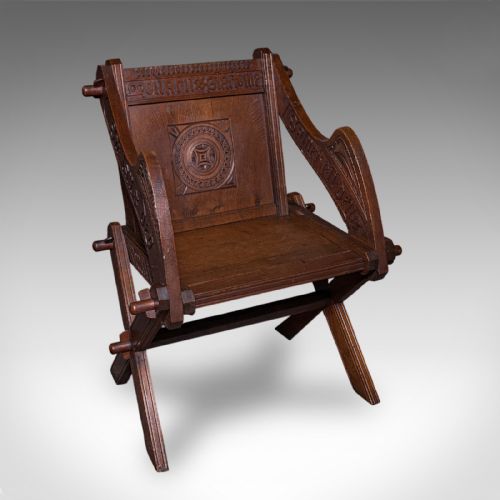
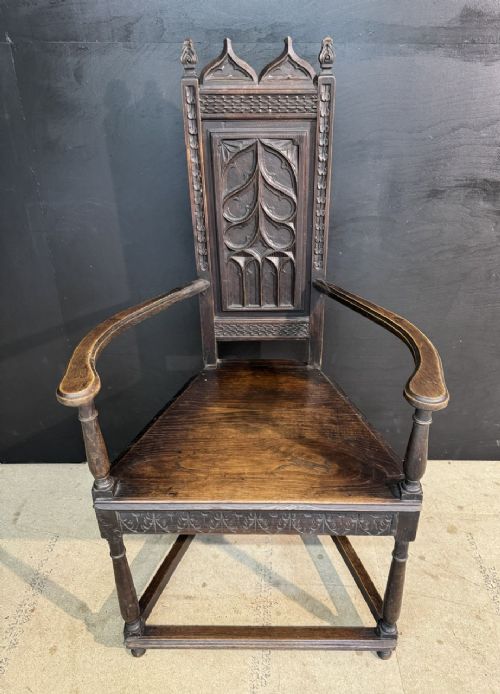
Carpenters built these seats primarily from solid oak, supplemented by walnut, pitch pine, and beech, joined with traditional framing methods. Carvers applied surface ornament by hand, cutting tracery, linenfold panels, and grotesque Green Man masks directly into the timber.
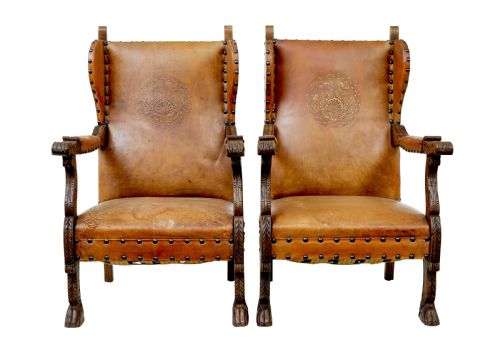
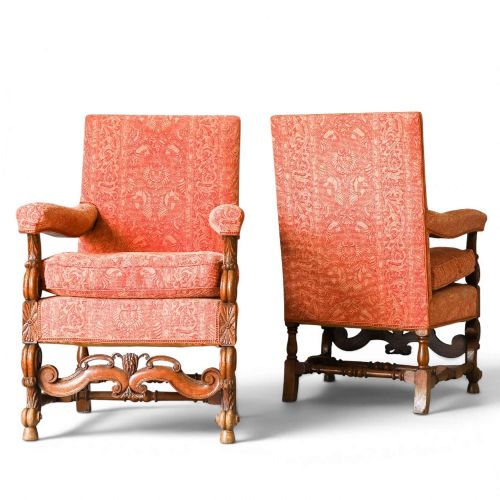
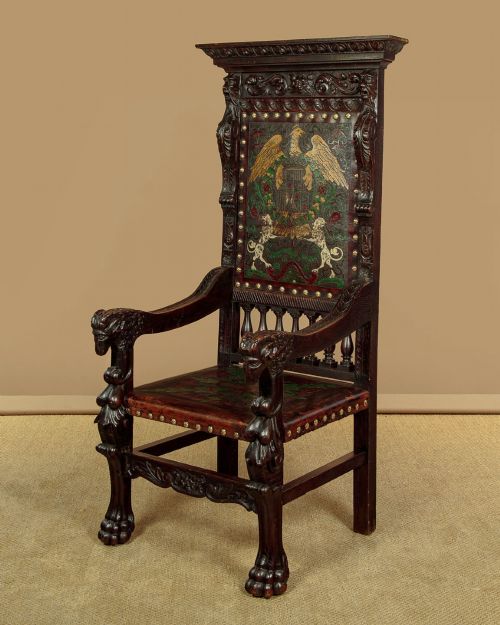
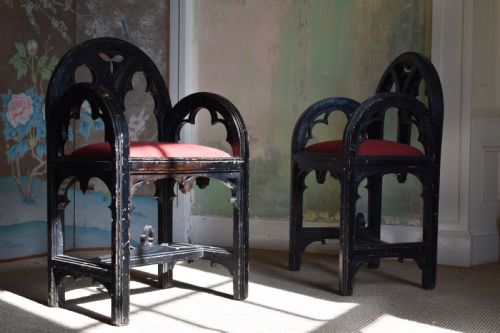
Upholstery materials include embossed leather, painted leather, tapestry, and buttoned fabric secured with brass studs. Some variants employ turned spindles, painted wood finishes, and inscribed panels to emulate earlier centuries.
Oak dominates the material palette across these listings, paired with leather, brass, and tapestry.
Assessing Quality
Depth and crispness of the hand carving separate standard production from exceptional work, particularly in figural details like hounds or foliage. The choice of timber grain and the integrity of heavy mortise and tenon joints dictate structural longevity.
Original upholstery treatments and intact brass detailing elevate an example, whereas later replacements alter the character of the piece. The scale and proportion of the high back relative to the base determine the visual impact of the design.
The Gothic Revival Carved Throne Glossary
- Wainscot chair
- A solid wooden armchair of panelled construction originating in the sixteenth or seventeenth century, heavily copied during the nineteenth century. These seats feature high backs and substantial armrests.
- Glastonbury chair
- A folding chair design with intersecting X-form legs and a sloping back, popularized during the nineteenth-century revival. They are typically constructed from oak.
- Caquetoire
- A sixteenth-century style of conversation chair with a trapezoidal seat and a tall, narrow back. This form reappears in nineteenth-century continental revivals.
- Turner's chair
- A round chair constructed entirely from turned wooden spindles and triangular seats. They are also known as Saxon or Glastonbury precursors.
- Green Man
- A sculptural motif depicting a human face emerging from or entwined with foliage. It appears frequently as a decorative corbel or terminal on Victorian woodwork.
Gothic Revival Carved Throne: Frequently Asked Questions
Where should I place a heavy gothic throne?
These large seats command attention and anchor spaces like high-ceilinged entrance halls, libraries, or studies. Pair them with neutral surroundings to let the dark timber and carved details stand out.
Ensure the floor can support the substantial weight of solid oak and iron or brass hardware. Keep them away from direct heat sources to prevent the timber and leather panels from drying out.
How do I care for nineteenth-century oak furniture?
Dust the carved crevices regularly with a soft brush and feed the timber occasionally with a quality beeswax. Avoid silicone polishes that build up a sticky residue over decades.
Condition leather panels with specialist balms to maintain flexibility and prevent cracking. Keep upholstered elements protected from prolonged direct sunlight to preserve the fabric and leather tones.
Are these chairs comfortable for daily sitting?
Most examples prioritize architectural presence and upright posture over ergonomic lounging. High backs and rigid wooden arms encourage an upright seating position.
Models featuring buttoned leather upholstery or padded fabric inserts offer a softer sit than plain timber panel variants. Add a simple cushion if you plan to use one at a desk or reading table for long periods.
How can I tell a Victorian copy from an older piece?
Examine the tool marks and the uniformity of the timber seasoning across the frame. Nineteenth-century makers frequently utilised machine-sawn backing boards alongside hand-carving to mimic earlier eras.
Check the joinery methods and the type of fixings used in hidden areas. Wear patterns on the feet and arms should align with the stated period of manufacture rather than appearing artificially aged.