



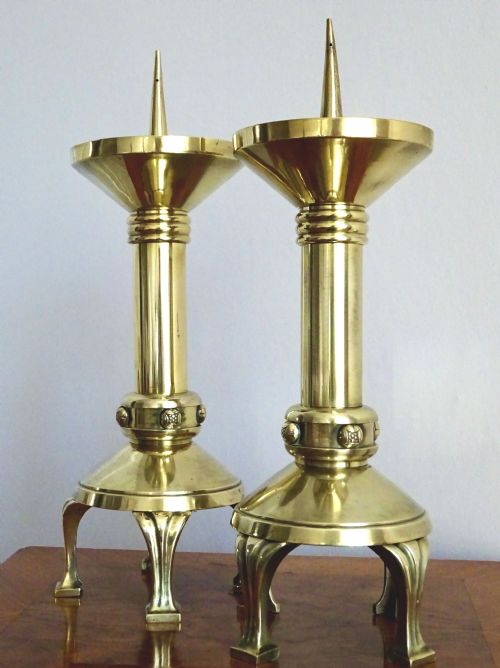


Gothic Revival Candleholders
These gothic revival candleholders bring heavy brass, wrought iron and ecclesiastical form straight from nineteenth-century altars into modern rooms.
Gothic Revival Candleholders
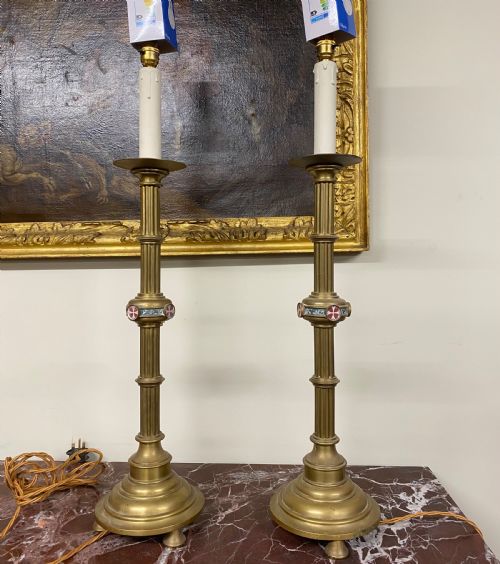
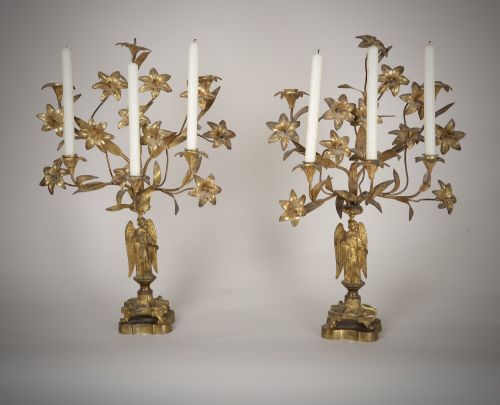
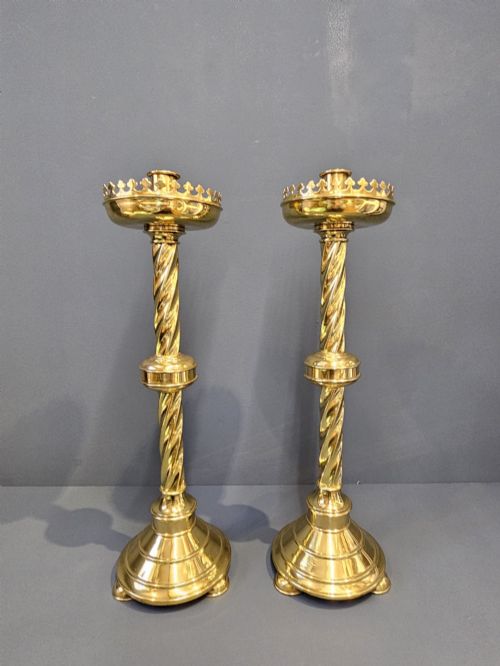
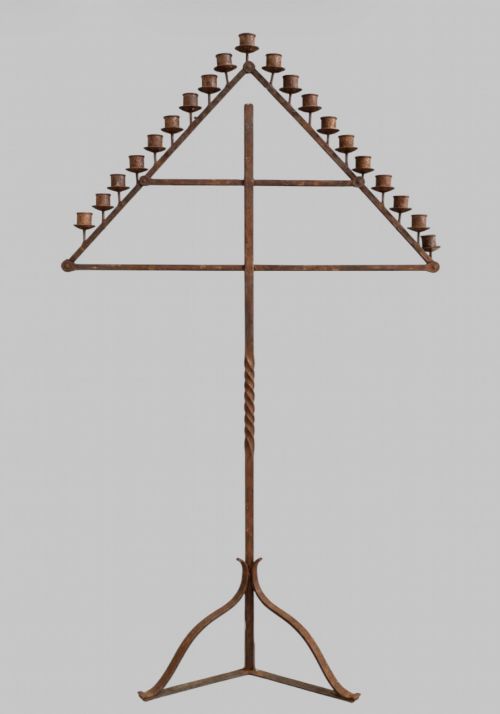
When you search for gothic revival candleholders, you encounter robust metal lighting designed for churches, chapels and grand domestic interiors during the Victorian era and the early twentieth century. Most examples found here take the form of pairs, ranging from tall altar candlesticks to multi-branch candelabra, wall sconces and heavy floor-standing pieces.
The objects stem predominantly from the nineteenth century, including Victorian periods and Edwardian decades, alongside pieces dated around nineteen-thirty. They draw directly on medieval ecclesiastical architecture and ornamentation, translating pointed arches, heavy bases and candle prickets into functional domestic and liturgical metalwork.
Tabletop candlesticks and altar sticks dominate the current selection, constructed largely in pairs for symmetrical placement upon altars, sideboards or mantlepieces. Wall sconces and architectural floor candelabra appear alongside these standard forms, providing varied scale and mounting options for interiors.
Materials and construction
Foundry work and metal smithing define these objects, utilising cast brass, gilt brass, ormolu, and cast metal alongside heavy wrought iron for structural strength. Makers employed casting techniques to shape intricate architectural details like trefoils, clustered columns and wide drip pans into solid metal bodies.
Surface treatments range from polished or gilt brass finishes to the darker, industrial textures of forged wrought iron and bronze. Enamel elements occasionally appear to add colour and contrast to the metallic structures of ecclesiastical altarware.
Gothic Revival Candleholders Retail Price Guide 2026
Typical asking prices for gothic revival candleholders among the pieces listed under this phrase on Sellingantiques today, from the lower quarter to the upper quarter. They describe what is for sale here now, not the wider market.
Listings span the nineteenth century to nineteen-thirty, with Victorian and Edwardian periods providing the majority of brass altar candlesticks and wall sconces.
Judging quality and execution
Substance and weight separate robust church-grade castings from lighter domestic interpretations, with heavier pieces offering greater stability and more deeply rendered architectural ornamentation. The crispness of cast details - such as mouldings, knops and drip pans - indicates the precision of the original foundry work.
Materials also dictate the tier of a piece, where gilt brass and ormolu finishes or combinations of enamel show higher initial cost and ambition than standard cast brass. Intricate assembly, such as multi-tiered construction in floor candelabra or wall sconces, requires superior mechanical joining and substantial gauge metal.
T Thomason & Co
The Gothic Revival Candleholders Glossary
- Pricket
- A sharp metal spike on a candlestick or altar candleholder designed to impale the base of a wax candle. This form derives directly from medieval church tradition before socket holders became standard.
- Ecclesiastical
- Pertaining to the Christian church or its clergy, describing metalware originally commissioned for altar, chapel or cathedral use. These pieces often incorporate distinct liturgical symbols and architectural motifs.
- Candelabra
- A large branched candlestick or holder for multiple candles, standing on a base or mounted to a wall. They provide greater illumination and visual weight than single candlesticks.
- Ormolu
- Gilded bronze or brass applied to decorative objects, giving a rich gold appearance that resists tarnishing. It appears on finer nineteenth-century pieces to highlight structural details.
- Wrought iron
- Iron that has been heated and hammered into shape by a smith rather than cast in a mould. This material provides strong, fibrous structural elements for large floor candelabra and architectural pieces.
Gothic Revival Candleholders: Frequently Asked Questions
What is a pricket candlestick?
A pricket candlestick uses a sharp metal spike at the top rather than a traditional socket to hold the candle in place. This design reflects ancient and medieval church practices where candles rested directly upon the vertical point.
Such sticks were standard upon altars and in large ecclesiastical settings. They require candles with a small indentation or base prepared to accept the spike.
How do I clean antique brass?
Antique brass typically benefits from gentle dusting and minimal intervention to preserve its historical surface and patina. Aggressive chemical cleaning can strip away age-appropriate darkening that collectors value.
Consult a specialist before applying metal polishes, particularly on gilt or enamelled surfaces where abrasive cleaners cause permanent damage.
Are these candleholders safe for modern candles?
Most antique candleholders accommodate standard taper candles, though variations in socket width or pricket size mean measurements should be checked. Pricket spikes require candles with a sturdy base to stand straight.
Care must be taken with tall floor candelabra and heavy wall sconces to ensure stability and secure placement in domestic rooms.
How do I date a gothic revival piece?
Dating relies on examining manufacturing techniques, material composition, and stylistic clues tied to nineteenth and early twentieth-century production periods. Heavier cast brass and specific ecclesiastical forms often point towards Victorian church commissions.
Makers' marks or stamps, where present on the metal base, provide precise attribution to workshops active during the nineteenth century.