




Gothic Revival Accent Table
These gothic revival accent table selections bring medieval architectural spirit into domestic spaces through robust timber and ecclesiastical carving.
Gothic Revival Accent Table
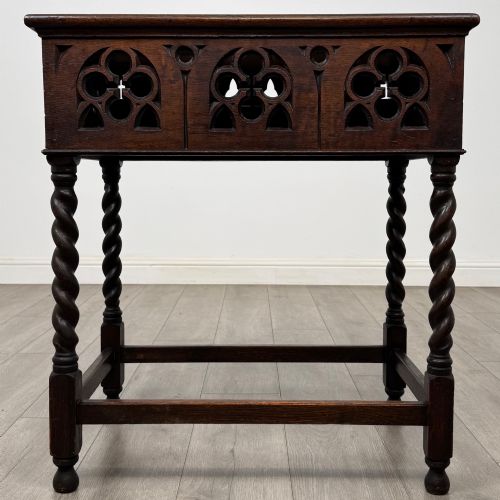
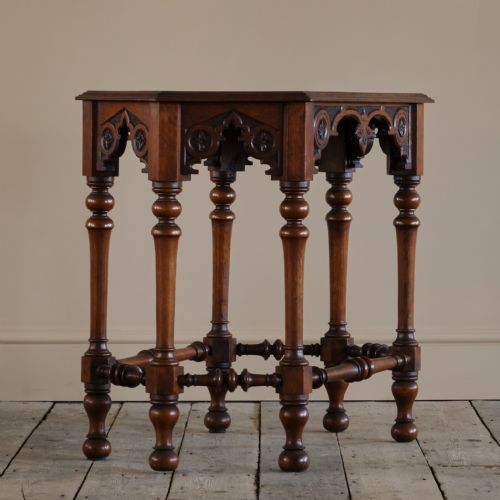
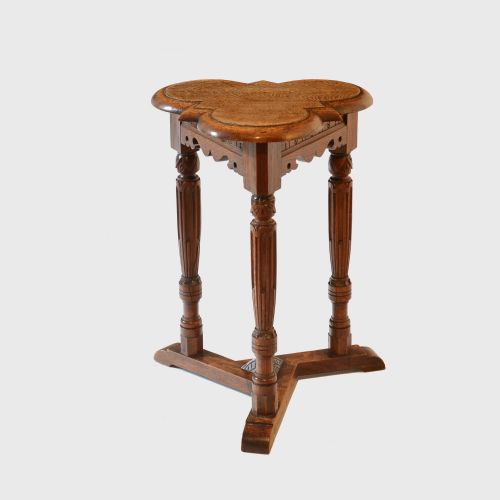
A gothic revival accent table typically takes the form of an oak side table, occasional table, or centre table produced during the nineteenth century. These pieces draw directly on medieval architectural vocabulary, translating stone arches and traceried windows into domestic furniture.
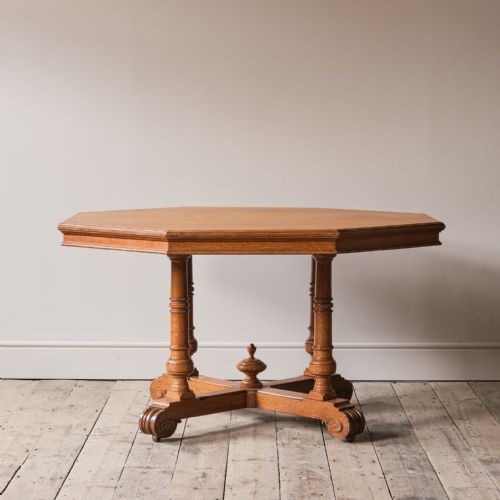
The versions most commonly met on this page are sturdy nineteenth-century oak examples featuring octagonal or rectangular tops, often associated with the Victorian era, Edwardian period, and broader Gothic Revival movements.
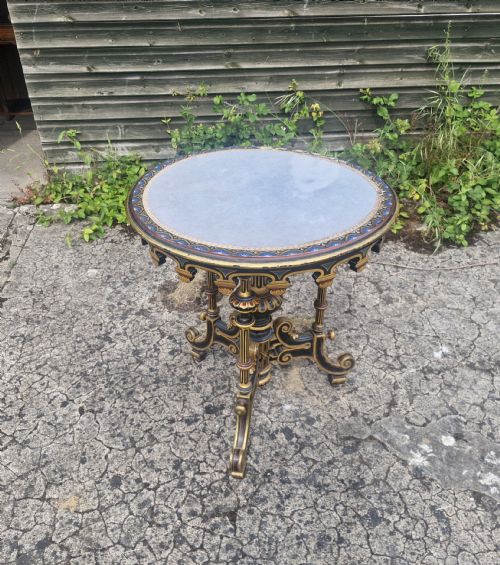
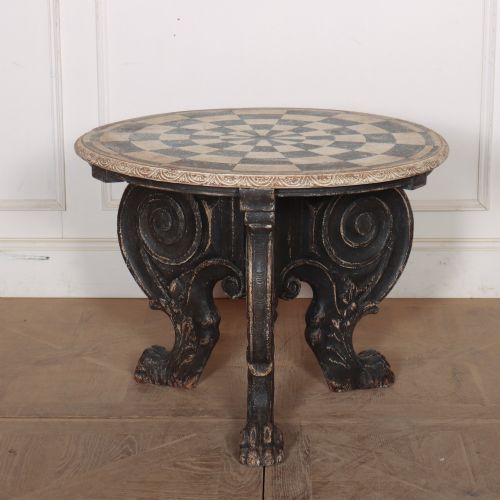
Beyond standard side tables, related forms span from tripod tables and credenza tables to occasional pieces with carved details like trefoils and zodiac motifs, reflecting the diverse output of nineteenth-century workshops.
Materials and Techniques
Construction relies heavily on solid timber, with oak dominating the selection alongside occasional uses of mahogany, walnut, and painted wood. Workshops utilised traditional joinery methods to build heavy, durable frames capable of supporting intricate surface decoration.
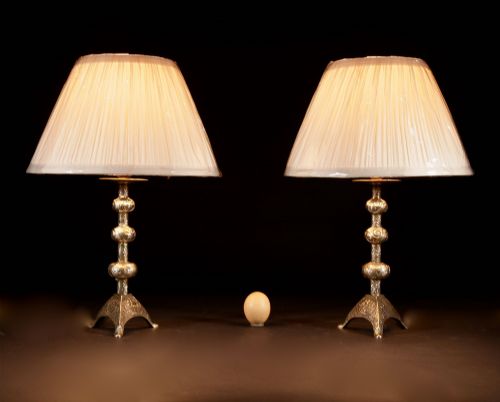
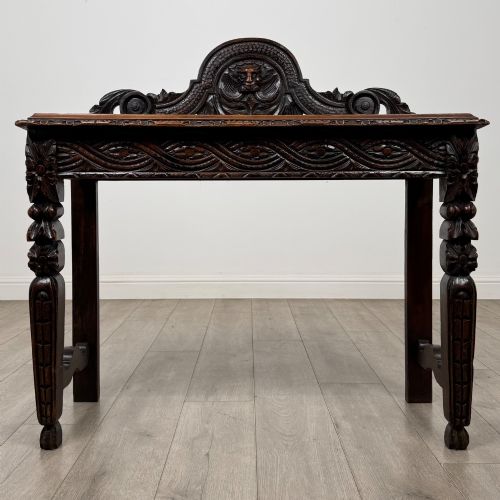
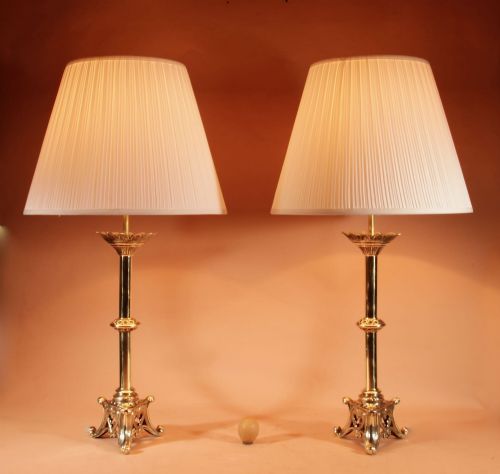
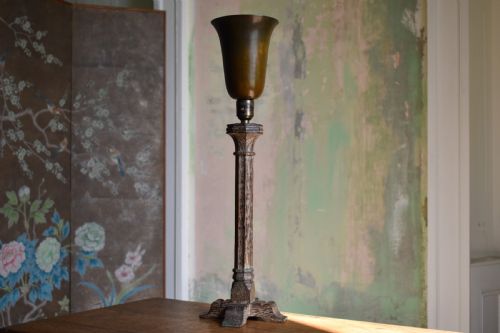
Carving serves as the primary decorative technique, manifesting as deep relief work on table skirts and legs. Other materials such as brass, cast brass, ceramic tiles, and velvet fabrics appear on related lamps and tables, adding textural contrast to the dark wood.
Among the heavy timber stands an antique tarot parlour table complete with zodiac carvings, ready for nineteenth-century evening divination.
Judging Quality
Quality rests upon the depth and crispness of the carving, where skilled hand execution creates sharp architectural profiles rather than soft, rounded edges. The choice of timber also dictates the character, with dense, honey-coloured or honey oak offering superior visual warmth.
Proportion and structural integrity distinguish the finest examples from simpler utilitarian pieces. Well-balanced forms with thoughtful details like trefoil cut-outs or geometric inlay demonstrate the maker's adherence to proper revival design principles.
Baillie Scott
The Gothic Revival Accent Table Glossary
- Trefoil
- A three-lobed ornamental design resembling clover leaves, frequently pierced through the wood of gothic table tops or brackets.
- Prie-Dieu
- A devotional prayer desk equipped with a slanted shelf for books and a kneeler, often executed in carved oak during the Victorian period.
- Credence table
- A small side table historically used for holding sacramental elements, adapted in the nineteenth century for domestic display with gothic panels.
- Ebonised
- Wood finished with a dark stain or black lacquer to imitate ebony, seen on nineteenth-century aesthetic movement tables.
- Chamfer
- A symmetrical sloping surface cut across a corner or edge, commonly utilised on the legs and posts of gothic revival furniture to lighten heavy timber profiles.
Gothic Revival Accent Table: Frequently Asked Questions
How do I identify a gothic revival accent table?
Look for characteristic architectural motifs such as pointed arches, trefoils, heavy turned legs, and deep linenfold or geometric carving executed primarily in solid oak. These elements reflect the deliberate nineteenth-century imitation of medieval church and cathedral architecture.
Proportions tend to be sturdy and grounded, distinguishing these pieces from lighter neoclassical or mid-century designs. Many examples also bear the distinct stamp of the Victorian era or associated movements like the Arts and Crafts revival.
Where were these tables placed originally?
In nineteenth-century homes, smaller tables served as occasional surfaces in parlours, libraries, or studies to hold books, lamps, or decorative objects. Centre tables occupied prominent positions in larger reception rooms, often positioned beneath hanging pendant lights.
Prie-dieux and prayer desks functioned as private devotional furniture in bedrooms or quiet domestic corners. Their versatile sizing made them suitable for placement alongside larger seating arrangements.
How do I care for nineteenth-century oak furniture?
Maintain the wood by applying a quality beeswax polish periodically to nourish the dry grain and preserve the historic patina. Avoid placing tables in direct sunlight or near heat sources to prevent timber shrinkage and splitting.
Dust surfaces regularly with a soft, dry cloth rather than using silicone-based sprays. Gentle handling ensures the original carved details and finishes remain intact for years to come.
What is the difference between gothic revival and aesthetic movement tables?
Gothic revival pieces lean heavily into medieval ecclesiastical architecture, featuring pointed arches, heavy oak construction, and deep religious or structural ornamentation. They prioritise robust craftsmanship and historical architectural references.
Conversely, aesthetic movement tables embrace simpler, more refined silhouettes, sometimes utilising ebonised wood or walnut with understated decorative schemes. The focus shifts from medieval revival toward artistic harmony and form.