
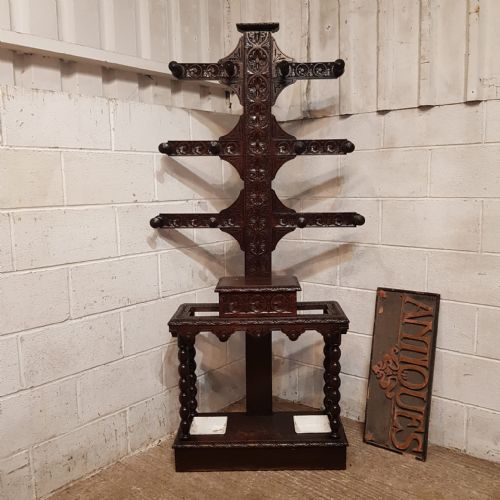
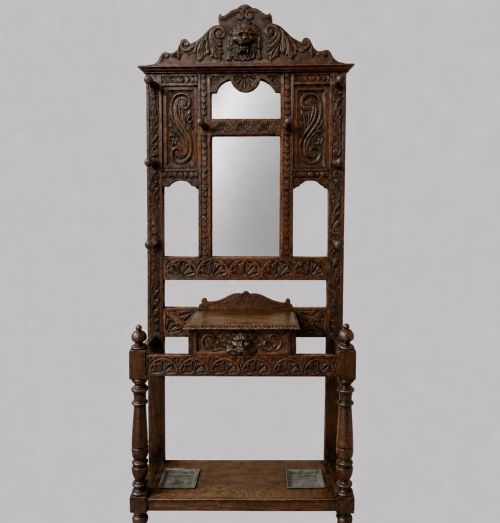


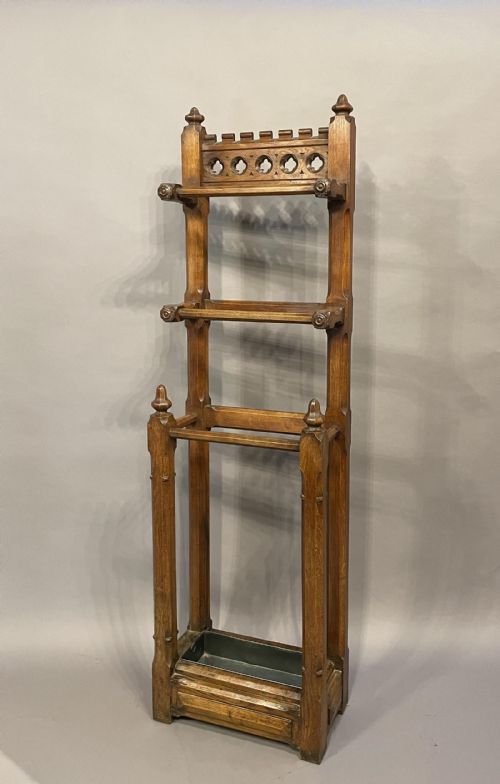


Gothic Oak Umbrella Stand
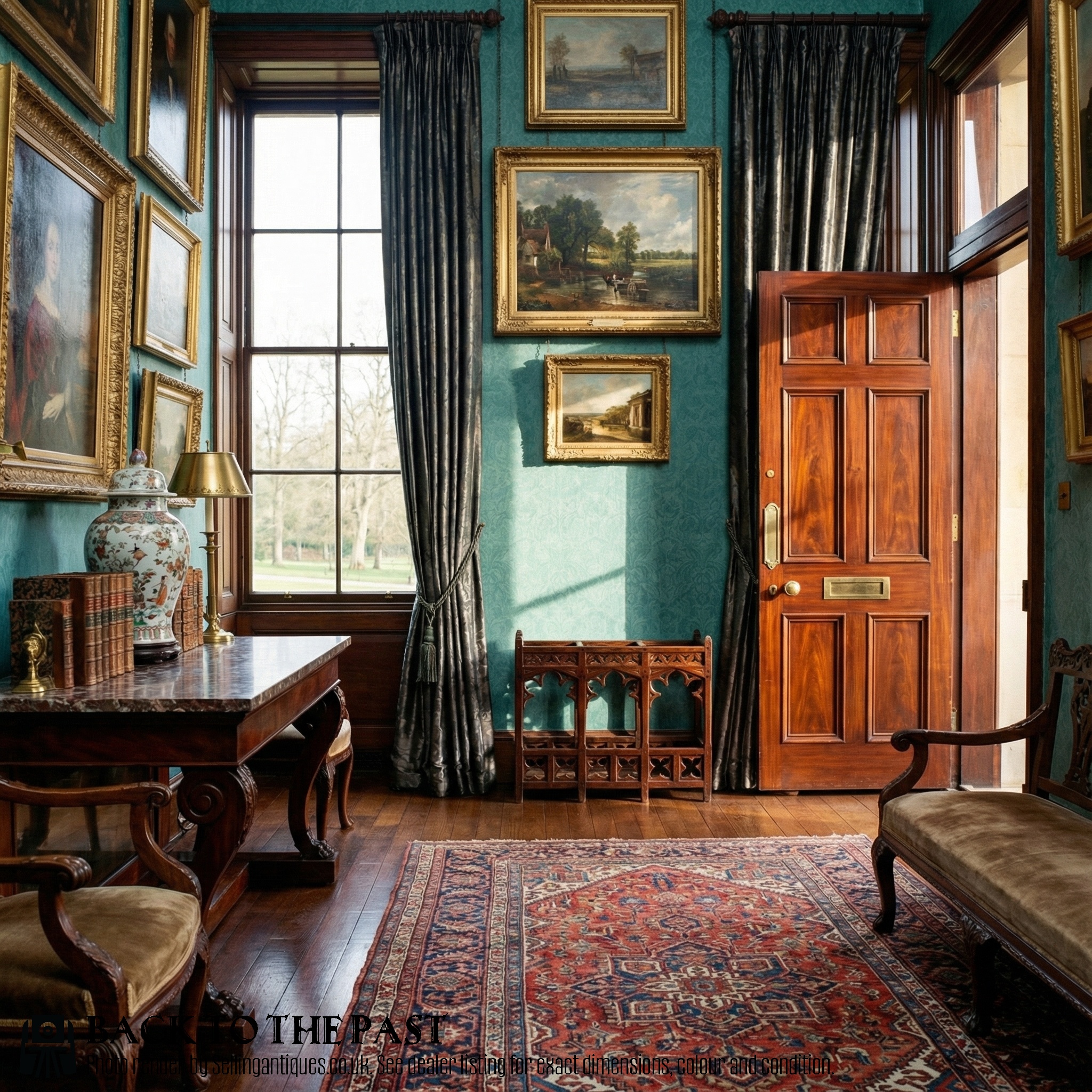
A gothic oak umbrella stand brings robust architectural timber and striking historic character straight to an entrance hall.
Gothic Oak Umbrella Stand
When you search for a gothic oak umbrella stand, you encounter pieces primarily from the Victorian period and the nineteenth century. These items manifest in forms ranging from dedicated stick and hat units to grand hall stands and cupboards.
The aesthetic leans heavily into the Gothic Revival and Victorian Gothic Revival styles. You are most likely to meet pieces featuring carved timber details, architectural lines, and integrated provisions for holding walking sticks and umbrellas.
Materials and construction methods
The primary material across the pieces is solid oak, frequently carved with elaborate motifs such as the Greenman or tree forms. Workshops combined this heavy timber with structural metal, iron, and brass elements designed to manage wet umbrellas.
Additional components like glass, marble, and zinc inserts frequently appear to protect the wood from moisture and to provide practical utility in a busy Victorian hallway.
Secreted among the foliage of the Greenman carvings, hidden wooden faces peer out to supervise your umbrellas.
Assessing craftsmanship and design
The distinction between standard examples and finer pieces lies in the depth and ambition of the carving. Relief work depicting figures like the Greenman or complex tree motifs requires considerable skill from the carver.
Integration of secondary materials such as marble trays and brass hooks elevates a piece beyond a basic utility item. The presence of fretwork and thoughtful architectural proportions distinguishes the more distinguished examples from simpler country house items.
William Whiteley
The Gothic Oak Umbrella Stand Glossary
- Gothic Revival
- An architectural and decorative style drawing inspiration from medieval design. It dominates nineteenth-century furnishings through pointed arches and heavy ornamentation.
- Greenman
- A sculptural motif depicting a human face disgorged from foliage or entirely made of leaves. It frequently appears in nineteenth-century woodcarving.
- Hall Stand
- A multifunctional piece of entrance furniture combining umbrella storage with hooks for coats and hats, often including a mirror.
- Zinc
- A durable, corrosion-resistant metal frequently utilised for linings in the base trays of umbrella stands to catch dripping water.
Gothic Oak Umbrella Stand: Frequently Asked Questions
Where should I place an umbrella stand?
These pieces suit entrance halls and corridors where they provide a practical drop zone for wet walking sticks and coats. Their architectural presence anchors a hallway and establishes a period tone immediately upon entry.
Ensure adequate clearance around the stand so the carved details remain visible and accessible. Positioning them away from direct heat sources protects the timber from drying out.
How do I care for nineteenth-century oak?
Maintain the timber by dusting regularly with a dry cloth and occasionally feeding the wood with traditional beeswax. Avoid excessive moisture on the unlined wooden sections.
Check that metal and zinc drip trays are emptied and dried regularly to prevent water damage to the surrounding oak base.
How do I distinguish Gothic Revival from Victorian pieces?
Gothic Revival describes the specific architectural vocabulary of medieval forms applied to nineteenth-century items, featuring pointed arches, tracery, and heavy mouldings. Victorian simply denotes the broad era of manufacture spanning the reign of Queen Victoria.
Many pieces successfully belong to both categories, exhibiting Victorian manufacturing dates alongside distinct Gothic Revival stylistic ornamentation.
What is the function of the mirror on these stands?
The integrated mirror allowed occupants to check their appearance before stepping out into the nineteenth-century street. It also served to bounce light around darker entrance halls.
Mirrors in these stands are typically bevelled and set securely within the carved oak framework.