



Gothic Oak Storage Trunk
A gothic oak storage trunk brings centuries of robust craftsmanship and heavy timber into a room.
Gothic Oak Storage Trunk
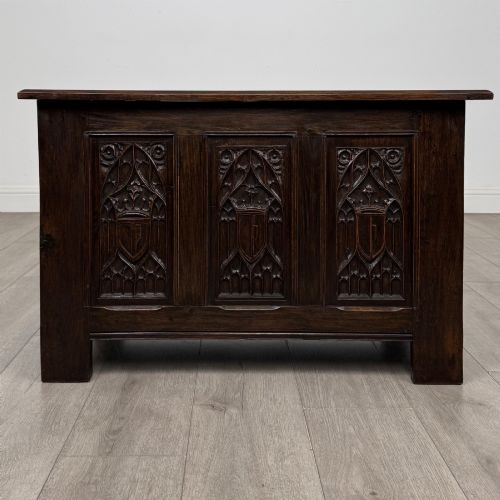
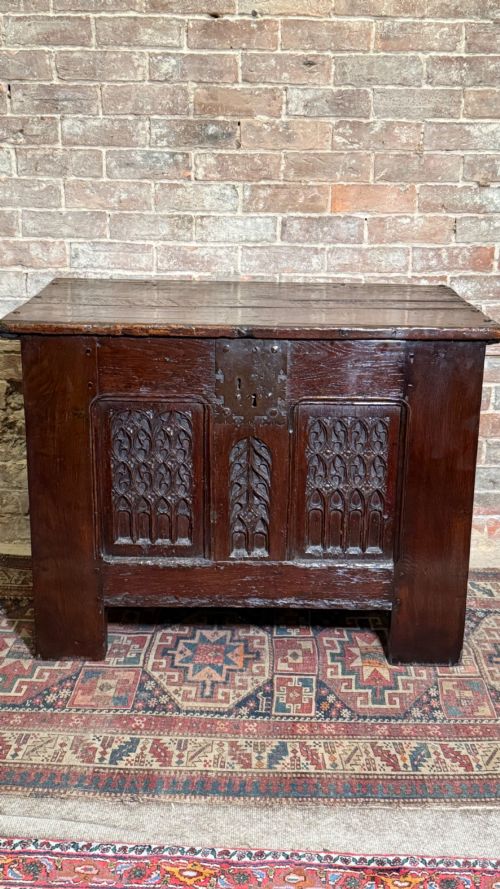
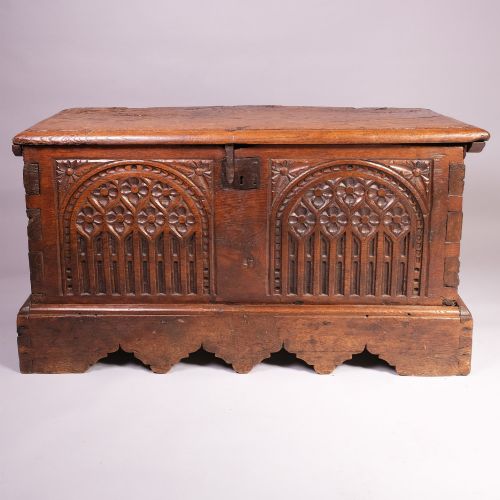
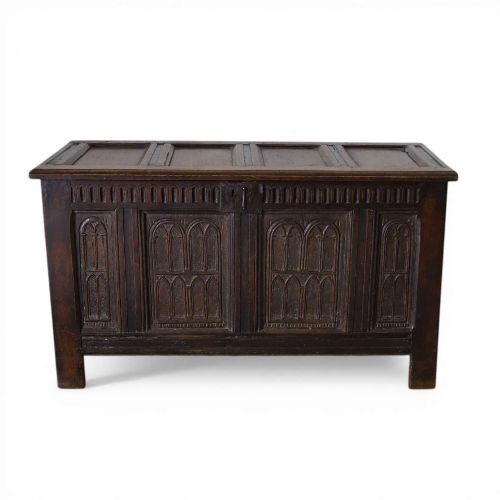
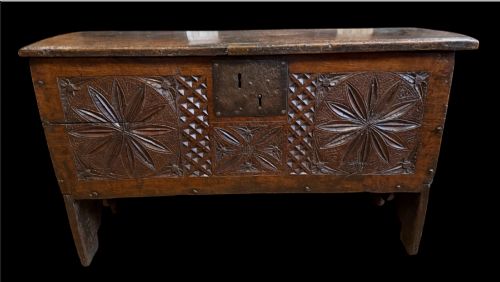
A gothic oak storage trunk spans heavy-timbered coffers and chests originating from the sixteenth century onwards, alongside later nineteenth-century revival and Arts and Crafts interpretations. These pieces function primarily as deep storage vessels, appearing frequently as plank coffers or panelled chests with sturdy lids.
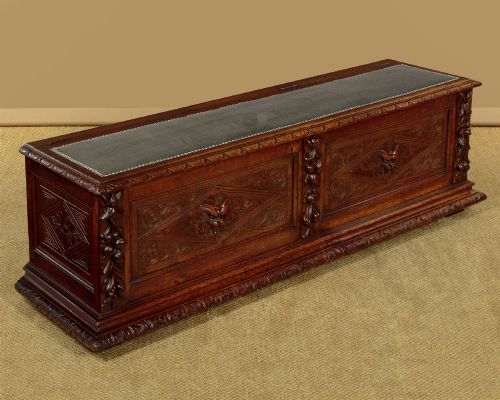
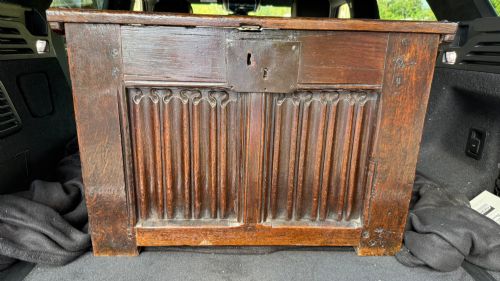
Buyers encounter early examples fashioned with linenfold carving or iron bands, as well as ecclesiastical and continental interpretations in oak, elm, and chestnut. The selection ranges from medieval plank construction to nineteenth-century carved ottoman box seats and provincial regional chests.
How they were made
Makers utilised solid oak, elm, and chestnut timbers, often combining woods within a single carcass such as oak and elm boards. Boards were joined using traditional plank construction or frame and panel methods, shaped by hand with adzes and chisels.
Hardware played a structural role, incorporating heavy wrought iron straps, iron hinges, and brass fittings to reinforce the heavy timber corners and lids. Surface decoration relied on chip carving, linenfold panels, and ecclesiastical gothic motifs cut directly into the solid wood.
The selection includes regional continental pieces alongside English Tudor, Spanish gothic, and nineteenth-century revival works.
What varies in quality
Quality rests in the integrity of the original timber and the depth of the hand-carved gothic detailing across the front panels and stiles. Early sixteenth-century examples demonstrate superior joinery and original ironwork compared to later revival iterations.
The preservation of the original surface patina, uncompromised boards, and contemporary iron hinges distinguishes standard utilitarian boxes from exceptional architectural pieces.
Jack Grimble
The Gothic Oak Storage Trunk Glossary
- Coffer
- A heavy wooden chest used historically for storing valuables, vestments, or documents. These pieces typically feature a hinged flat lid and robust plank or panelled construction.
- Linenfold
- A style of relief carving imitating folded linen cloth, popular on sixteenth-century panels. This vertical motif creates a textured surface across the front of Tudor chests.
- Plank coffer
- An early form of chest constructed from thick boards joined at the edges rather than a framed panel structure. These primitive vessels rely on simple boards secured with iron nails or dowels.
- Wrought iron
- Iron beaten and shaped by hand into structural straps and hinges. This material reinforces the corners and lids of early storage chests.
Gothic Oak Storage Trunk: Frequently Asked Questions
What is a gothic oak storage trunk used for?
These heavy wooden chests serve as practical storage containers for blankets, linens, and household items while functioning as substantial furniture pieces.
Their sturdy flat lids also allow them to double as benches or low tables within living spaces and hallways.
How do I date an old oak chest?
Dating relies on observing construction methods, such as whether the body uses heavy single planks or framed panels, alongside tool marks left by makers.
Stylistic details like linenfold carving or wrought iron strapwork help narrow the period of origin from the sixteenth century into later revival eras.
Are these chests heavy to move?
Solid oak, elm, and chestnut construction combined with wrought iron hardware makes these pieces exceptionally heavy and dense.
They require careful planning for placement within a room since their weight keeps them firmly anchored in place.
What is the difference between a coffer and a trunk?
A coffer traditionally denotes a heavy, heavily secured wooden chest built with thick boards or panels for storing valuables.
While modern usage often groups them together, historical coffers tend to feature more elaborate architectural carving and iron reinforcement.