
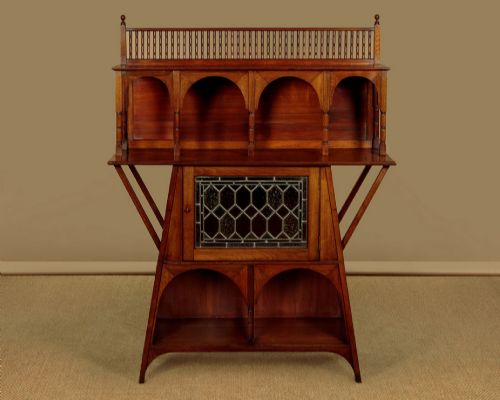
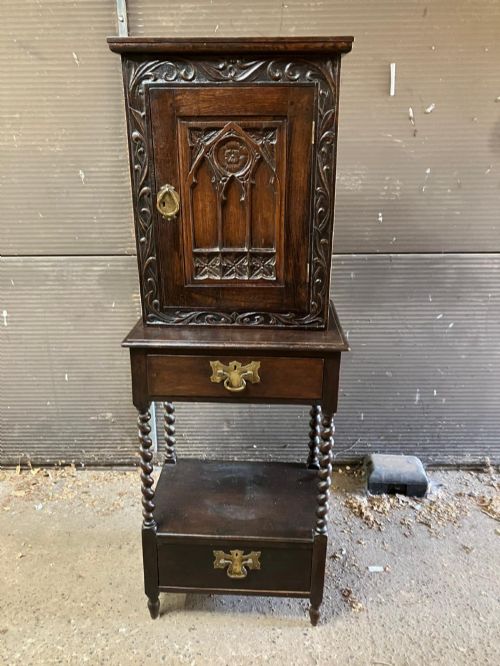
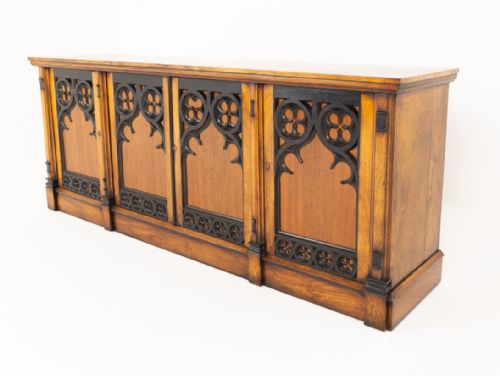
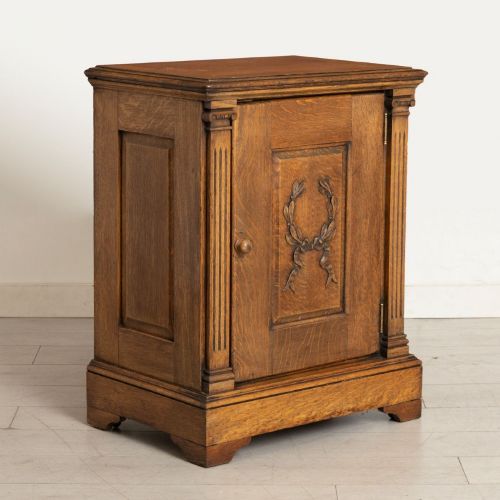
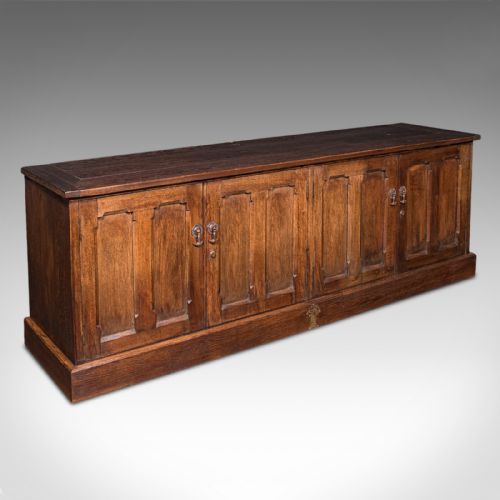


Gothic Oak Side Cabinet
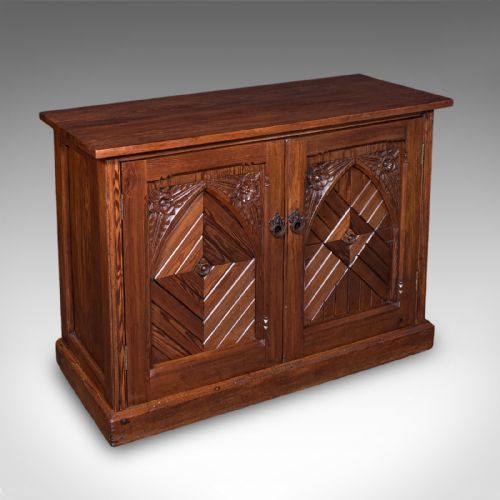
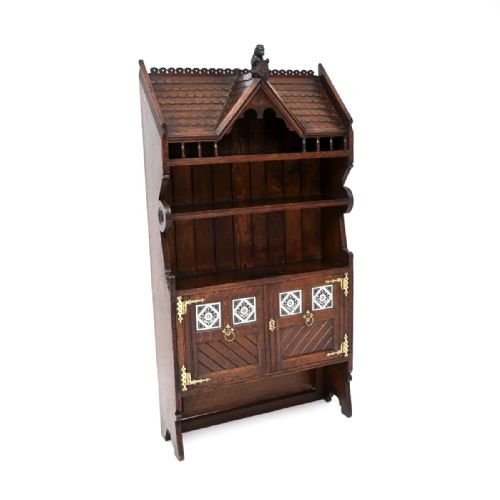
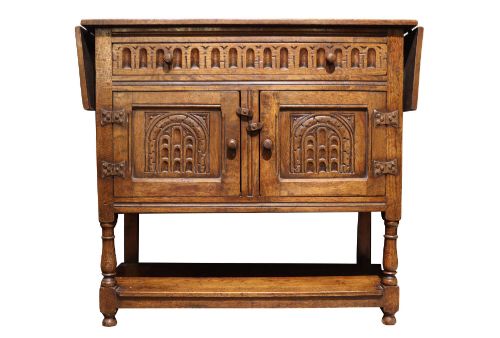
A gothic oak side cabinet brings heavy timber, pointed arches and medieval proportion into a room with solid architectural presence.
Gothic Oak Side Cabinet
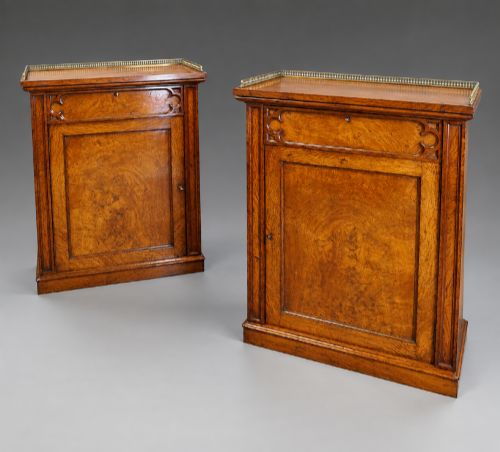
A gothic oak side cabinet is a substantial storage piece shaped by medieval revival movements, architectural tracery and dark timber. Buyers searching for a gothic oak side cabinet encounter forms ranging from compact bedside cupboards and hall cabinets to large dresser bases, sideboards and cabinets on stand.
The selection on this page draws heavily from Victorian Gothic Revival, Arts and Crafts, Aesthetic Movement, and Jacobean Revival styles alongside continental examples. Pieces span from the sixteenth century through the nineteenth and twentieth centuries, showing how cabinet makers continually reinterpreted medieval design in solid oak.
Materials and Construction
These pieces are built primarily from solid oak, frequently augmented with secondary pine, and fitted with functional or decorative hardware in brass, iron, and wrought iron. Glass and lead appear in cabinet doors and bookcase fronts, while selected cupboards incorporate ceramic elements and painted black finishes.
Construction relies on traditional joinery designed to support heavy timber panels, deep carvings, and structural mouldings. Carved detailing defines the styles, employing motifs from flamboyant gothic tracery to geometric Jacobean panels.
Listings span from the sixteenth century through the nineteenth and twentieth centuries, featuring oak, pine, brass, iron, and glass.
Distinctions in Execution
Quality rests in the depth and crispness of the hand carving, the selection of timber grain, and the integrity of the structural joinery. Pieces range from straightforward vernacular workshop production to sophisticated designs by notable makers involving integrated stands, stained glass, and bespoke metalwork.
The handling of architectural elements such as arches, columns, and panel work distinguishes superior examples. A well-proportioned cabinet balances heavy timber construction with refined detailing that reflects its specific revival period.
John Moyr Smith·Liberty and Co.·Bruce Talbert·Gillows
The Gothic Oak Side Cabinet Glossary
- Gothic Revival
- A nineteenth-century architectural and decorative movement that reintroduced medieval forms, pointed arches, and heavy ornamentation into furniture design. It draws inspiration from medieval cathedrals.
- Arts and Crafts
- A design movement valuing traditional craftsmanship, simple forms, and visible construction methods over mass production. It often highlights the natural grain of the oak.
- Aesthetic Movement
- A late nineteenth-century movement emphasising art for art's sake and incorporating diverse cultural influences. Pieces from this style frequently feature stylized decoration and refined cabinetwork.
- Jacobean Revival
- A style popular in the nineteenth and early twentieth centuries that mimics seventeenth-century English furniture. It utilises heavy turned legs, geometric moulding, and deep panel carving.
- Tracery
- Architectural stonework ornamentation adapted for woodwork in cabinet doors and panels. It creates open patterns reminiscent of gothic windows.
Gothic Oak Side Cabinet: Frequently Asked Questions
What rooms suit a gothic oak side cabinet?
These cabinets suit dining rooms, hallways, and living spaces where their dark timber and strong architectural lines can anchor the room. They provide functional enclosed storage while serving as a prominent decorative anchor.
Because they are built from heavy materials like solid oak, they pair well with neutral walls and plain flooring that allow the carved details and historic character to stand out without overcrowding the space.
Are these cabinets purely decorative?
While their visual impact is significant, these pieces were designed for practical containment. Cupboards, sideboards, and bookcase variants offer substantial internal shelving and storage capacity for everyday items.
Bedside cabinets and smaller hall cupboards provide compact storage for smaller spaces, combining historical design with functional utility in daily use.
How do I care for antique oak furniture?
Antique oak benefits from stable indoor humidity and protection from direct sunlight, which can dry out the timber and fade the finish. Regular dusting with a dry or slightly damp cloth maintains the surface without stripping the natural patina.
Applying a traditional wax polish occasionally helps nourish the solid oak and preserves the depth of the carved details over time.