



Gothic Mahogany Clock
A gothic mahogany clock brings architectural pointed arches and rich timber grain together on the mantel or hallway floor.
Gothic Mahogany Clock
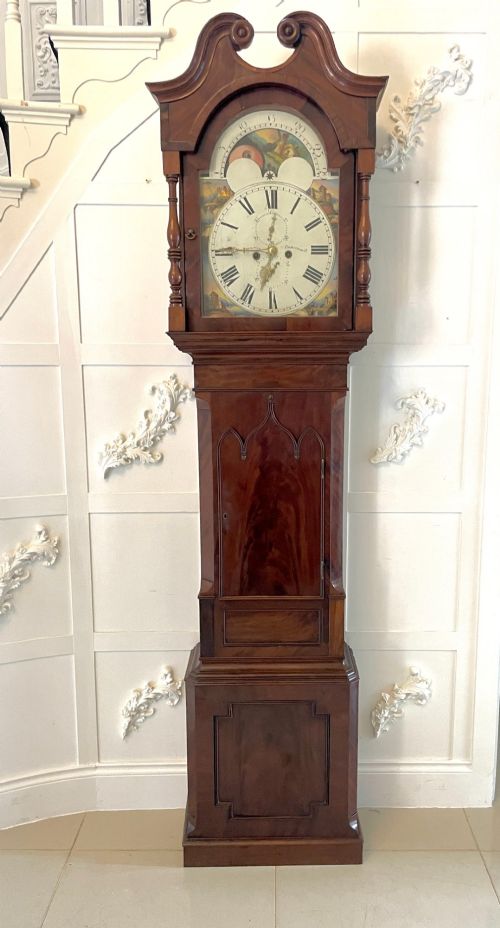
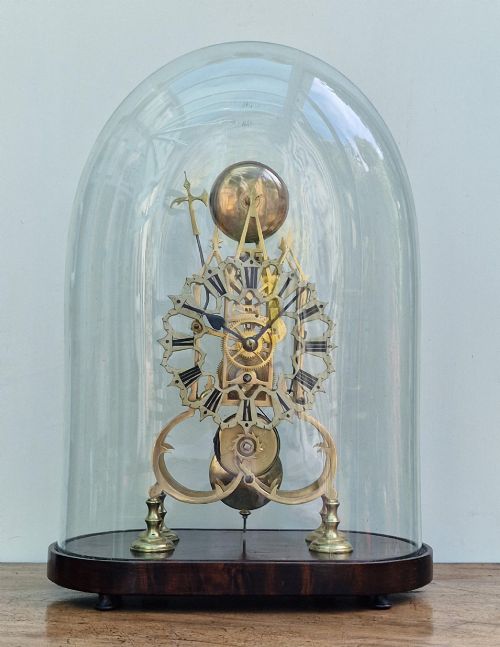
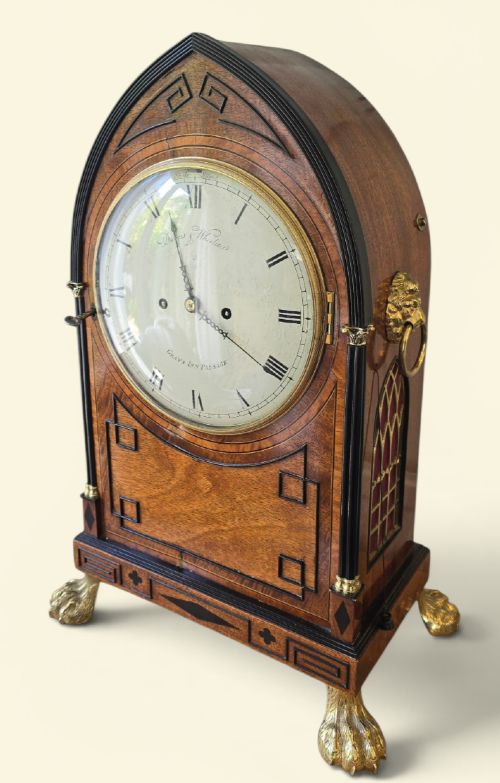
A gothic mahogany clock combines dark timber cases with pointed arch profiles, trefoil details, and architectural proportions drawn from medieval buildings. These horological pieces appear primarily as mantel clocks, bracket clocks, and tall case grandfather clocks.
The surviving examples span the Georgian, Regency, and Victorian periods, alongside later Victorian and Edwardian interpretations. Makers housed these movements in flame mahogany, rosewood, and standard mahogany timber.
Buyers encounter longcase grandfather clocks alongside smaller bracket clocks and mantel clocks intended for desks and libraries. The aesthetic adapts from austere lancet shapes to elaborate revival facades with brass inlay.
Quality factors
Superior examples display exceptional figure in the mahogany veneer and crisp, sharply carved architectural details such as crockets and pointed arches. Lesser pieces rely on plain timber surfaces with minimal decorative carving.
The reputation of the maker dictates desirability, with signed dials from noted London and provincial watchmakers commanding greater interest. Movement complexity, including quarter-striking trains and fusee control, elevates the standard.
Proportion and the integrity of the original case structure separate masterwork horology from later utility pieces.
Gothic Mahogany Clock Retail Price Guide 2026
Typical asking prices for gothic mahogany clock among the pieces listed under this phrase on Sellingantiques today, from the lower quarter to the upper quarter. They describe what is for sale here now, not the wider market.
Materials recorded across the inventory include mahogany, flame mahogany, rosewood, brass, glass, steel, and enamel.
George Orpwood·Desbois & Wheeler·Edward Shepley·William Moon·Cording of London·Bryson Edinburgh·Wightman Of London·Garman Meonstoke·Ganthony of London·Edwards Of London·Christie of Perth·Perigal Bond Street·Mitchell & Russell·H Yeomans Nottingham
The Gothic Mahogany Clock Glossary
- Fusee
- A conical pulley used in spring-driven clocks to equalise the declining power of the mainspring as it unwinds. This mechanism ensures more consistent timekeeping throughout the duration of the wind.
- Lancet top
- An arched case shape terminating in a pointed peak, mirroring the architectural style of medieval church windows. This silhouette defines many bracket and mantel clocks.
- Bracket clock
- A portable clock designed to sit on a table, shelf, or specialised wall bracket rather than stand on the floor. Despite the name, many sat directly on mantelpieces.
- Quarter striking
- A movement complication that chimes the quarters of the hour on bells or gongs in addition to striking the full hour. It requires a more complex gear train than a standard hourly strike.
- Moon dial
- A specialised clock face featuring a rotating painted disc that tracks the phases of the lunar cycle. These appear predominantly on tall grandfathers and longcase clocks.
Gothic Mahogany Clock: Frequently Asked Questions
What is a gothic mahogany clock?
A gothic mahogany clock is a timepiece housed in a timber case that borrows architectural motifs from medieval Gothic design, such as pointed arches, lancet shapes, and vertical emphasis.
These clocks range from small desk and mantel pieces to tall floor-standing grandfather clocks produced across the Georgian, Regency, and Victorian eras.
How do I wind a fusee movement?
A fusee movement requires a key inserted into the dial face to wind the cord or chain around the conical drum.
Careful, measured turns prevent over-winding and protect the delicate brass teeth and spring mechanism inside the case.
Where should I place a longcase clock?
A longcase grandfather clock requires a stable, dry interior wall away from direct sunlight, central heating vents, and damp exterior stone.
Placing the tall wooden case on a level floor ensures the pendulum swings evenly and the anchor escapement maintains an accurate beat.
How do I distinguish Regency gothic from Victorian gothic?
Regency gothic clocks tend to feature restrained classical proportions combined with pointed arches, often enhanced by brass inlay or flame mahogany grain.
Victorian interpretations lean toward heavier, more elaborate architectural carvings, darker timber finishes, and varied dial configurations.