

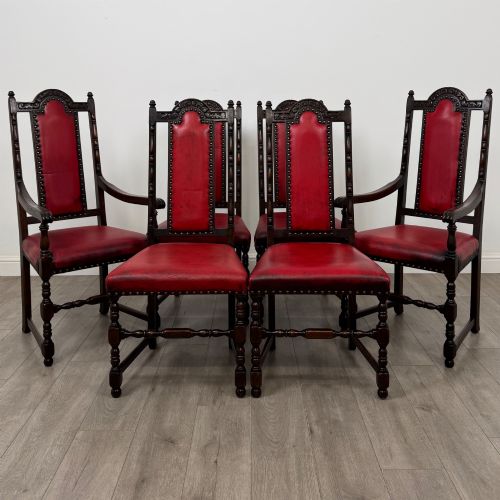
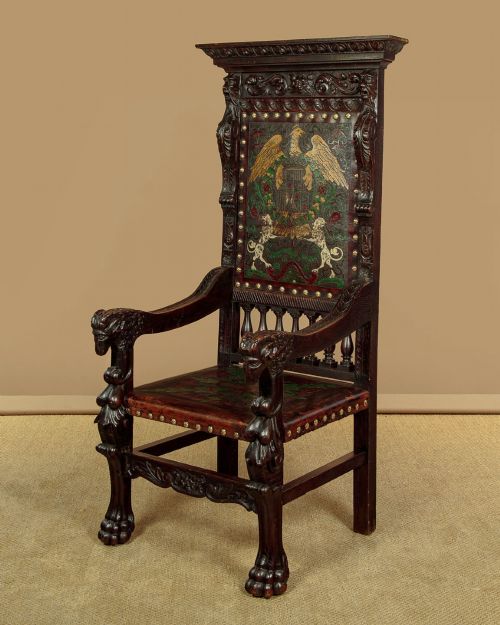
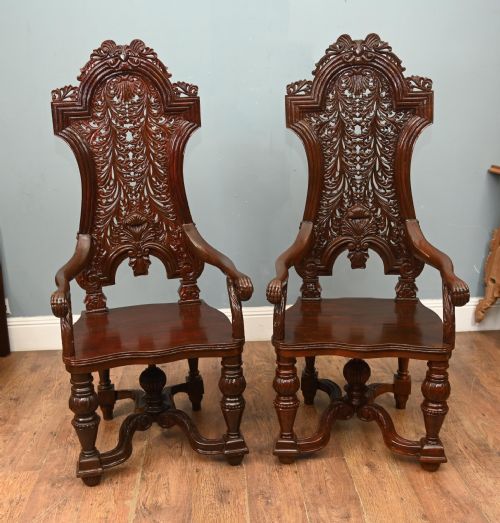
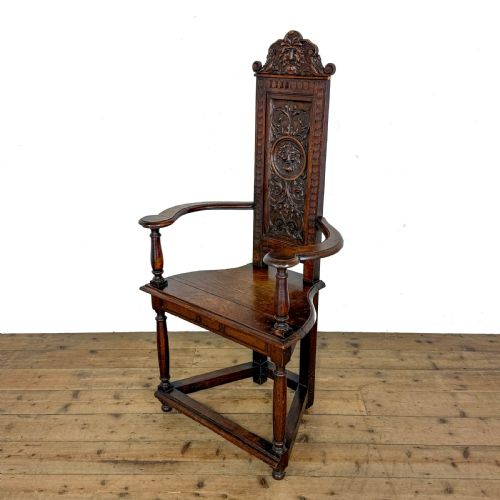


Gothic High Back Armchair
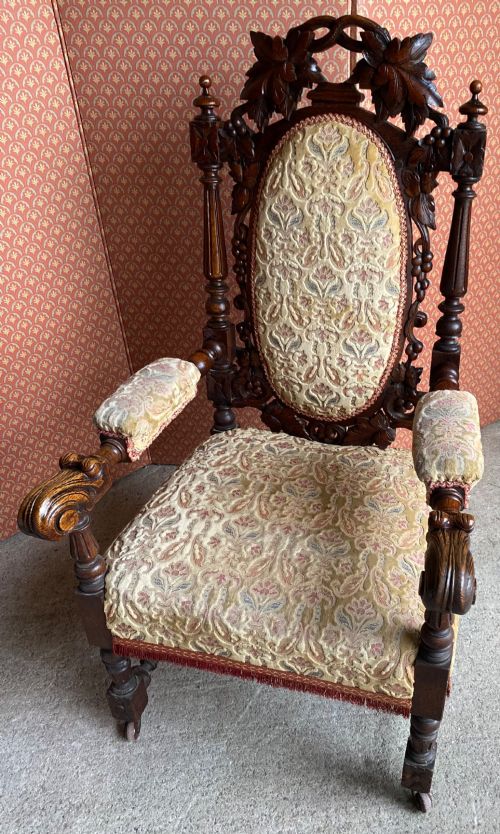
A gothic high back armchair brings architectural presence and heavy timber character into a room through soaring uprights and carved detail.
Gothic High Back Armchair
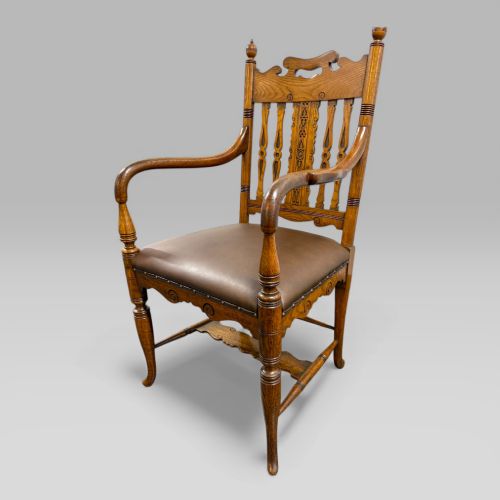
When you search for a gothic high back armchair, you encounter imposing seating defined by vertical proportions, panelled backs, and substantial wooden frames. These pieces draw heavily on historical architectural motifs, utilising pointed arches, tracery, and formal geometry.
The versions most common on this page date from the nineteenth century, spanning Victorian revivals alongside Edwardian and early twentieth-century interpretations. Makers channelled Jacobean, Renaissance, and Carolean design elements into heavy throne chairs and library carvers.
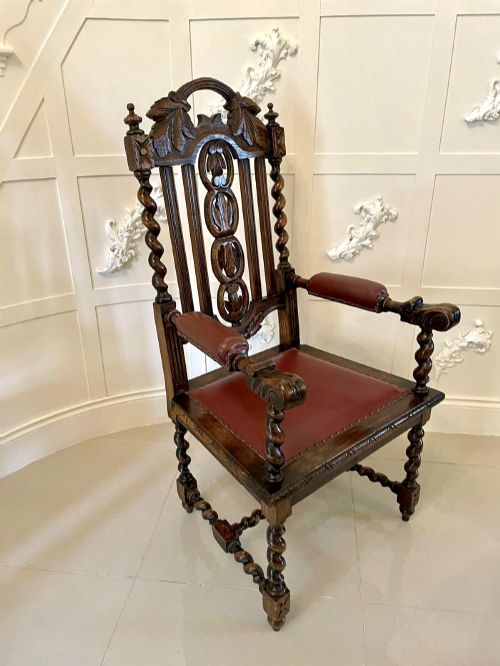
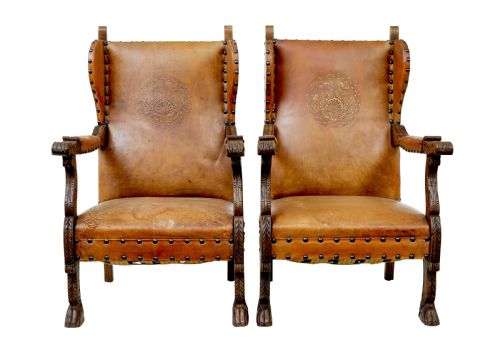
Many examples incorporate leather panels, brass studding, and elaborate figural carvings ranging from green men to hunting hounds. They function naturally as statement pieces in studies, halls, and libraries where scale and historical weight matter.
Distinctions in Quality
The distinction between standard production and top-tier work rests in the crispness and depth of the timber carving. Superior examples feature hand-chiselled detailing with distinct animal figures, tracery, and balanced proportions rather than shallow, mechanically routed decoration.
Material selection and upholstery finish also define the upper tier. High-grade chairs utilise thick, well-grained oak or walnut paired with substantial leather panels, secure brass studwork, and robust joinery that withstands the considerable weight of the high back.
Gothic High Back Armchair Retail Price Guide 2026
Typical asking prices for gothic high back armchair among the pieces listed under this phrase on Sellingantiques today, from the lower quarter to the upper quarter. They describe what is for sale here now, not the wider market.
Listings demonstrate a strong preference for oak frames paired with leather panels across Victorian and Edwardian periods.
A W N Pugin
The Gothic High Back Armchair Glossary
- Throne chair
- An imposing armchair with a very high back and substantial arms, designed to dominate a room much like a seat of authority. These often feature prominent carved woodwork.
- Caquetoire
- A sixteenth-century style of lightweight conversational armchair with a high, narrow back and trapezoidal seat. Nineteenth-century revivals recreated this form in oak.
- Green man
- A sculptural face carved from foliage or branches, frequently appearing in nineteenth-century architectural woodwork and chair crests. It symbolizes rebirth and forest spirits.
- Tracery
- Openwork intersecting pattern derived from Gothic stone window design. Cabinetmakers applied this linear geometry to wooden chair backs.
- Tooling leather
- Leather decorated by pressing heated metal tools into the surface to create repetitive borders or patterns. This technique frequently frames the padded backrests.
Gothic High Back Armchair: Frequently Asked Questions
What rooms suit a gothic high back armchair?
These imposing seats suit spaces with high ceilings and traditional architectural proportions, such as libraries, large studies, or entrance halls. Their vertical timber frames require adequate wall clearance to display the carved details properly.
Pairing them with heavy wooden desks or large reading tables balances their visual weight. They function best as standalone focal points rather than grouped seating.
How do I care for the leather upholstery?
Maintain embossed and plain leather panels by dusting them regularly with a dry cloth and applying appropriate leather balms periodically. This prevents the hide from drying out around the brass studding.
Keep the chairs away from direct heat sources and strong sunlight to protect both the leather and the underlying timber frame from shrinking.
How do I date a revival gothic chair?
Examine the timber species, tool marks on hidden surfaces, and the style of the screws or fixings to establish age. Nineteenth-century revival pieces often combine machine-sawn components with hand-finished carving.
Look for clues in the upholstery techniques, such as buttoning styles and webbing materials, which shifted noticeably between the early Victorian period and the Edwardian era.
Are these chairs comfortable for daily use?
The upright posture demanded by the high back encourages an erect seating position rather than relaxed lounging. Generous armrests and padded leather panels provide solid support for reading or working at a desk.
Seat heights and depths vary across nineteenth-century examples, reflecting the specific ergonomic preferences of the era in which they were built.