


Gothic Revival Upholstered Chair
A gothic revival upholstered chair brings architectural gravity and rich timber carving directly into a domestic interior.
Gothic Revival Upholstered Chair
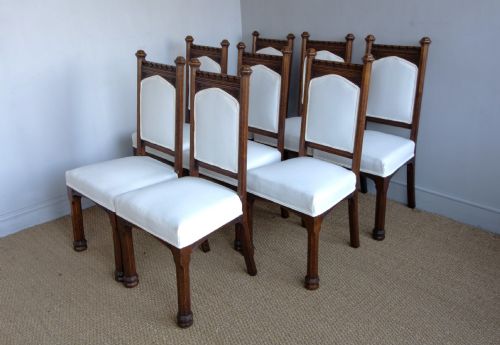
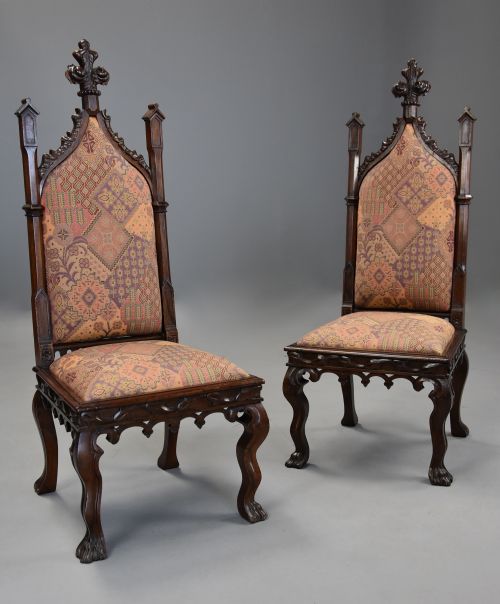
A gothic revival upholstered chair represents a nineteenth-century fascination with medieval design, translating pointed arches, tracery, and robust timber frames into functional seating. These pieces emerge predominantly from the Victorian era, spanning decades from the eighteen-fifties through the end of the nineteenth century.
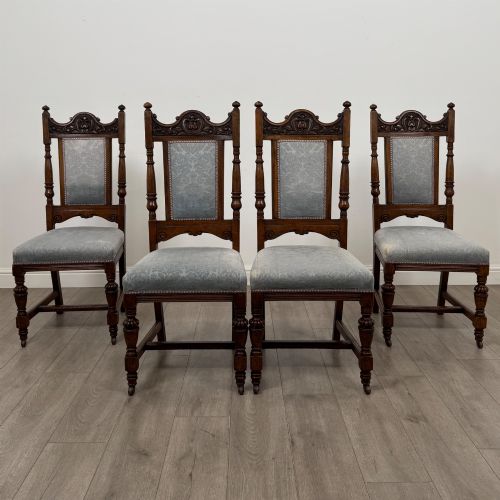
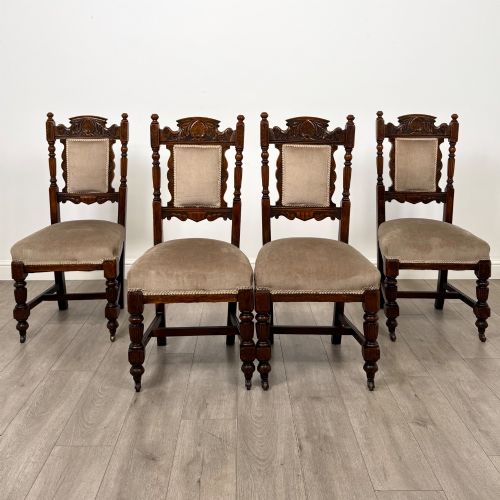
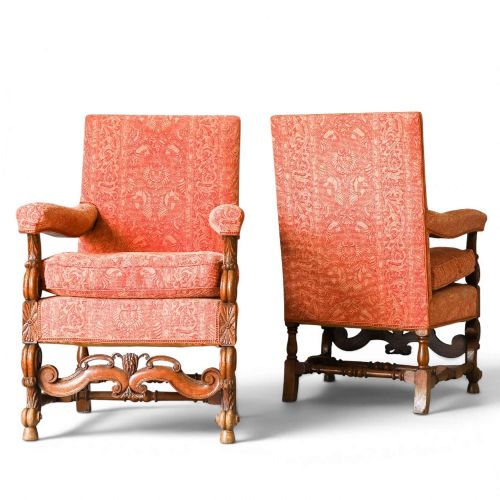
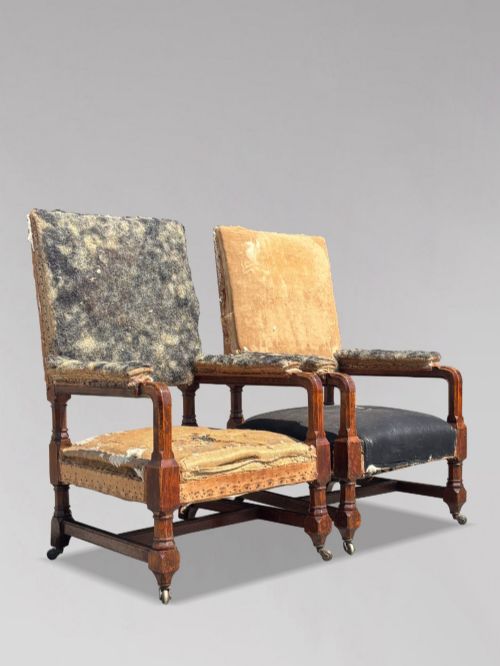
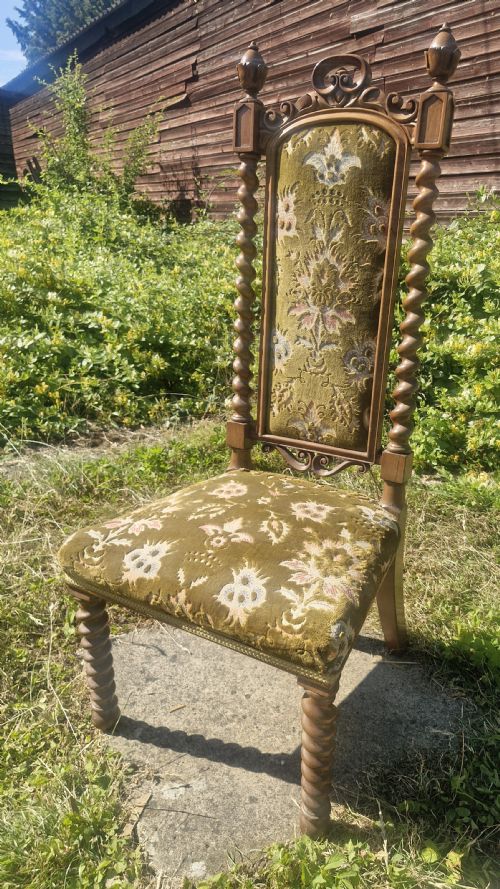
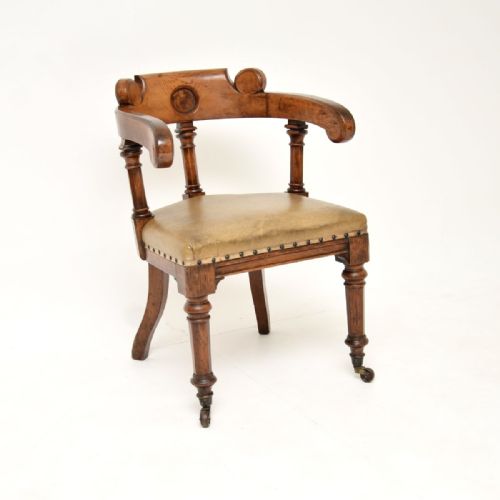
Buyers encounter various forms ranging from generous library armchairs and high-backed library seats to sets of dining chairs, compact side chairs, and devotional prayer chairs. Oak forms the backbone of these listings, frequently accompanied by rosewood, walnut, and mahogany frames.
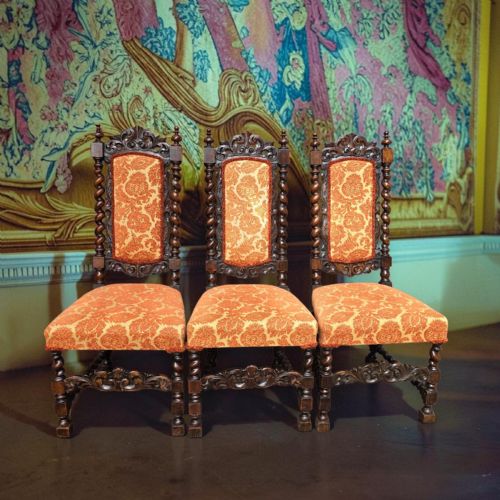
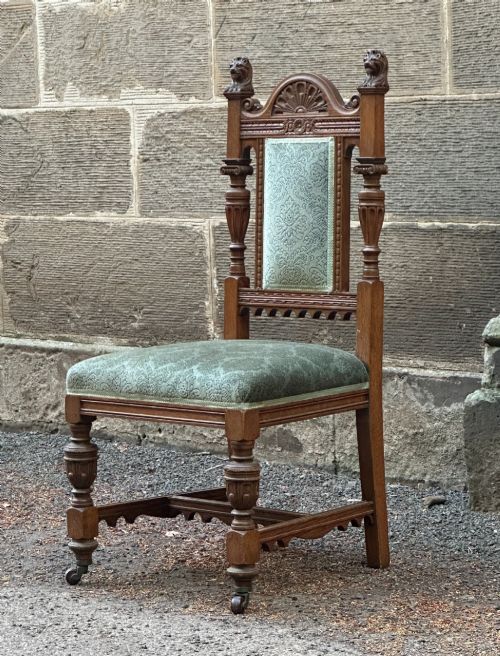
The integration of upholstery distinguishes these specific examples from rigid wooden hall chairs, incorporating materials such as leather, tapestry, and contemporary textiles. Makers applied these styles across single accent pieces as well as matched sets intended for formal dining rooms.
How they were made
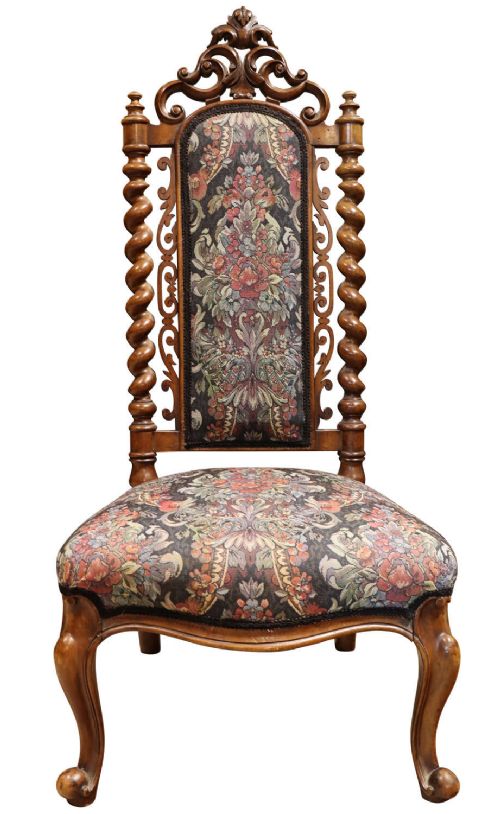
Craftsmen utilised solid hardwoods including oak, rosewood, walnut, and mahogany, constructing heavy frames designed to support intricate hand-carved details such as lion heads, green man motifs, and barley twist turnings. Joinery relied on traditional pegged and mortise-and-tenon methods to ensure structural longevity.
Upholstery techniques involved durable webbing and stuffing applied to sprung or padded seats, secured with brass tacks and finished with textiles, leather, or tapestries. Structural brass elements occasionally reinforced stress points on armchairs and library seating.
Listings demonstrate a strong predominance of solid oak frames alongside rosewood, walnut, and mahogany examples dating from the Victorian period.
What varies in quality
Quality separates ordinary production pieces from exhibition-grade examples through the depth and crispness of the hand-carving on the timber frames. Deeper undercut foliage, sharply defined architectural tracery, and substantial proportions indicate superior craftsmanship.
The choice of primary timber and the integrity of the original framing dictate endurance, whilst the retention of period-appropriate upholstery materials influences historical authenticity.
Bruce Talbert·Gillows of Lancaster·Charles Bevan
The Gothic Revival Upholstered Chair Glossary
- Tracery
- Openwork stonework patterns translated into wooden furniture decoration, creating skeletal Gothic arch motifs along chair backs.
- Prie Dieu
- A low devotional prayer chair designed with an upper rest for kneeling or leaning during private worship.
- Green Man
- A sculptural architectural ornament depicting a human face surrounded by or sprouting from foliage, frequently carved into Victorian oak chair crestings.
- Barley Twist
- A decorative furniture turning resembling a twisted rope, carved into the upright supports and legs of nineteenth-century seating.
- Rosewood
- A dense, dark timber with distinct grain patterns utilised for high-status Victorian library and drawing-room chairs.
Gothic Revival Upholstered Chair: Frequently Asked Questions
How do I identify a gothic revival chair?
Look for pointed arch motifs, trefoils, heavy carved tracery, and dense timber frames reflecting medieval architecture.
These architectural elements distinguish the style from simpler Victorian or classical seating designs.
Where were these chairs used historically?
They furnished libraries, formal dining rooms, and private studies in nineteenth-century homes.
Smaller prayer chairs found placement in domestic bedrooms for private devotion.
Are these chairs comfortable for daily use?
Armchairs and library models offer generous proportions and padded upholstery suited for relaxed sitting.
Dining chairs and high-backed side chairs provide a firmer, upright posture intended for formal dining.
How should I care for the wooden frames?
Maintain the timber by applying traditional beeswax periodically to preserve the natural grain and finish.
Avoid placing antique chairs near direct heat sources to prevent timber splitting.