



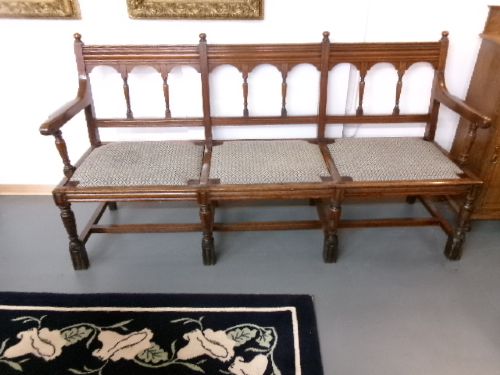
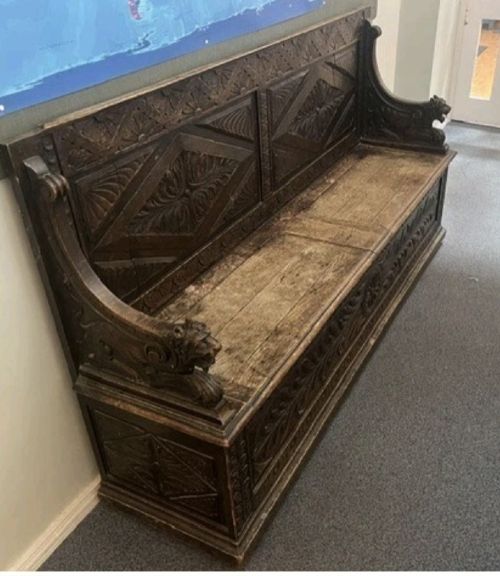
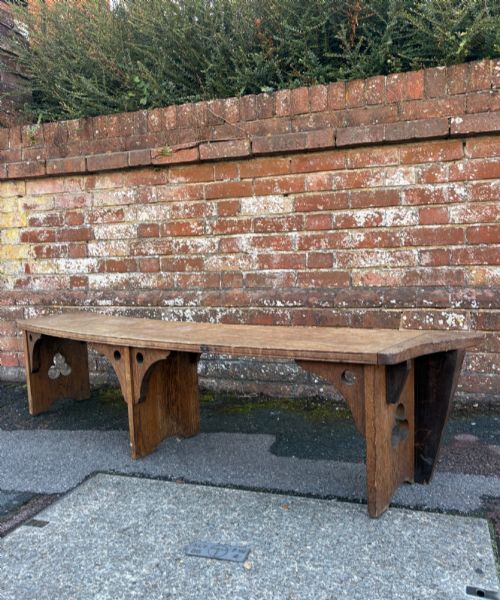
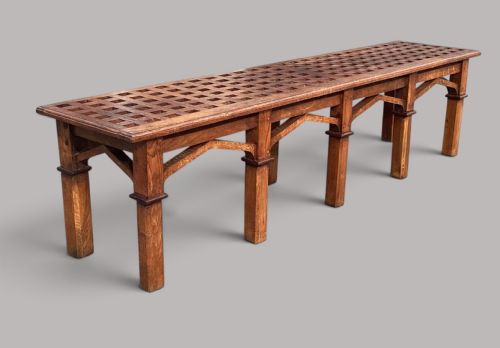
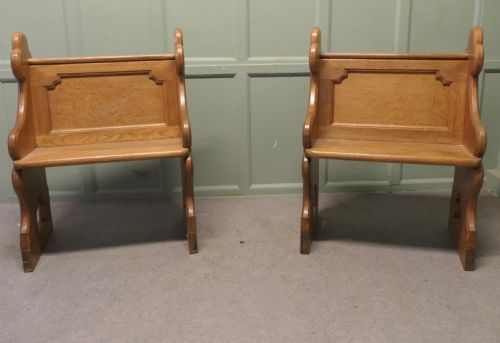
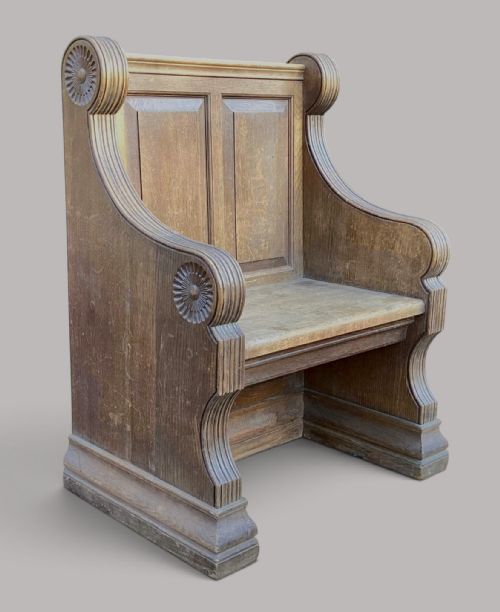
Gothic Hall Bench
A gothic hall bench anchors an entrance with architectural presence, offering sturdy seating and historic timber character.
Gothic Hall Bench
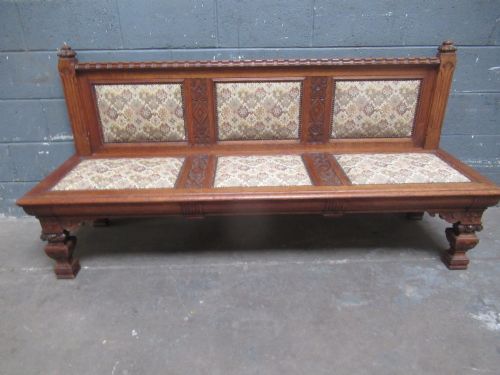
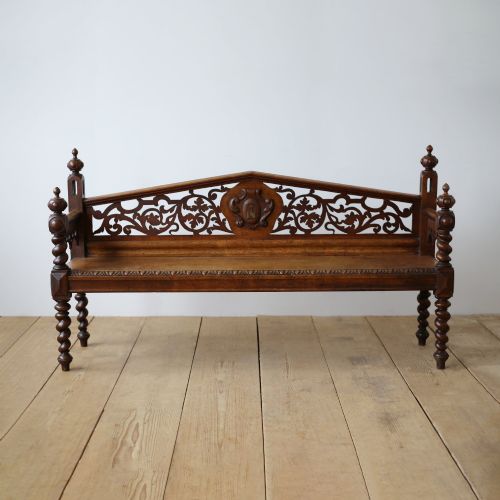
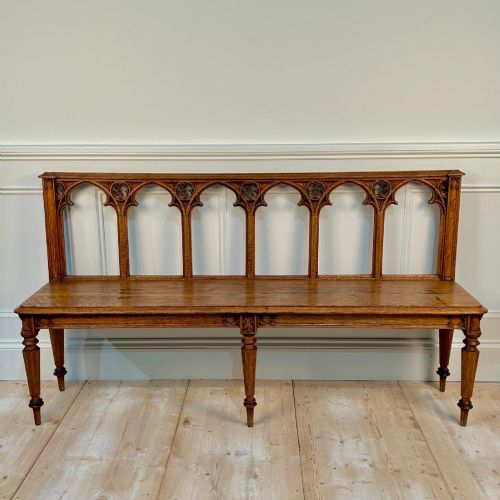
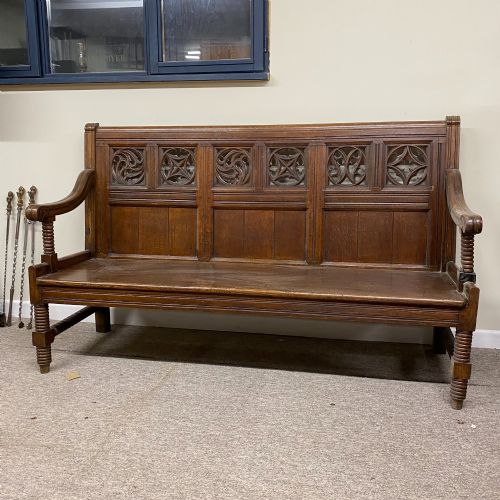
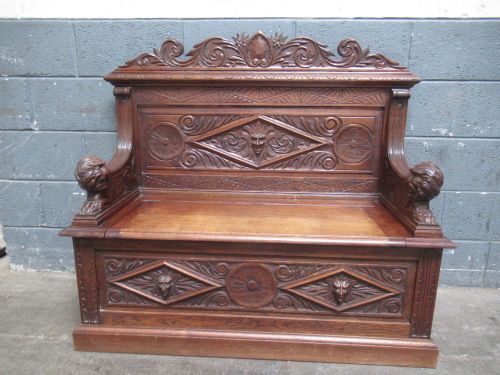
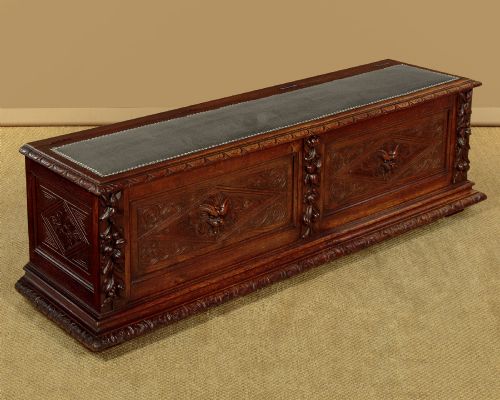
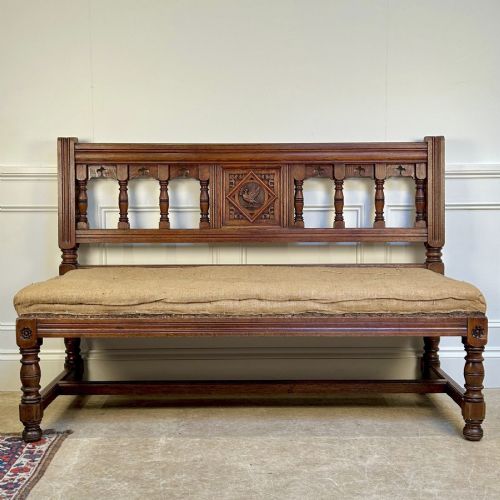
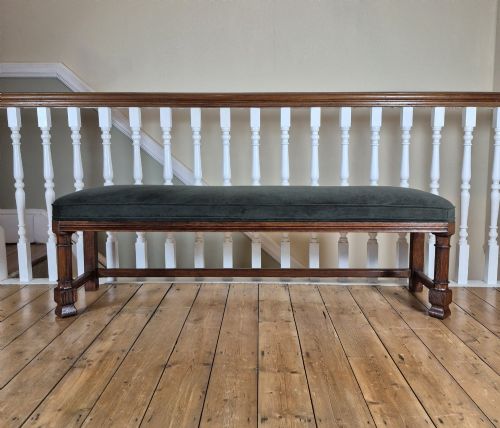
When searching for a gothic hall bench, buyers encounter substantial seating designed for entranceways, corridors and reception rooms. These pieces predominantly date from the Victorian period through to the early twentieth century, drawing heavily on Gothic Revival, Arts and Crafts and Renaissance Revival influences. Forms range from architectural settles and monks benches with lift-up seats to long gallery benches and carved oak window seats.
The pieces appearing here often incorporate ecclesiastical or baronial motifs, including trefoil carvings, panelled backs and Green Man details. Many examples integrate practical elements such as shoe storage, umbrella stands or hinged storage boxes beneath the seat. Oak is the primary timber utilised, frequently paired with elm, walnut or structural ironwork to create a commanding presence in a hallway.
Materials and Construction
Makers relied principally on solid oak, selected for its durability and suitability for heavy carving in the Gothic manner. Elm and walnut also appear in structural and decorative elements, whilst brass, iron and leather provide functional hardware and upholstery.
Construction techniques emphasise architectural joinery, with panelled backs, mortise and tenon joints and pegged frames ensuring stability. Carving is executed directly into the solid timber, displaying deep relief work such as tracery, linenfold or figural motifs.
Gothic Hall Bench Retail Price Guide 2026
Typical asking prices for gothic hall bench among the pieces listed under this phrase on Sellingantiques today, from the lower quarter to the upper quarter. They describe what is for sale here now, not the wider market.
Listings feature solid oak, elm and walnut across Victorian, Arts and Crafts and Gothic Revival periods.
Distinctions in Quality
Quality rests in the crispness and depth of the timber carving and the architectural ambition of the overall form. Pieces displaying well-defined trefoil details, balanced proportions and substantial solid oak construction stand apart from simpler vernacular examples.
The integrity of the timber and the retention of original hardware, such as hinges and brass brackets, elevate a piece. Finer examples maintain untouched surfaces where the grain and colour of the oak have deepened naturally over generations.
GIllows
The Gothic Hall Bench Glossary
- Settle
- A wooden bench with a high panelled back, solid arms and often a storage compartment beneath the seat, designed to block draughts in hallways.
- Monks Bench
- A convertible piece of furniture featuring a hinged top that flips to form a table back over a box seat base.
- Trefoil
- A three-lobed decorative ornament resembling a clover leaf, commonly pierced or carved into Gothic tracery.
- Green Man
- A sculptural motif depicting a human face carved with leaves, vines or foliage sprouting from the mouth.
- Reformed Gothic
- A nineteenth-century design style advocating simplified architectural forms and honest construction over excessive ornamentation.
Gothic Hall Bench: Frequently Asked Questions
Where should I place a gothic hall bench?
These benches suit entrance halls, boot rooms and wide corridors where their architectural frames provide both seating and visual weight. Their substantial backs help define open-plan spaces or anchor long walls.
Ensure adequate clearance for hinged seats or storage compartments if the bench functions as a shoe box or monks bench.
How do I care for antique oak?
Maintain the timber by dusting regularly with a dry cloth and occasionally applying a traditional beeswax to nourish the grain. Avoid placing the bench near direct heat sources or strong sunlight to prevent timber splitting.
Protect upholstered sections, whether fabric, leather or velvet, by keeping them away from damp environments.
How do I identify Gothic Revival pieces?
Look for architectural elements borrowed from medieval buildings, such as pointed arches, trefoil cutouts, tracery panels and heavily carved mouldings. The timber is predominantly solid oak with dark finishes typical of nineteenth-century revivalism.
Makers often drew inspiration from ecclesiastical furniture like church pews and choir stalls.
Did these benches serve storage purposes?
Many examples feature lift-up seats opening into deep box compartments originally utilised for boots, blankets or cloaks. Some incorporate integrated stands for walking sticks, hats and umbrellas alongside the seating area.
This dual functionality made them central pieces of furniture in nineteenth-century domestic reception spaces.