





Gothic Carved Timber Figure
A gothic carved timber figure brings medieval and Renaissance devotion directly into a room, offering tactile presence through centuries of grain and chisel marks.
Gothic Carved Timber Figure
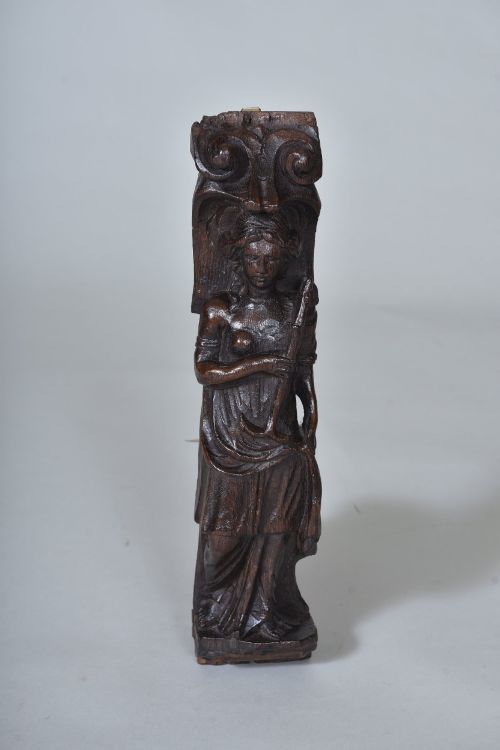
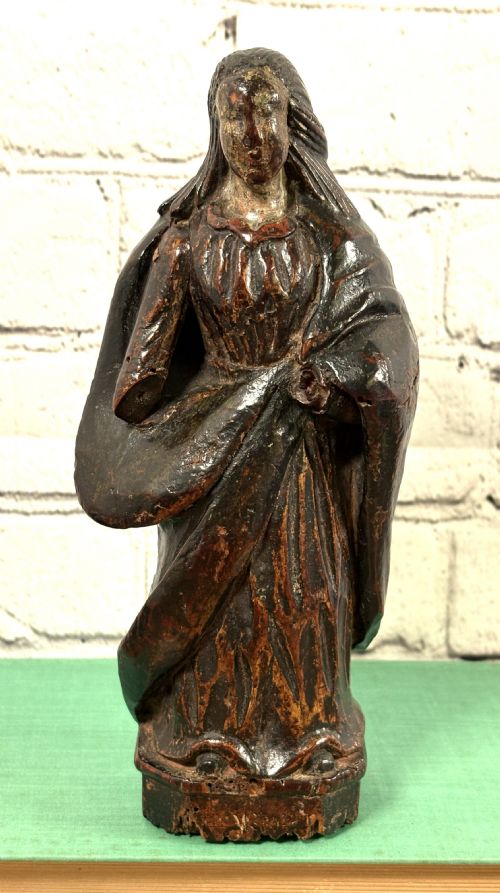
A gothic carved timber figure encompasses saints, apostles, and biblical groups hewn from solid wood during periods ranging from the late medieval era through the nineteenth-century Gothic Revival.
Buyers frequently encounter oak and limewood devotional sculptures, often originating as architectural fragments, church figures, or household devotional panels from continental Europe and Britain.
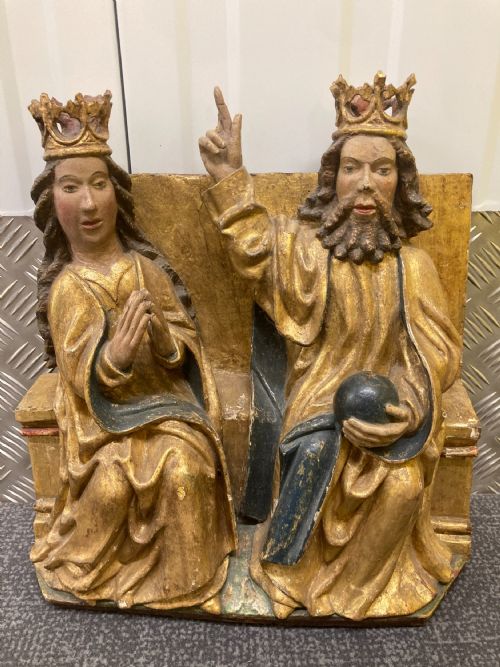
These works bridge sacred architecture and domestic collection, appearing as standalone sculptures, architectural brackets, or paired figures of kings, queens, and holy figures.
Materials and construction
Carvers shaped these pieces primarily from dense hardwoods like oak, walnut, and limewood, utilising hand chisels and gouges to build deep relief and three-dimensional form.
Many surviving surfaces retain traces of their original preparation, including gesso, polychrome paint, and gold leaf applied over the bare timber to heighten visual drama.
Earlier pieces often display joined construction where larger blocks were built up or hollowed to prevent splitting, while later revival works make use of seasoned timber stocks.
Among the solemn apostles and saints, an occasional smiling young bishop peers out from the centuries with a surprisingly cheerful expression.
Judging the carving
The degree of surface survival dictates value, as original polychrome and gilt surfaces offer historical depth that stripped or heavily restored timber lacks.
Proportion and structural integrity separate complete devotional figures from compromised fragments, though architectural brackets and panels retain distinct character through their integration with original timber.
The Gothic Carved Timber Figure Glossary
- Polychrome wood
- Timber sculpture painted in multiple colours, often using pigments bound in oil or tempera over a gesso ground.
- Giltwood
- Wood carved and surfaced with a very thin layer of gold leaf, common in ecclesiastical and high-status decorative contexts.
- Caryatid
- A sculpted female figure serving as an architectural support pillar, appearing on pedestals and structural elements.
- Anna Selbdritt
- An iconic Christian subject depicting Saint Anne with the Virgin Mary and the Christ Child together as a family group.
- Gothic Revival
- A nineteenth-century artistic movement that revived medieval architectural and sculptural forms.
Gothic Carved Timber Figure: Frequently Asked Questions
How do I date a timber figure?
Dating relies on tool marks, timber shrinkage, stylistic conventions in drapery, and the presence of original ground layers like gesso.
Early works show adze and primitive chisel work, while later revival pieces often exhibit mechanised preparation and tighter timber seasoning.
Where were these figures originally placed?
Many originated inside churches as altarpieces, rood screens, or devotional niches, while others served as secular architectural brackets.
Later nineteenth-century figures were created primarily for domestic display within Gothic Revival interiors and libraries.
How should I care for old wood?
Keep timber figures away from direct heat sources and sudden humidity fluctuations to prevent the wood from splitting or warping.
Dust gently with a dry, soft brush and avoid modern polishes or cleaning agents that penetrate porous historic surfaces.
Are painted surfaces original?
Many pieces retain early or original polychrome and gilt layers, though repainting occurred frequently across subsequent centuries of devotional use.
Close inspection under magnification helps reveal underlying pigment layers and the age of the preparation ground.