


Gothic Carved Oak Shelves
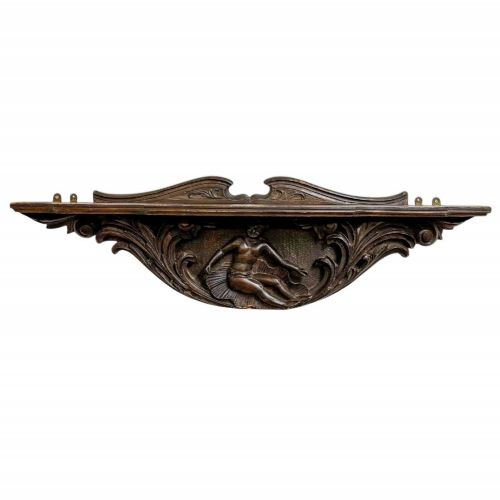
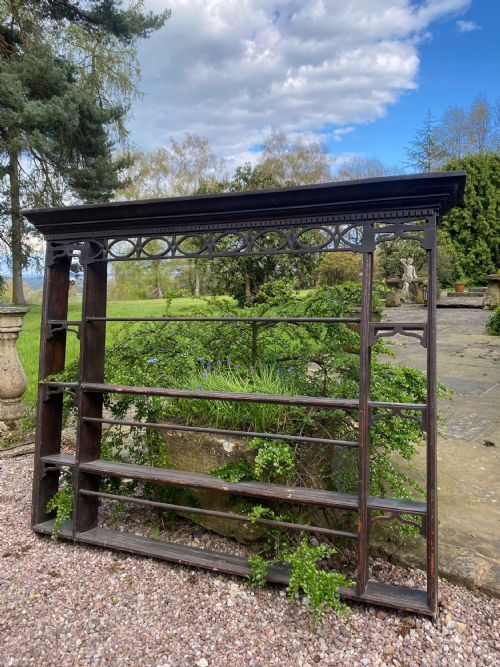
Gothic carved oak shelves bring substantial timber and pointed architecture into a room, offering sturdy ledges designed to display books and heavy china.
Gothic Carved Oak Shelves
Gothic carved oak shelves encompass architectural wall brackets, hanging display plate racks, and open bookcases produced primarily during the nineteenth century. These items emerge in styles ranging from straightforward Victorian Gothic Revival to Arts and Crafts and Aesthetic Movement interpretations, reflecting nineteenth-century revivals of medieval joinery.
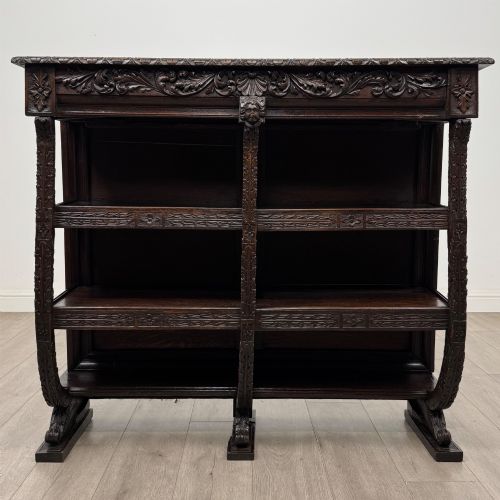
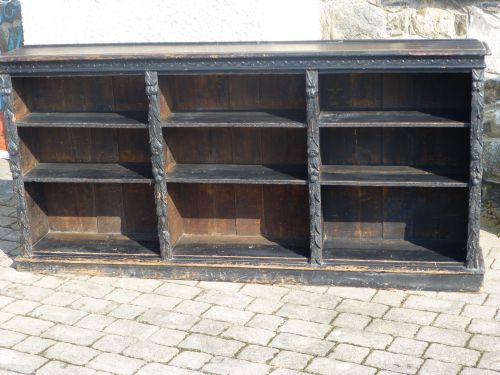
The version most commonly met on this page is the Victorian open bookcase or wall shelf fashioned from solid oak. Such pieces frequently display characteristic Gothic ornament, including tracery, carved panels, and occasionally green man motifs.
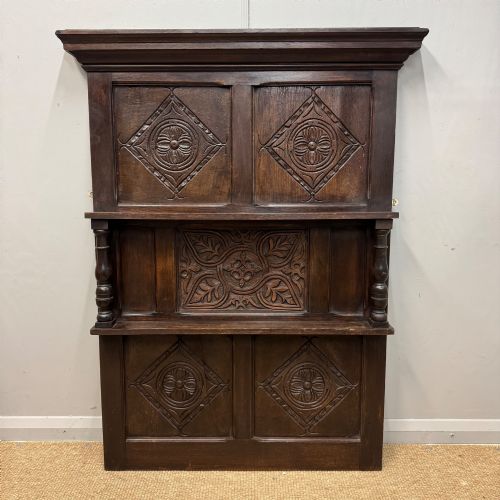
Beyond dedicated wall shelves and bookcases, the selection extends to related oak forms with integrated ledges, such as overmantels, pediments, and cabinets. Pieces hail predominantly from nineteenth-century workshops, though eighteenth-century hanging shelves and early twentieth-century examples also appear.
What varies in quality
The distinction between ordinary utility items and superior work rests on the depth and crispness of the timber carving. Elaborate detailing, such as pierced tracery or well-modelled figural elements like green man masks, elevates a piece above plain architectural mouldings.
Material selection and structural integrity also divide the range, with dense golden oak or ebonised surfaces holding up better than utilitarian secondary woods. Thoughtful proportions and integrated architectural elements, such as pediments or adjustable shelving systems, mark out pieces executed by more accomplished cabinet-makers.
Keep an eye out for the green man peering from the foliage on nineteenth-century bookcases.
John Moyr Smith·Richard Bridgens·Beha·Gillows
The Gothic Carved Oak Shelves Glossary
- Gothic Revival
- A nineteenth-century architectural and decorative style drawing inspiration from medieval buildings. It introduced pointed arches, trefoils, and heavy carved woodwork into domestic furniture.
- Green Man
- A sculptural motif representing a human face entwined with or sprouting foliage. It appears frequently in nineteenth-century carved woodwork.
- Overmantel
- A decorative structure placed above a fireplace mantelpiece. In this context, it often incorporates a display shelf.
- Ebonised
- Wood finished with a black stain or polish to imitate ebony. This treatment was common in Aesthetic Movement furniture.
- Tracery
- Openwork ornamental stonework patterns adapted for woodwork in Gothic design. It often decorates the upper panels of bookcases and cabinets.
Gothic Carved Oak Shelves: Frequently Asked Questions
What periods do these shelves come from?
The pieces span multiple centuries, though the majority originate from the nineteenth century during the Victorian Gothic Revival.
Earlier examples from the eighteenth century and later pieces from the early twentieth century also feature among the listings.
Are the shelves adjustable?
Many of the open bookcases and wall units include adjustable shelves supported by traditional wooden or metal systems.
Fixed shelves remain common in smaller hanging racks and older architectural cabinets.
What is ebonised oak?
Ebonised oak is timber treated with a dark stain or finish to mimic the appearance of expensive ebony wood.
This finish appears frequently on nineteenth-century pieces associated with the Aesthetic Movement.
How do I distinguish Gothic Revival from Arts and Crafts?
Gothic Revival pieces emphasise medieval architectural motifs such as pointed arches, tracery, and heavy carved foliage.
Arts and Crafts examples tend to focus on visible construction, simpler joinery, and functional honesty rather than ecclesiastical ornament.