
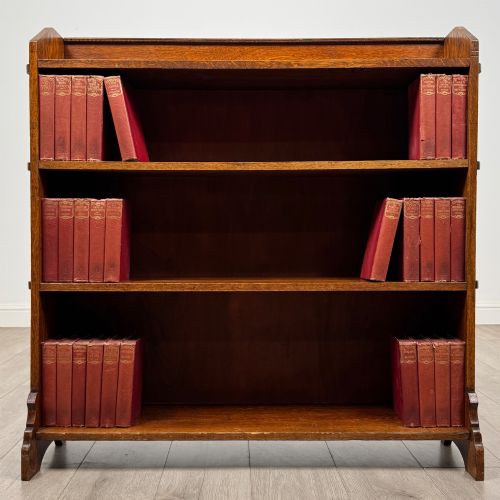
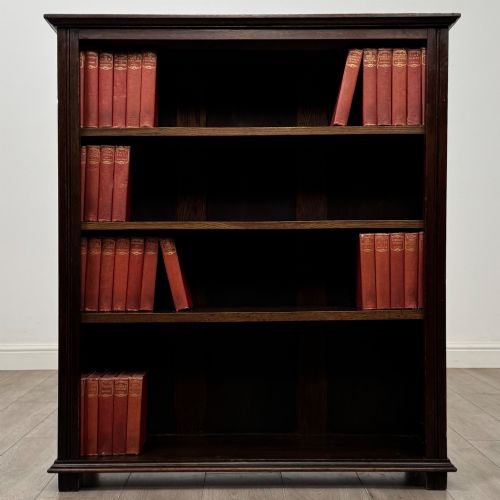
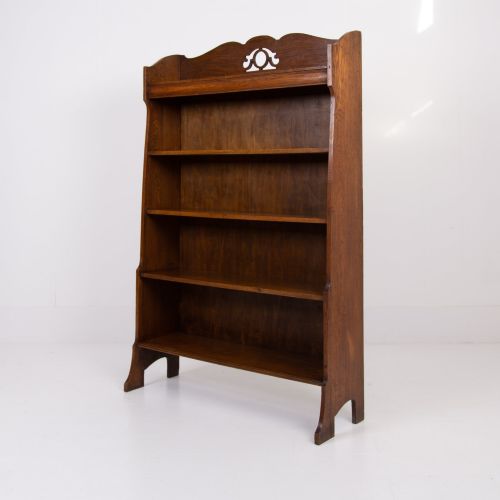
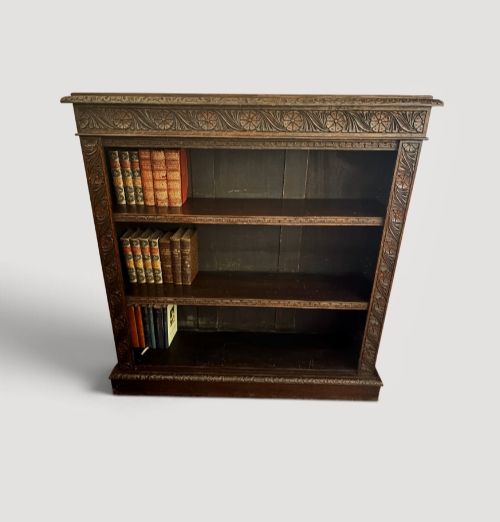
Oak Open Book Shelves
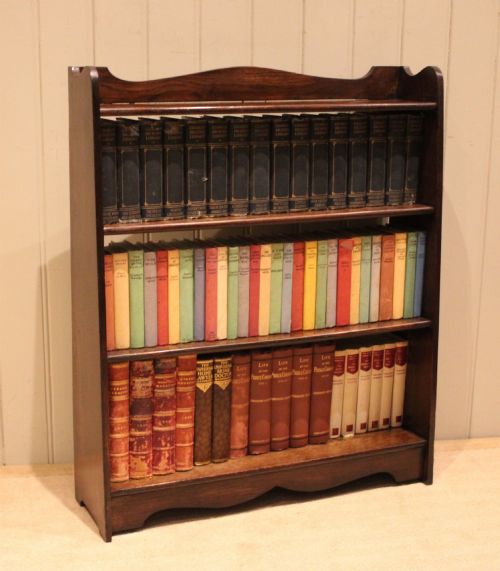
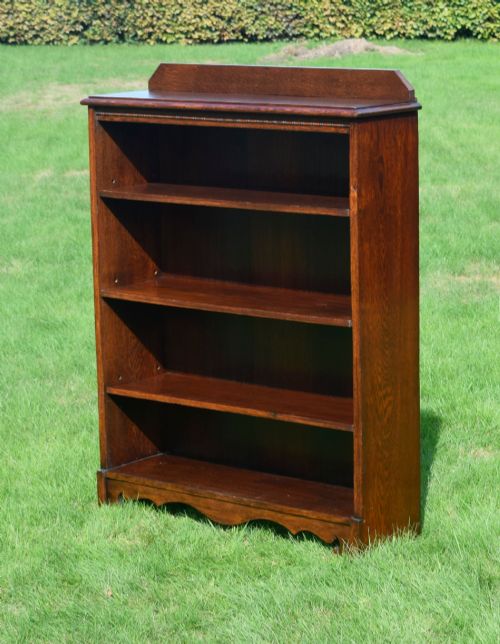
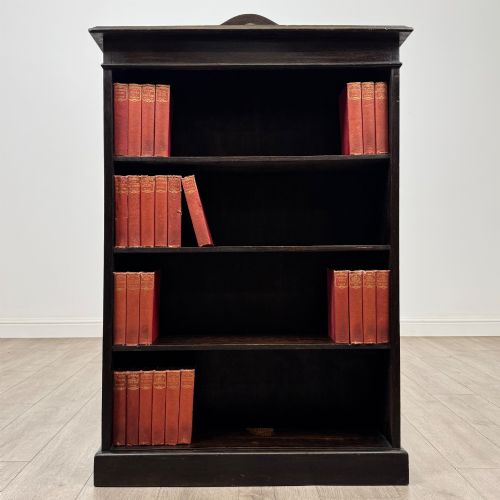
Oak open book shelves provide accessible storage while showcasing timber grain across Victorian, Edwardian and Arts and Crafts designs.
Oak Open Book Shelves
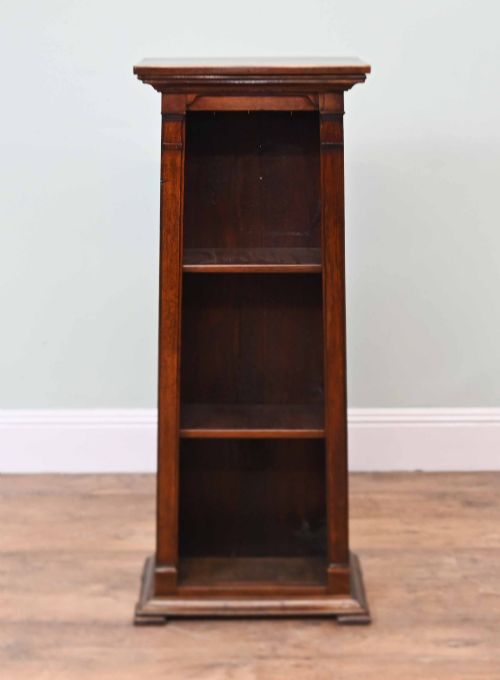
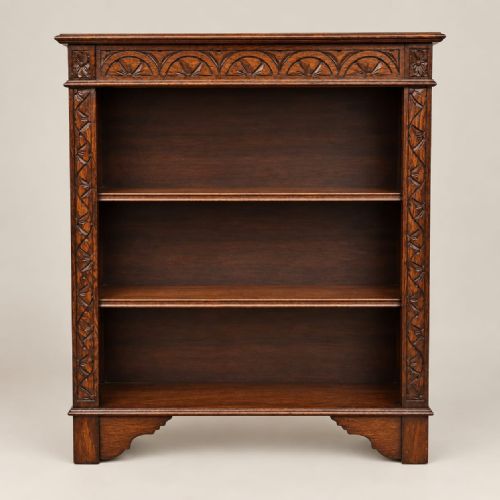
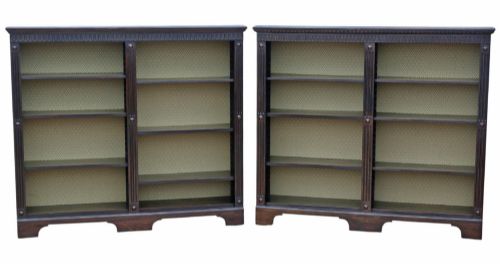
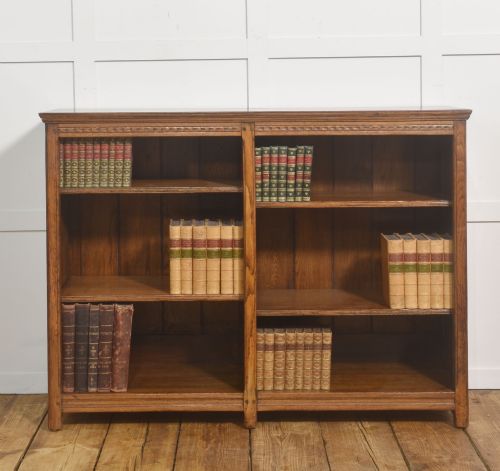
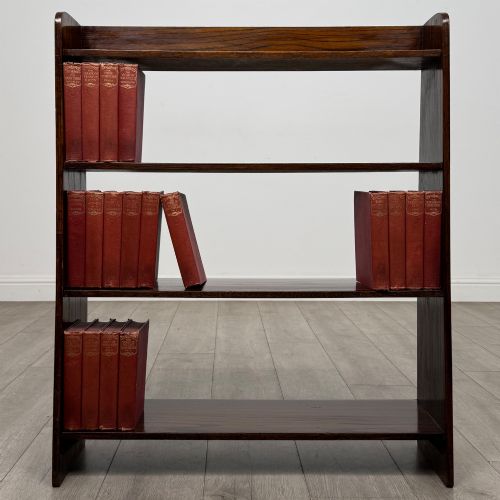
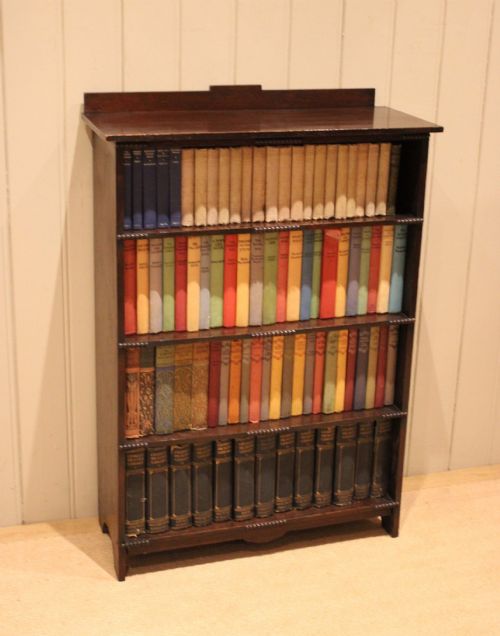
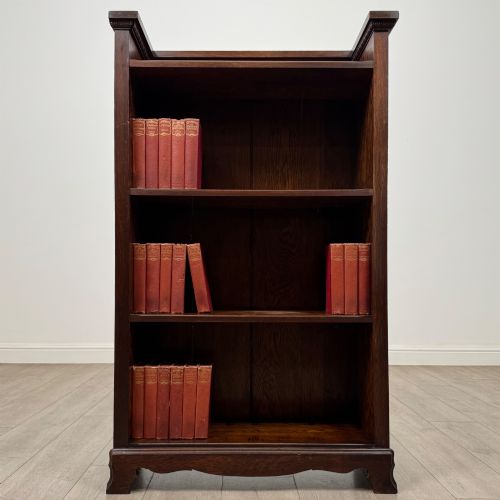
When searching for oak open book shelves, buyers encounter unglazed shelving units designed for domestic libraries and studies. The selection spans compact Edwardian pieces and tall nineteenth-century formats.
Most examples originate from the Edwardian era and the early twentieth century, utilising solid oak or golden oak timber. Formats range from narrow freestanding towers to low book tables and waterfall designs.
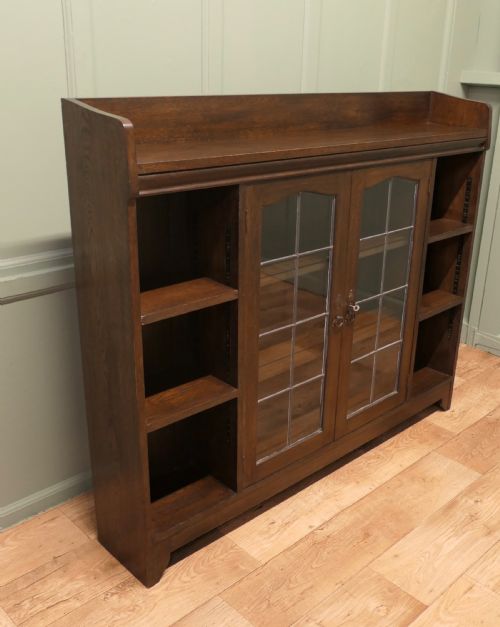
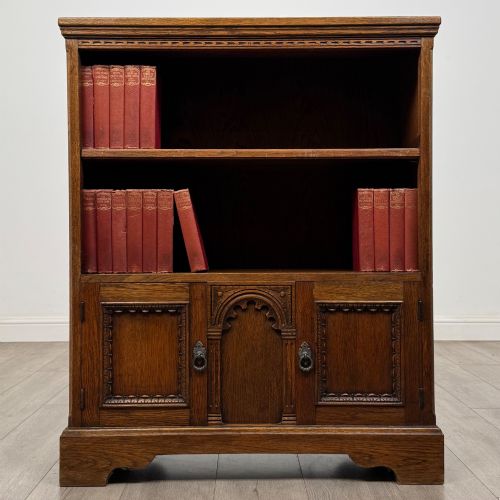
Many variants include adjustable shelves supported by wooden ratchets or metal pins. Period pieces occasionally incorporate side cabinets, carved panels or leather tops alongside standard open compartments.
How they were made
Carpenters constructed these shelves predominantly from solid oak, sometimes utilising dark oak or golden oak finishes. Walnut, brass fittings, and occasional leather inserts appear as secondary materials in specific designs.
Joinery methods varied by period, employing traditional framing alongside adjustable shelf mechanisms. Carved detailing and beaded edges frequently distinguish Arts and Crafts and Victorian Revival workshops.
Listings feature solid oak and dark oak across Victorian, Edwardian, and Art Deco periods, alongside specialised forms like book troughs and leather-topped tables.
What varies in quality
The standard of timber selection and timber matching heavily influences the overall execution of each piece. Superior examples utilise dense, quartersawn oak displaying pronounced medullary rays.
Construction rigidity and the precision of the adjustable shelving mechanisms separate standard production items from workshop pieces. Maker attribution, such as marked pieces associated with known firms, elevates the standing of individual items.
Heals·Waring and Gillows
The Oak Open Book Shelves Glossary
- Quarter sawn
- Timber cut radially through the growth rings to produce distinct silver grain patterns. This method yields stable boards favoured in quality furniture making.
- Adjustable shelves
- Shelving units supported by removable pegs, tracks or ratchets allowing variable vertical spacing. This system accommodates books of diverse heights.
- Arts and Crafts
- A design movement prioritising honest construction, plain materials and visible craftsmanship over mass-produced ornamentation. Pieces from this tradition often feature simple geometric lines.
- Waterfall bookcase
- A tiered shelving format where each successive shelf steps back from the one below. This tiered profile creates a cascading silhouette.
- Golden oak
- A warm, light-toned finish applied to oak timber to highlight natural grain patterns. It is particularly common on pieces from the Edwardian period.
Oak Open Book Shelves: Frequently Asked Questions
How do I adjust the shelves?
Most period variants utilise wooden support strips, metal pins, or ratchets set into the interior sides. Users simply lift the board and relocate the supports into alternative slots.
Older mechanisms may require gentle handling if timber has expanded over decades of environmental changes.
Are these shelves sturdy enough for heavy books?
Solid oak construction provides robust weight capacity suited to heavy volumes and reference books. Thick timber boards resist sagging across standard spans.
Shorter compartments or narrow formats offer the highest resistance to long-term timber flex under heavy loads.
How do I identify an Edwardian piece?
Edwardian examples typically feature lighter golden oak tones, restrained carving, and simpler vertical proportions than their Victorian predecessors. Many date between 1900 and 1910.
They often prioritise domestic utility with clean rectangular lines and occasional open back panels.
Where should I place an open bookcase?
These pieces suit living rooms, studies, and hallways where quick access to books is preferred over glazed protection. Position them away from direct heat sources to prevent timber splitting.
Low variants also function effectively as side tables or display surfaces beneath windows.