


Gothic Bronze Candlestick
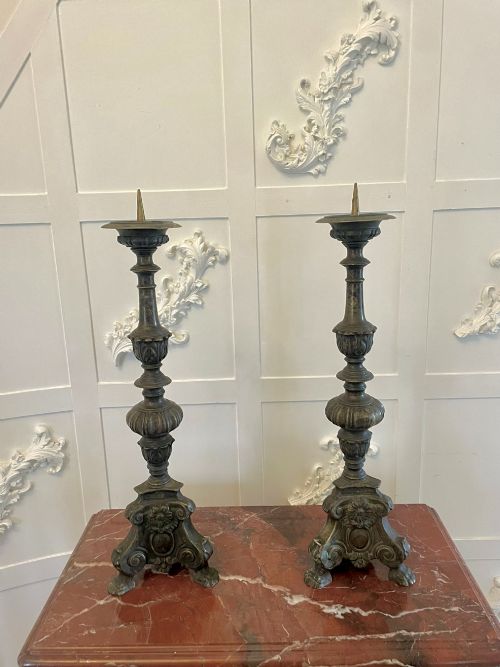
These gothic bronze candlestick examples combine ecclesiastical forms and medievalist ornamentation, offering heavy metalwork to anchor a traditional interior.
Gothic Bronze Candlestick
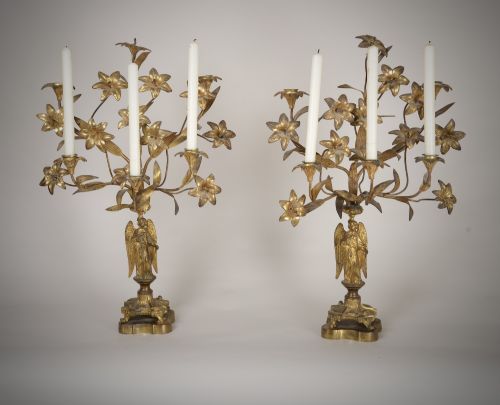
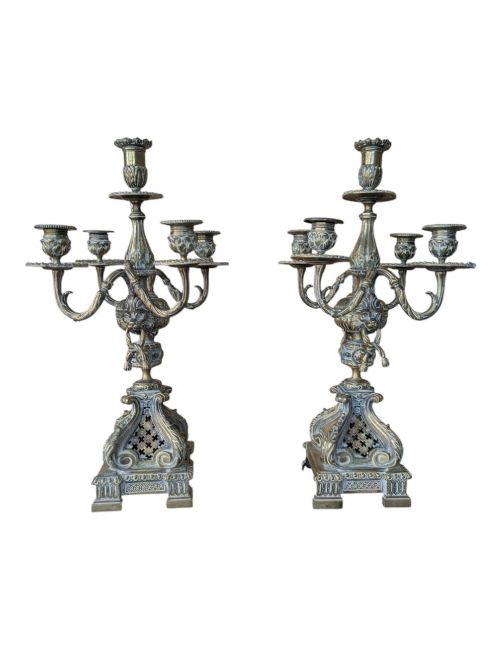
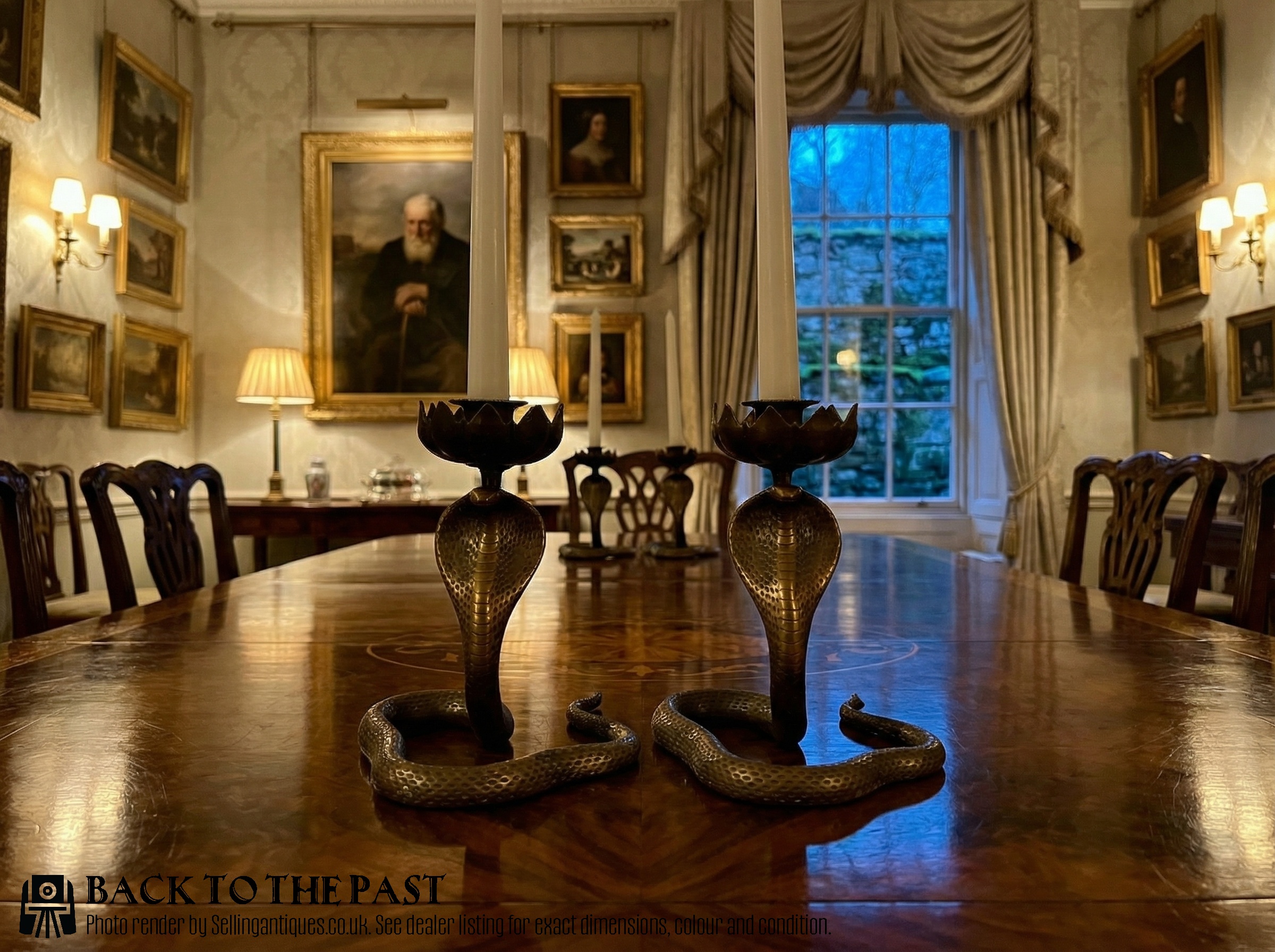
When searching for a gothic bronze candlestick, a buyer encounters heavy lighting fixtures drawn from nineteenth-century revivals. The listings show forms ranging from tall church pricket candlesticks to multi-light candelabra.
Most examples date from the Victorian era and the later nineteenth century, utilising bronze, brass, and gilt metals. Pairs dominate the selection, often incorporating medievalist details or figural elements.
The objects serve as functional lighting and decorative focal points. The selection includes specialist items like church candle holders alongside domestic pairs.
How they were made
The construction relies on cast metals including solid bronze, brass, and ormolu. Workshops employed patination techniques to darken surfaces or applied fire gilding to create bright metallic finishes.
Makers shaped the metal into architectural or figural forms, utilising pricket spikes for church candles or socket arrangements for multiple lights. Decorative details draw directly from Gothic Revival and Renaissance Revival vocabularies.
Among the historical offerings, one pair of medievalist characters balances precariously on stilts to hold the candles.
What varies in quality
Quality rests upon the crispness of the casting and the weight of the metal utilised. Solid bronze and heavy brass retain sharp architectural details, whereas lighter spelter alternatives show softer definition.
The richness of the finish dictates the visual success of the piece. Deep bronze patination or careful gilding separates standard production from superior decorative work.
The Gothic Bronze Candlestick Glossary
- Pricket
- A candlestick featuring a vertical spike at the centre to impound the base of a candle. This form derives primarily from medieval church altar fittings.
- Ormolu
- Finely ground high-carat gold applied to a bronze base through a mercury amalgamation process. This technique produces a bright golden surface seen on revival pieces.
- Spelter
- A zinc alloy utilised as a cheaper alternative to bronze for figural castings. It is often given a bronze patination to mimic heavier metal.
- Candelabra
- A branched lighting fixture designed to hold multiple candles simultaneously. These pieces often feature three or five lights.
- Gothic Revival
- An architectural and decorative style drawing inspiration from medieval design. It employs pointed arches, heavy tracery, and ecclesiastical motifs.
Gothic Bronze Candlestick: Frequently Asked Questions
What is a pricket candlestick?
A pricket candlestick uses a sharp metal spike rather than a socket to hold the candle in place. This design originates from medieval ecclesiastical lighting.
Such pieces were standard on church altars and large dining tables during the revival periods.
How do I clean bronze candlesticks?
Bronze candlesticks require only gentle dusting with a soft, dry cloth to maintain their condition. Harsh metal polishes must be avoided because they strip away historic patination.
Preserving the original surface finish maintains the character and historical integrity of the metalwork.
Are these pieces actually medieval?
These items date from the nineteenth century rather than the medieval period itself. They represent Victorian revivals of earlier Gothic and Renaissance styles.
Craftsmen of the eighteen-hundreds drew heavily on medieval architecture and church furnishings for their designs.
What is the difference between bronze and spelter?
Bronze is a heavy copper alloy valued for its durability and capacity to hold crisp casting details. Spelter is a softer, lighter zinc-based metal.
Spelter was frequently patinated to resemble bronze in less expensive nineteenth-century decorative pieces.