
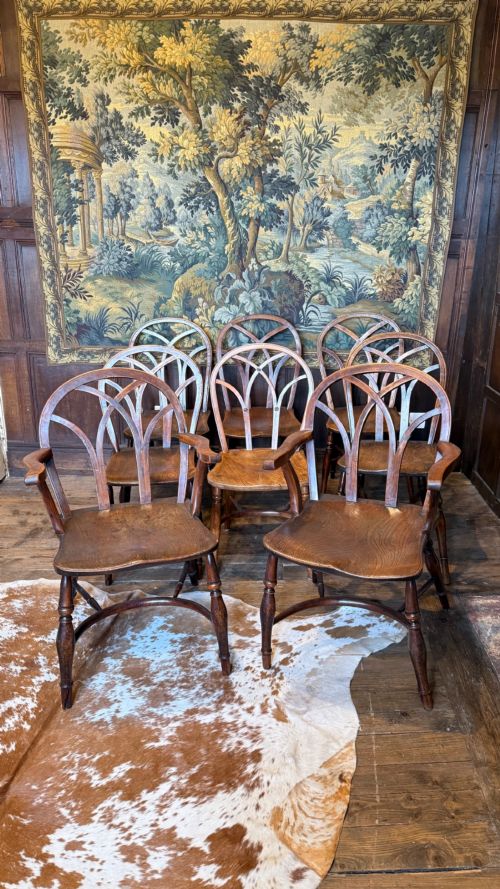
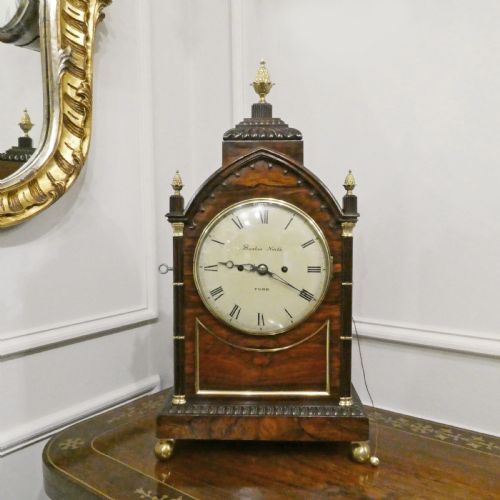

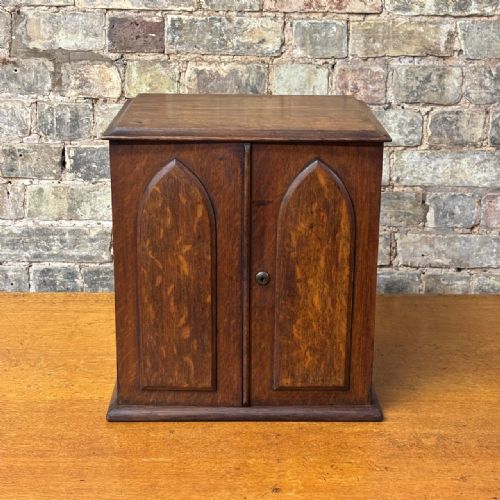


Gothic Arch Desk
These items commonly grouped as a gothic arch desk span distinct periods like the Georgian and Victorian eras, offering functional workspace and architectural character.
Gothic Arch Desk
When buyers search for a gothic arch desk, they typically encounter examples ranging from Georgian and Regency secretaire bookcases to Victorian clerk desks and library tables incorporating pointed arch motifs.
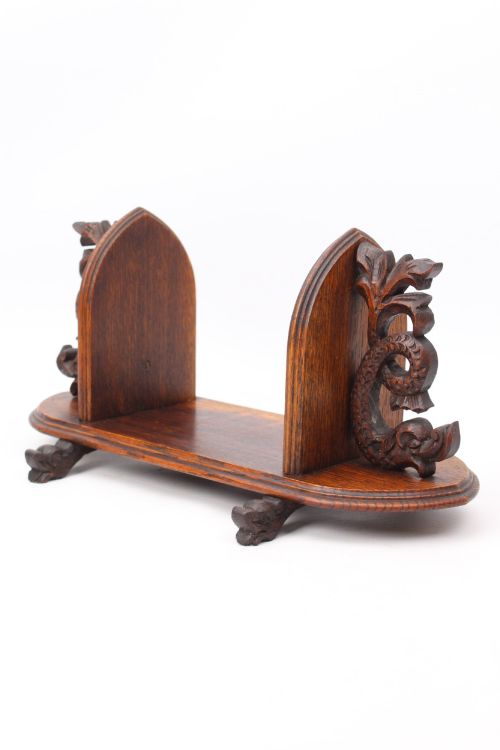
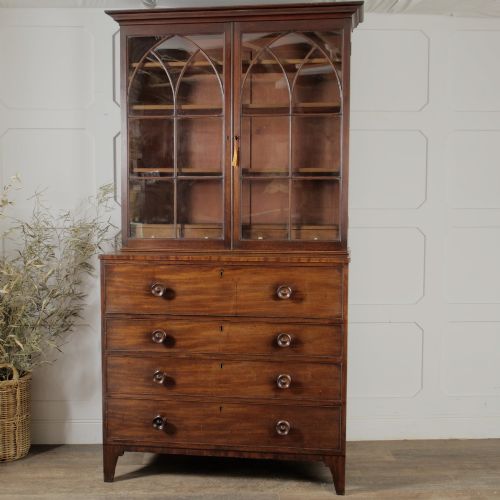
The selection here encompasses related forms such as oak book stands, mahogany secretaire bookcases, and golden mahogany clerks desks dating from the eighteenth century through the Edwardian period.
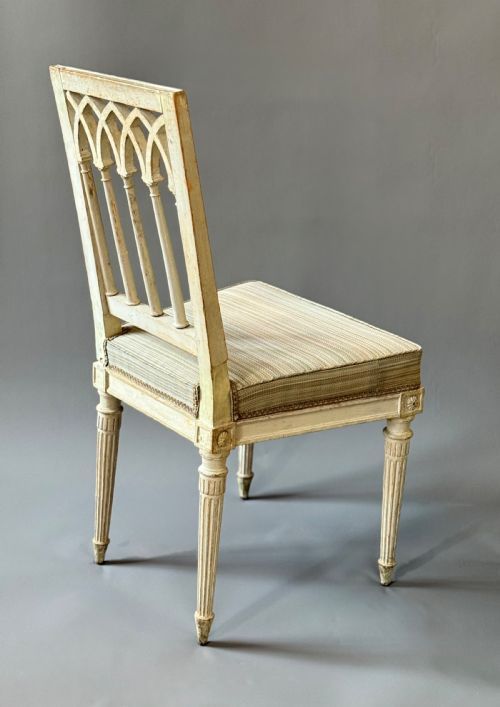
Makers and designers of these pieces drew upon Gothic Revival, Gothick, and Aesthetic periods to infuse utilitarian furniture with ecclesiastical proportions and pointed arch detailing.
How they were made
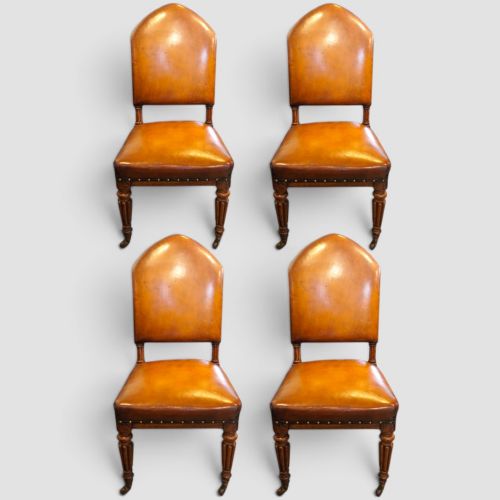
Cabinet makers utilised dense hardwoods including mahogany, oak, pitch pine, and rosewood to construct the carcases and frames of desks, bookcases, and chairs.
Decorative accents frequently incorporate brass inlay, enamel dials, glass panels, and leather writing surfaces, reflecting the varied capabilities of nineteenth-century workshops.
Joinery techniques ranged from standard framing for utilitarian clerk desks to intricate fretwork and panel doors echoing architectural window tracery.
Listings incorporate timber varieties such as mahogany, oak, pitch pine, and rosewood across Victorian and Georgian periods.
What varies in quality
The degree of refinement in the carved pointed arches and tracery panels distinguishes standard utilitarian furniture from exceptional library pieces.
Selection of timber grain, particularly in golden mahogany or figured oak, dictates the visual impact of the writing surface and cabinetry.
Integration of secondary materials, such as precision brass inlay or fine leather inserts, separates straightforward workshop productions from exhibition-grade commissions.
Barber and North of York·Charles Bevan·Wilkinson Leicester
The Gothic Arch Desk Glossary
- Secretaire bookcase
- A tall cabinet combining a pull-down writing drawer with upper shelving enclosed by glazed or panelled doors. This dual-purpose form provides both workspace and storage.
- Gothic Revival
- An architectural and decorative style reviving medieval forms, characterised by pointed arches, trefoils, and vertical emphasis. It heavily influenced nineteenth-century furniture design.
- Single fusee
- A clock movement utilising a conical pulley to equalise the pull of the mainspring as it winds down. This mechanism improves timekeeping accuracy.
- Bracket clock
- A portable clock designed to sit on a shelf, table, or bracket, typically featuring a striking mechanism. Regency and Victorian examples often incorporate brass handles and fine timber cases.
Gothic Arch Desk: Frequently Asked Questions
What periods do these desks and bookcases come from?
The pieces span the Georgian, Regency, William IV, and Victorian eras, extending into the Edwardian period.
Craftsmen across these centuries reinterpreted medieval architectural motifs using contemporary timbers and hardware.
How do I identify a Gothic Revival desk?
Look for characteristic pointed arches, tracery panels, and vertical lines drawn from ecclesiastical architecture.
These architectural elements appear on panel doors, gallery rails, and framing members.
What woods were used for these pieces?
Cabinet makers predominantly worked in mahogany, oak, pitch pine, and rosewood.
Selection depended on the period and the specific furniture form, with oak and mahogany dominating library and desk production.
How were secretaire bookcases used?
The drop-front drawer served as a writing desk equipped with small internal drawers and pigeonholes for correspondence.
The upper section functioned as a bookcase for storing leather-bound volumes.