

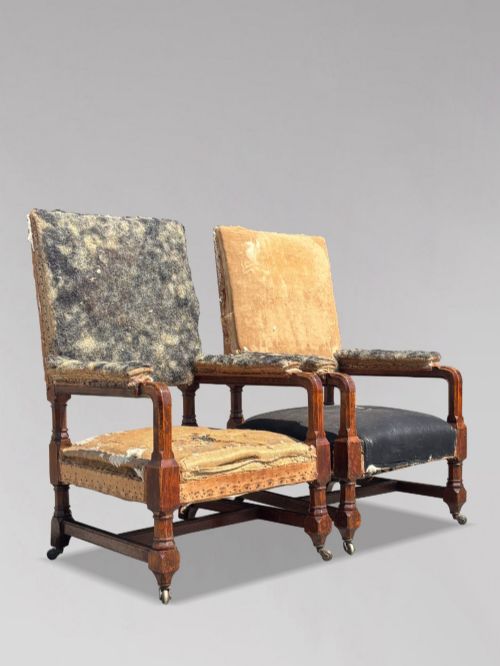
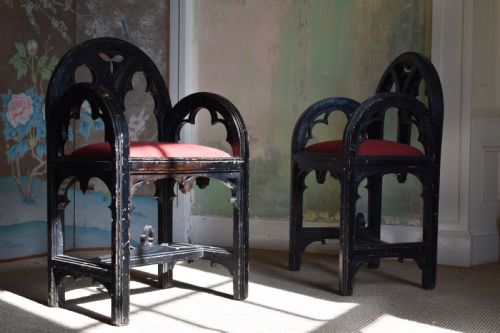

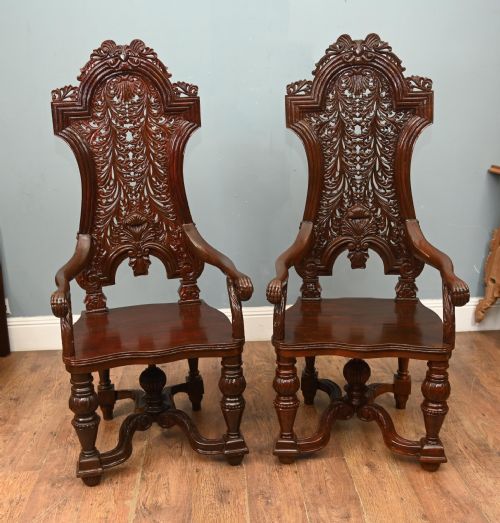


Gothic Accent Armchair
These gothic accent armchair pieces bring architectural presence and heavy timber character to a room, rooted firmly in nineteenth-century revivalism.
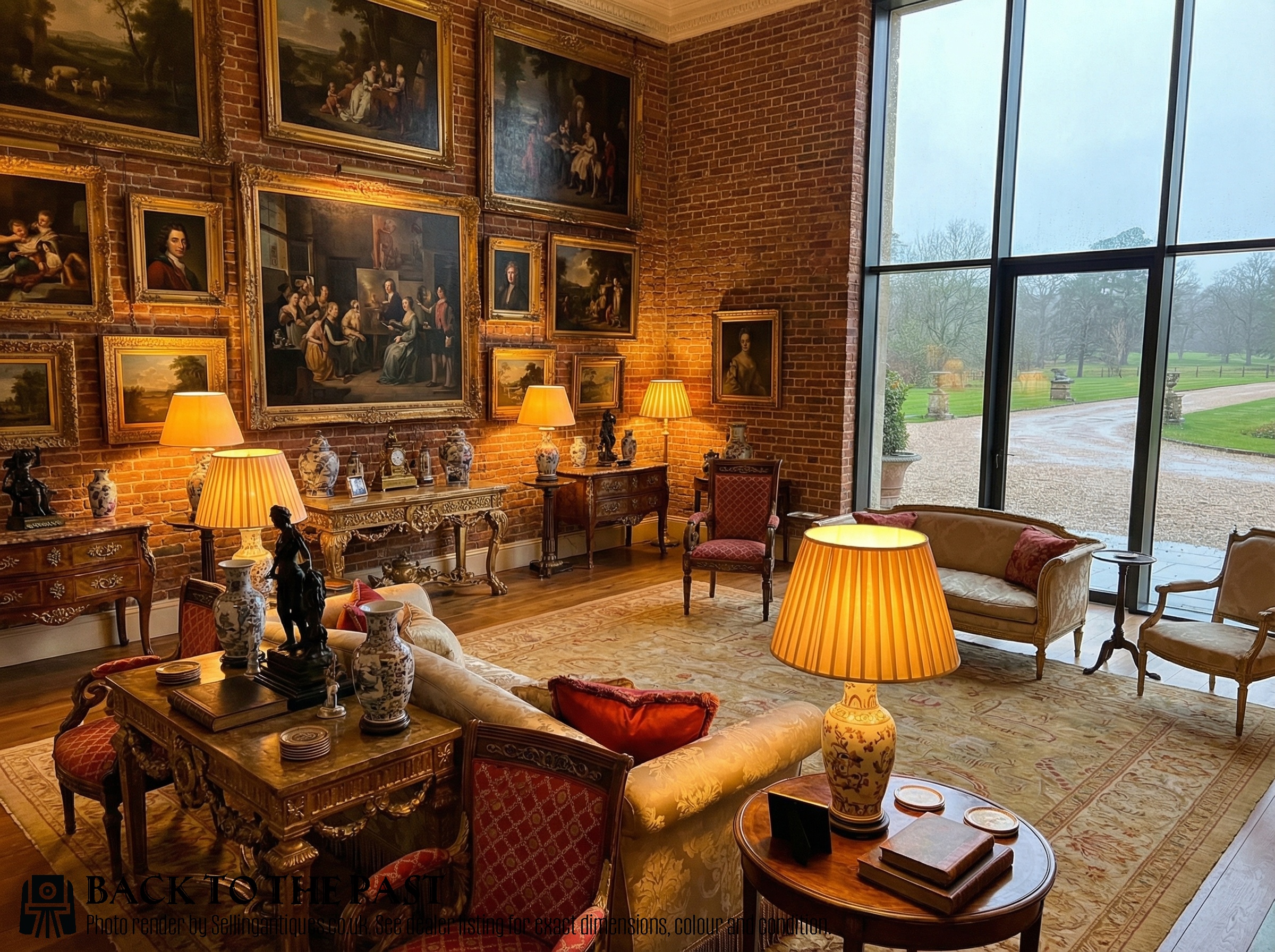
Gothic Accent Armchair
A gothic accent armchair draws on medieval architectural forms, showing high backs, pointed arches, and sturdy timber construction across nineteenth-century interpretations. These seats function as strong focal points in a room, combining historical motifs with practical seating.
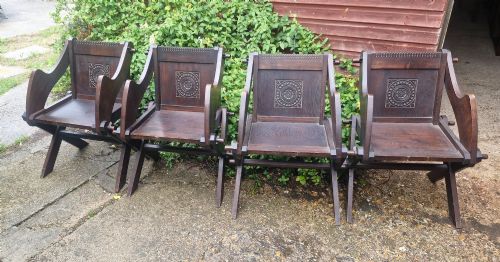
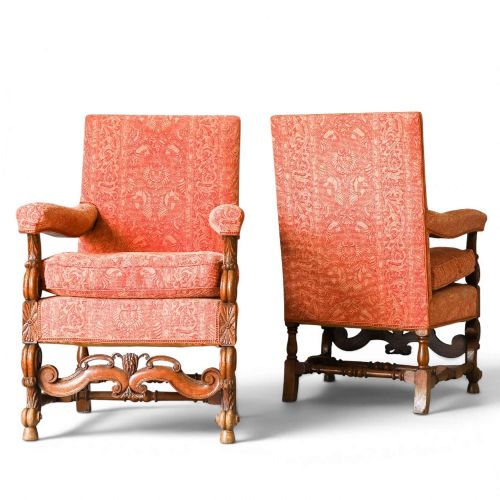
Most examples encountered here originate from the nineteenth century, including Victorian manifestations of the Gothic Revival alongside Jacobean and Renaissance revival pieces. Buyers find everything from heavy oak wainscot and Glastonbury chairs to upholstered library seats and carved throne forms.
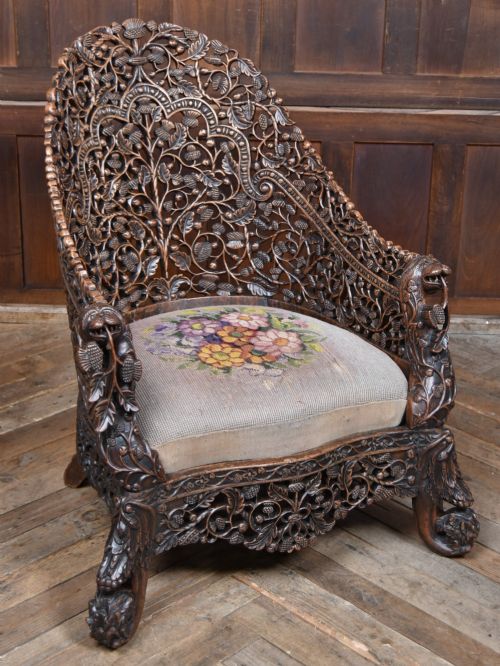
Makers and designers of these pieces often utilised vernacular traditions, turning to English, Welsh, and continental European workshops for inspiration. The resulting chairs range from simple turned spindle structures to elaborately carved seating adorned with linenfold panels and heraldic details.
Materials and Construction
Oak dominates the evidence, complemented by walnut, pitch pine, beech, and satinwood, providing the structural heft required for these architectural forms. Craftsmen joined massive timbers using traditional pegged mortise and tenon joints to withstand heavy daily use.
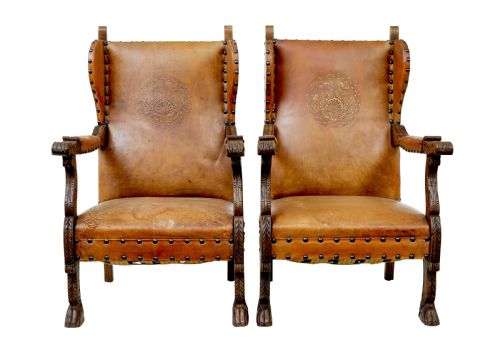
Upholstery materials include embossed leather, brass nailheads, hessian, and woven tapestry, adding texture and colour to the severe timber frames. Carving, inlay, and ebonising finish the surfaces, reflecting both rural craft traditions and sophisticated revivalist workshops.
The inventory spans the eighteenth, nineteenth, and early twentieth centuries, capturing multiple revival phases.
Judgments of Quality
Quality rests upon the crispness of the hand-carving and the proportional balance of the architectural elements, distinguishing workshop skill from mass production. Well-executed pieces display deep relief work, such as hound motifs or tracery, rather than shallow machine milling.
The integrity of the timber and the retention of original upholstery materials, leather panels, and brass detailing dictate the standing of an individual piece. Retaining patinated oak surfaces and authentic structural joinery elevates an armchair above later adaptations or marriages of parts.
Collier and Plucknett·A.W.N. Pugin
The Gothic Accent Armchair Glossary
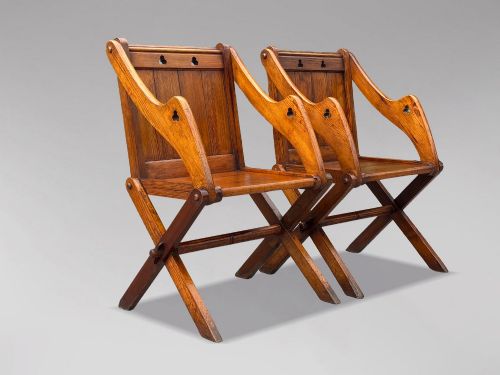
- Glastonbury chair
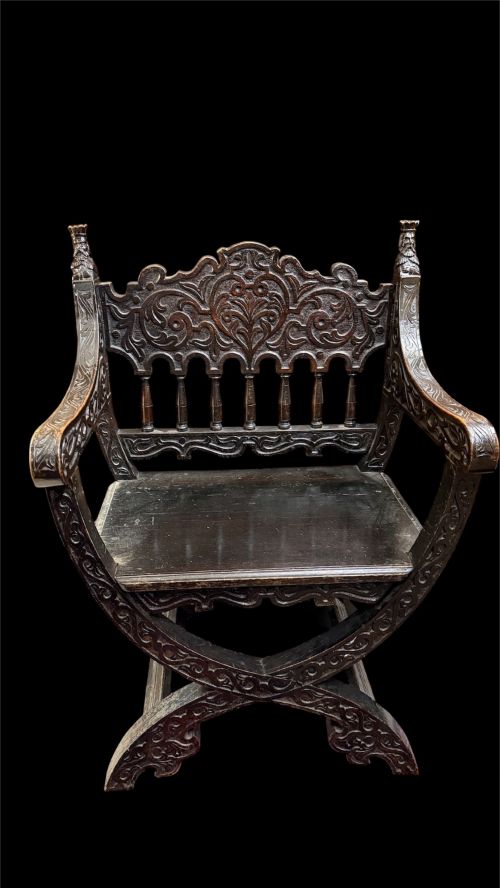
- A folding armchair type with X-frame supports and sloping arms, popularised during the nineteenth-century Gothic Revival. This design draws inspiration from medieval monastic furniture.
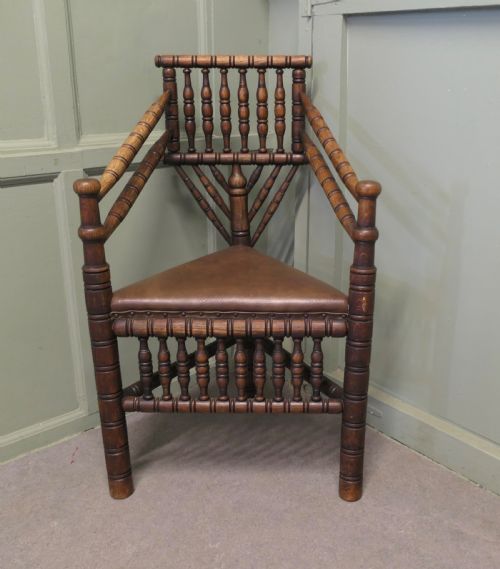
- Turners chair
- An early chair type built entirely from turned wooden spindles and triangular seats, also known as a roundabout or Saxon chair. These pieces rely on sophisticated joinery rather than upholstery.
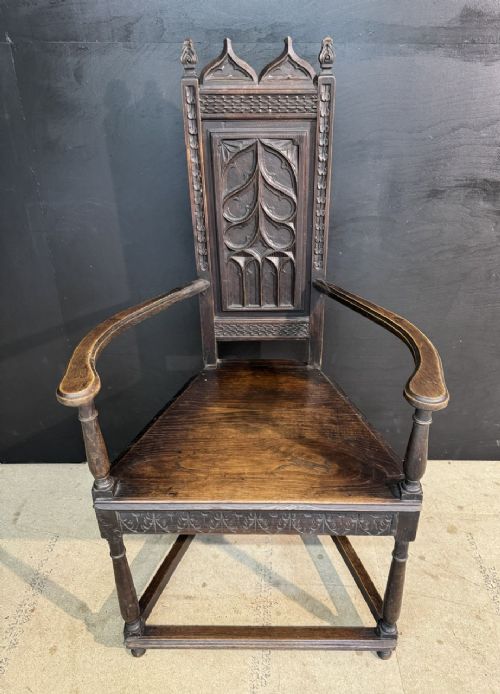
- Throne chair
- A large, high-backed armchair designed with architectural canopy or panel details to denote status. Victorian makers produced these heavily carved seats for domestic libraries and halls.
- Curule
- An ancient X-shape frame style adopted by Renaissance and nineteenth-century revival designers for ceremonial seating. The intersecting legs create a curule cross-brace beneath the armrests.
Gothic Accent Armchair: Frequently Asked Questions
What defines a gothic accent armchair?
These chairs combine heavy timber construction with medieval architectural motifs such as pointed arches, tracery, and linenfold panelling. Nineteenth-century cabinetmakers drew directly on Gothic, Jacobean, and Renaissance precedents to create dramatic seating for domestic interiors.
Most examples utilise solid oak or walnut, featuring carved panels, leather upholstery, or turned spindle frames. Their imposing silhouettes serve as deliberate accent pieces within a room.
How do I date a gothic revival chair?
Dating relies on examining the timber preparation, tool marks, and specific revival style, which peaked during the Victorian era. Nineteenth-century makers often combined authentic historical construction methods with machine-sawn secondary woods.
While many pieces date from the mid to late nineteenth century, makers frequently referenced seventeenth-century wainscot or medieval Glastonbury forms. Examining the wear patterns and upholstery backing helps confirm the period of manufacture.
Where were these chairs used historically?
Historically, these robust armchairs stood in halls, libraries, and studies where their architectural presence reflected the owner's taste. They functioned as primary seating for reading or formal reception rather than casual lounging.
The sturdy construction of oak and leather suited high-traffic areas in both grand country houses and Victorian suburban villas.
How should I care for antique oak?
Maintain antique oak furniture by keeping it away from direct heat sources and sudden humidity changes that cause timber to split. Regular dusting with a dry, soft cloth preserves the natural patina without building up chemical residues.
Feed dry leather panels with appropriate conservation balms while leaving the surrounding wood finish untouched by modern silicones.